2026 NFL Practice Squad: Roster Strategy & Elevation Rules
The 2026 NFL practice squad regulations feature a 16-player roster limit and specific elevation rules, significantly impacting team strategy, player development, and in-season flexibility for all franchises.
Understanding the intricacies of the NFL practice squad 2026 regulations is crucial for any football enthusiast or aspiring analyst. These rules, governing the 16-player roster strategy and elevation protocols, are not just bureaucratic details; they are the bedrock of in-season team building, player development, and tactical flexibility for every franchise.
The Evolution of the NFL Practice Squad System
The NFL practice squad has undergone significant transformations over the years, evolving from a supplementary group of players to an integral component of team strategy. Its primary purpose remains to develop talent and provide immediate depth, but the specific rules governing its size and player movement have been refined to adapt to the league's ever-changing landscape.
Initially, practice squads were quite limited, often seen as an afterthought. However, as the game evolved, so did the recognition of the need for a robust system to nurture young talent and offer a safety net for teams facing injuries. The expansion to 16 players for the 2026 season reflects a continued commitment to these principles, offering more opportunities for players and greater flexibility for teams.
Historical Context and Key Milestones
The journey of the practice squad is marked by several pivotal changes. From its inception as a small, often overlooked group, it has grown in size and importance, particularly in recent years. The COVID-19 pandemic, for instance, accelerated many of these changes, highlighting the critical need for expanded rosters and relaxed elevation rules to navigate unprecedented challenges.
- Early Days: Limited to a few players, primarily for developmental purposes without much direct impact on game day rosters.
- Incremental Expansion: Gradual increases in roster size, reflecting a growing understanding of player development needs.
- Pandemic Era Adjustments: Temporary rules during COVID-19 significantly expanded practice squad sizes and relaxed elevation rules, proving their strategic value.
- Current Structure: The 16-player limit and refined elevation rules for 2026 solidify many of these temporary changes into permanent fixtures, enhancing team depth and player pathways.
These historical shifts underscore a league-wide recognition that a strong practice squad is not just a luxury but a necessity for sustained success and player welfare. The 2026 regulations build upon this foundation, aiming for a stable yet dynamic framework.
Understanding the 16-Player Roster Strategy
The 2026 NFL practice squad regulations stipulate a 16-player roster, a significant number that allows teams considerable strategic depth. This expanded capacity enables franchises to stash promising young talent, maintain veterans recovering from injuries, and provide immediate replacements for various positions without dipping into the free agent pool prematurely.
Teams approach this 16-player limit with careful consideration, balancing developmental prospects with immediate utility. It's a delicate dance between nurturing future stars and ensuring there are always ready-to-go options for Sunday. The composition often reflects a team's specific needs, injury history, and long-term vision.

Strategic Allocation of Practice Squad Spots
Coaches and general managers typically prioritize certain positions on the practice squad. Offensive and defensive linemen, for example, are almost always well-represented due to the high attrition rate and specialized skills required. Quarterbacks, while less frequently elevated, are often kept for developmental purposes and as emergency backups.
- Offensive Line and Defensive Line: High priority due to frequent injuries and the need for specialized depth.
- Skill Positions (WR, RB, DB):S Often include players with specific skill sets, like return specialists or slot receivers, who might not make the active roster but offer unique value.
- Quarterbacks: Usually one or two developmental QBs are kept, offering a chance to learn the system without immediate game-day pressure.
- Special Teams Specialists: Kickers, punters, and long snappers might find spots if the active roster players are struggling or as insurance.
The 16-player limit provides enough room to address these diverse needs, allowing teams to be proactive rather than reactive in managing their roster throughout a grueling NFL season. It's a testament to how crucial every single player, even those not on the active roster, can be.
Key Player Eligibility Criteria for the Practice Squad
Not every player is eligible for the practice squad, and the 2026 regulations outline specific criteria to ensure fairness and maintain the developmental nature of the system. These rules are designed to prevent teams from simply stashing experienced veterans who could otherwise contribute to active rosters.
Understanding these eligibility rules is vital for players and agents alike, as it dictates career pathways and opportunities. The league aims to strike a balance between providing opportunities for younger players and allowing some flexibility for veterans who might need a stepping stone back to the active roster.
Categories of Eligible Players
The eligibility rules categorize players based on their accrued seasons in the NFL, creating a tiered system. This ensures that the practice squad primarily serves as a development tool for newer players, while still offering a limited number of spots for more experienced individuals.
- Unlimited Accrued Seasons: Teams can carry up to six players on the practice squad who have an unlimited number of accrued seasons. These are typically veterans who provide experience, leadership, or are recovering from injuries.
- Zero-to-Two Accrued Seasons: Players with zero to two accrued seasons are generally fully eligible, forming the bulk of the practice squad. This category is crucial for nurturing young talent.
- Three Accrued Seasons: Players with three accrued seasons are also eligible, but their numbers might be subject to specific team limits or strategic choices.
These categories ensure a mix of experience and potential, allowing teams to build a well-rounded practice squad that can contribute both immediately and in the long term. The flexibility for a limited number of veterans is a key aspect, offering a second chance or a pathway back to the main roster.
The Mechanics of Player Elevation Rules
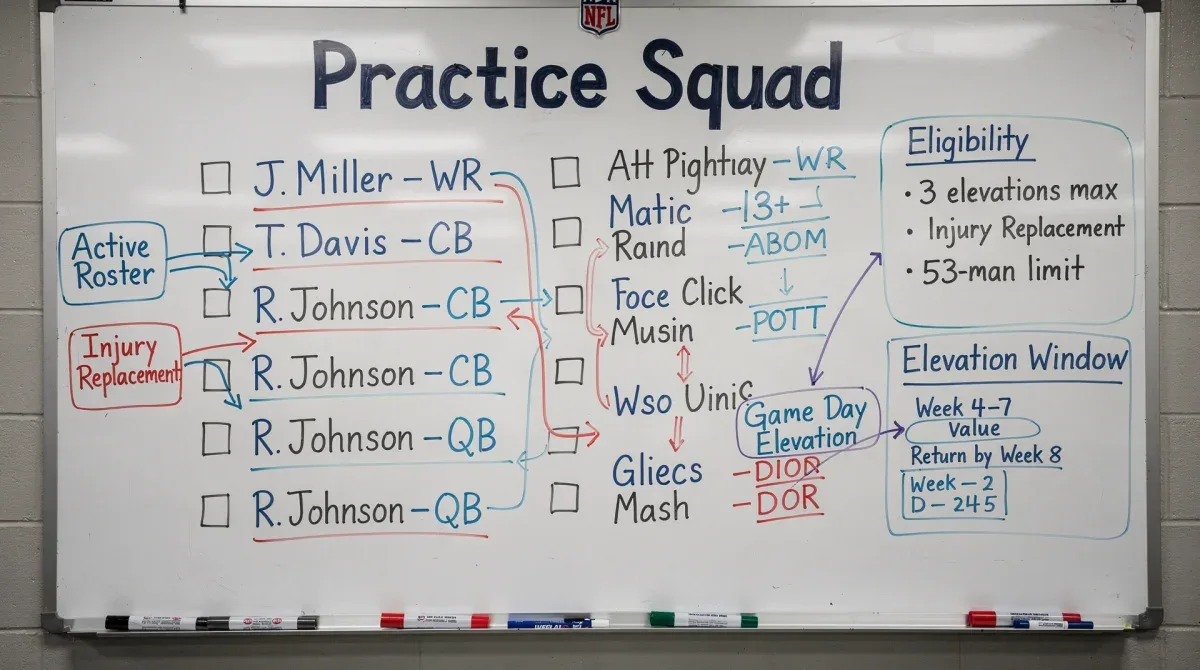
Player elevation rules are arguably the most dynamic aspect of the practice squad system for 2026, allowing teams to temporarily promote players to the active roster for game day. This mechanism provides invaluable flexibility, enabling teams to respond quickly to injuries or tactical needs without committing to a permanent roster spot.
The ability to elevate players has profoundly changed how teams manage their 53-man roster, reducing the pressure to keep multiple players at certain positions solely for depth. It allows for more specialized active rosters while maintaining a robust pool of ready-to-play individuals on the practice squad.
Temporary Elevation Limits and Procedures
Under the 2026 regulations, teams can elevate up to two practice squad players to the active roster for each game. This temporary elevation allows the player to participate in the game without officially taking up a spot on the 53-man roster. After the game, the player reverts to the practice squad without clearing waivers.
- Two Elevations Per Game: A maximum of two practice squad players can be elevated for a given game, offering targeted reinforcements.
- Limited Elevations Per Player: A player can be elevated a maximum of three times during the regular season. After the third elevation, if the team wishes to elevate them again, they must be signed to the active 53-man roster permanently and clear waivers if cut.
- Postseason Rules: The elevation rules often become more flexible in the postseason, allowing teams greater freedom to adapt to playoff scenarios.
This system optimizes roster management, giving teams the agility to fill gaps caused by short-term injuries or to exploit specific opponent matchups. It's a tactical advantage that top-tier coaching staffs leverage throughout the season.
Impact on Team Building and Player Development
The 2026 NFL practice squad regulations have a profound impact on both team building philosophies and the long-term development of players. For teams, it means a more dynamic approach to roster construction, allowing for greater experimentation and patience with young talent. For players, it offers a clearer pathway to the NFL, even if they aren't immediate starters.
This system fosters a culture of continuous development, where players can hone their skills, learn the playbook, and adapt to the professional environment without the immense pressure of immediate game-day contributions. It's a win-win scenario, providing opportunities for players and strategic advantages for franchises.
Fostering Young Talent and Strategic Depth
Teams can use the practice squad as a dedicated development program, investing in players who might not be ready for the prime time but possess high ceilings. This reduces the pressure to cut promising prospects simply because there isn't an immediate spot on the 53-man roster. It also provides crucial depth in case of unforeseen circumstances.
- Developmental Pipeline: A structured environment for rookies and second-year players to grow and learn the NFL system.
- Injury Insurance: Immediate replacements available for key positions, minimizing disruption when active roster players get injured.
- Specialized Roles: Allows teams to keep players with niche skills (e.g., specific special teams roles) without sacrificing active roster spots.
- Cost-Effective Depth: Provides depth at a lower salary cap hit compared to signing free agents to the active roster.
The practice squad, therefore, is not just a holding pen but a vibrant ecosystem for cultivating future NFL stars and ensuring a team's resilience throughout the season. Its strategic importance cannot be overstated in modern NFL team management.

Strategic Benefits for NFL Franchises
The strategic benefits derived from the 2026 NFL practice squad regulations are multifaceted, touching on everything from in-season flexibility to long-term financial planning. Franchises that master the art of practice squad management gain a significant competitive edge, allowing them to adapt more swiftly and effectively to the unpredictable nature of an NFL season.
This system empowers general managers and coaching staffs to make more agile decisions, knowing they have a deep pool of talent readily available. It mitigates risks associated with injuries and underperformance, ensuring that the team can maintain a high level of play even when facing adversity.
Optimizing Roster Flexibility and Financial Management
One of the most significant advantages is the enhanced roster flexibility. Teams can experiment with different player combinations, give new acquisitions time to learn the system, or simply provide a week-to-week boost at a specific position. Financially, maintaining players on the practice squad is less expensive than on the active roster, offering salary cap relief.
- Game Day Adaptability: Ability to elevate players based on opponent matchups or specific game plan needs.
- Reduced Waiver Wire Exposure: Less need to expose players to waivers when short-term needs arise, protecting team investments.
- Salary Cap Efficiency: Practice squad salaries are significantly lower, allowing teams to allocate more resources to active roster players.
- Talent Retention: Helps retain promising players who might otherwise be claimed by other teams if cut from the active roster.
These strategic benefits underscore why the practice squad has become such a critical component of NFL operations. It's a sophisticated tool that, when wielded effectively, can be a cornerstone of a franchise's success, both on and off the field.
Challenges and Future Outlook for Practice Squads
While the 2026 NFL practice squad regulations offer numerous advantages, they also present certain challenges and areas for ongoing consideration. The dynamic nature of the league means that rules are constantly evaluated and sometimes adjusted. Understanding these potential challenges and the future outlook is key to appreciating the full scope of the practice squad system.
One challenge lies in managing player expectations and ensuring practice squad players remain motivated, knowing their path to the active roster might be prolonged. Another involves the constant strategic chess match between teams, trying to identify and secure talent from other practice squads.
Navigating Player Movement and Competitive Dynamics
The ability of other teams to sign players off a practice squad adds a layer of complexity. While this provides opportunity for players, it also means teams must be strategic about who they place on their practice squad, especially if those players are highly coveted. This competitive dynamic ensures a constant churn of talent across the league.
- Player Motivation: Keeping practice squad players engaged and ready, despite not being on the active roster, is crucial.
- Poaching Risk: Talented practice squad players can be signed by other teams, forcing franchises to weigh developmental benefits against retention risks.
- Rule Adjustments: The league may continue to tweak rules regarding veteran eligibility or elevation limits based on observed impacts on competition and player safety.
- Long-Term Player Health: Ensuring practice squad players receive adequate resources and support for their physical and mental well-being is an ongoing focus.
The future of the practice squad will likely involve continued refinement, balancing the needs of player development, team flexibility, and competitive balance. It remains a vital, evolving part of the NFL landscape, continually adapting to the demands of professional football.
| Key Aspect | Brief Description |
|---|---|
| Roster Size | Expanded to 16 players, offering increased depth and developmental opportunities for teams. |
| Player Eligibility | Specific rules based on accrued seasons, including up to six veterans with unlimited seasons. |
| Elevation Rules | Teams can elevate two players per game, up to three times per player in the regular season. |
| Strategic Impact | Enhances team building, player development, and in-season roster flexibility and depth. |
Frequently Asked Questions About the 2026 NFL Practice Squad
What is the maximum number of players allowed on the practice squad in 2026?▼For the 2026 NFL season, teams are permitted to carry a maximum of 16 players on their practice squad. This expanded roster size provides franchises with greater depth and flexibility to develop talent and respond to unforeseen circumstances like injuries throughout the season.
How many times can a player be elevated from the practice squad to the active roster?▼A player can be temporarily elevated from the practice squad to the active roster for game day a maximum of three times during the regular season. After the third elevation, if a team wishes to use that player again, they must sign them to the 53-man active roster permanently.
Can veteran players be on the practice squad under 2026 rules?▼Yes, the 2026 NFL practice squad rules allow teams to carry up to six veteran players who have an unlimited number of accrued seasons. This provision enables teams to retain experienced players for depth, development, or as insurance against injuries, balancing youth with experience.
What happens to a player after being elevated for a game?▼After being elevated for a game, a practice squad player automatically reverts to the practice squad without having to clear waivers. This temporary elevation mechanism allows teams to utilize players for specific games without making a permanent commitment to a 53-man roster spot.
How do practice squad regulations benefit NFL teams strategically?▼Practice squad regulations offer strategic benefits by providing flexible depth for injuries, allowing development of young talent, and enabling teams to adapt game plans based on weekly needs. It optimizes roster management, reduces waiver wire exposure, and contributes to overall salary cap efficiency.
Conclusion
The 2026 NFL practice squad regulations, with their 16-player roster and refined elevation rules, represent a sophisticated evolution in how professional football teams manage talent and build competitive rosters. These rules provide an indispensable framework for player development, offering a crucial pathway for aspiring athletes while simultaneously granting franchises unparalleled flexibility to navigate the demanding landscape of an NFL season. By understanding these intricate details, fans and analysts alike gain a deeper appreciation for the strategic chess match that unfolds both on and off the field, highlighting the practice squad's vital role in shaping the future of the league.
