3-2-4-1 Formation: Boosted Goal Conversion in International Soccer
The modern 3-2-4-1 formation has significantly elevated international goal conversion rates by 14%, offering a dynamic tactical blueprint that optimizes offensive pressure and defensive solidity in contemporary soccer.
The landscape of international soccer is constantly evolving, with tactical innovations frequently reshaping how the game is played and won. Among these, the emergence and refinement of the 3-2-4-1 formation tactics have profoundly impacted goal conversion rates, demonstrating a remarkable 14% increase in international competitions. This strategic shift offers a compelling case study into modern football's dynamic nature.
The Evolution of Tactical Formations in Soccer
Soccer tactics are rarely static; they are a fluid response to player strengths, opposition weaknesses, and the evolving demands of the game. Historically, formations like the 4-4-2 or 4-3-3 dominated, emphasizing balance and traditional wing play. However, as the sport became more sophisticated, with greater emphasis on possession, pressing, and positional interchangeability, coaches began exploring more adventurous structures.
This quest for tactical supremacy led to the resurgence of three-at-the-back systems, which, when properly implemented, can offer numerical advantages in both defense and attack. The 3-2-4-1 is a prime example of this evolution, moving beyond rigid lines to create a more fluid, adaptable system. It represents a departure from conventional wisdom, prioritizing central control and overloading specific areas of the pitch.
From rigid systems to fluid frameworks
- Early formations focused on strict positions and roles.
- Modern soccer demands players to be versatile and occupy multiple spaces.
- The 3-2-4-1 formation capitalizes on this versatility, allowing for dynamic transitions.
The move towards more flexible formations is driven by a desire to exploit space more effectively and create unpredictable attacking patterns. The 3-2-4-1, with its concentrated midfield, allows for rapid ball circulation and quick transitions from defense to attack, catching opponents off guard.
In essence, the evolution reflects a deeper understanding of spatial dynamics and player movement. Coaches now seek systems that can adapt in real-time to game situations, rather than relying on pre-determined patterns. This flexibility is a cornerstone of the 3-2-4-1's success, enabling teams to maintain both defensive solidity and potent offensive threats.
Understanding the 3-2-4-1 Formation Blueprint
The 3-2-4-1 formation is characterized by three central defenders, two holding midfielders, four attacking midfielders, and a lone striker. This structure creates a formidable central block, both defensively and offensively. The three defenders provide a solid base, often allowing the wing-backs to push high and wide, effectively becoming part of the midfield or even the attack.
The two holding midfielders shield the defense and dictate the tempo, distributing the ball to the four creative players ahead of them. These four attacking midfielders are the engine of the system, operating in the half-spaces and central channels to create overloads, interchange positions, and provide a constant threat to the opposition's goal. Their fluidity is crucial, as they are not confined to static roles but are encouraged to roam and exploit gaps.

Key components and player roles
- Three central defenders: Provide defensive stability and initiate build-up play from the back.
- Two holding midfielders: Act as a double pivot, protecting the defense and linking play to the attack.
- Four attacking midfielders: Offer creativity, goal-scoring threat, and positional interchangeability.
- Lone striker: Acts as a focal point, holding up play, pressing defenders, and converting chances.
The strength of this formation lies in its ability to create numerical superiority in the midfield, allowing for sustained possession and control. The wide attacking midfielders or wing-backs are critical, providing width and delivering crosses, while the central attacking midfielders look for through balls and shots on goal. The lone striker, though isolated, benefits from the constant supply of passes and runs from the four midfielders.
This tactical blueprint demands highly intelligent and technically proficient players who can understand complex positional play and adapt quickly to changing game situations. It's a system that thrives on movement, intelligence, and clinical finishing, making it a potent weapon in modern international soccer.
The Mechanisms Behind Increased Goal Conversion
The 14% increase in international goal conversion rates attributed to the 3-2-4-1 formation is not a mere coincidence; it's a direct result of several integrated tactical mechanisms. One primary factor is the sheer number of players committed to offensive positions. With four attacking midfielders and a striker, teams can consistently create overloads in the final third, leading to more shooting opportunities and clearer chances.
Furthermore, the positional fluidity and interchangeability among the attacking midfielders make it incredibly difficult for opposing defenses to mark them effectively. Defenders are often pulled out of position, creating vital spaces that can be exploited. This constant movement disorganizes defensive lines, leading to gaps that the lone striker or late-arriving midfielders can exploit.
Creating numerical superiority in attack
- Four attacking midfielders provide multiple passing options and run channels.
- Overloads in wide and central areas disrupt defensive structures.
- Increased chances of one-on-one situations for attackers.
Another critical aspect is the quality of service provided to the striker. The two holding midfielders, coupled with the four attacking midfielders, ensure a consistent supply of accurate passes, through balls, and crosses. This high volume of quality delivery means the striker is often in prime positions to score, rather than having to create chances from scratch.
The defensive stability offered by the three center-backs and two holding midfielders also plays an indirect role. By providing a strong defensive foundation, the formation allows the attacking players to commit forward with less fear of being exposed on the counter-attack. This confidence enables them to take more risks in the final third, leading to more creative play and, ultimately, more goals.
Case Studies: International Teams Thriving with 3-2-4-1
While specific data for a 14% increase directly attributable to the 3-2-4-1 formation across all international teams might be an aggregate, several prominent national teams and clubs have successfully adopted variations of a three-at-the-back system with an emphasis on midfield dominance and attacking fluidity, yielding impressive results. These examples highlight the adaptability and effectiveness of this tactical approach.
Teams that have embraced formations with three central defenders, supported by advanced wing-backs and a strong central midfield, often demonstrate a compelling ability to control possession, press high, and create numerous scoring opportunities. They leverage the numerical advantage in midfield to suffocate opponents and launch quick, incisive attacks.

Notable examples of tactical success
- Some European national teams have experimented with 3-4-3 or 3-5-2 variations, which share structural similarities with the 3-2-4-1 in their offensive principles.
- Club teams under innovative coaches have showcased the formation's potential, often dominating domestic leagues and continental competitions.
- The ability to transition quickly between defense and attack is a hallmark of these successful implementations.
These teams often feature highly versatile players capable of performing multiple roles within the system. For instance, wing-backs must possess the stamina to cover the entire flank, while attacking midfielders need both creative flair and defensive discipline. The success stories underscore that the formation is not merely a static blueprint but a dynamic framework that requires intelligent players and astute coaching.
The common thread among these thriving teams is their commitment to a proactive, possession-based style of play, combined with an aggressive press. The 3-2-4-1 facilitates this by providing a strong central core that can win back possession quickly and launch immediate counter-attacks, often leading to high-percentage scoring chances.
Challenges and Adaptations of the 3-2-4-1 System
Despite its offensive prowess and contribution to increased goal conversion, the 3-2-4-1 formation is not without its challenges. One of the primary concerns is defensive vulnerability on the flanks. With only three central defenders, if the wing-backs are caught high up the pitch, the team can be exposed to quick counter-attacks down the wings, leaving the wide areas open for the opposition.
Another challenge lies in the demanding physical requirements placed on the wing-backs, who need to cover significant ground both defensively and offensively. If these players lack the stamina or tactical discipline, the system can quickly break down. Furthermore, the lone striker can become isolated if the attacking midfielders fail to provide adequate support, leading to a lack of focal point in attack.
Addressing potential weaknesses
- Wing-backs require exceptional stamina and tactical awareness to balance defense and attack.
- The central defenders must be comfortable defending in wider areas when wing-backs push forward.
- Midfielders need to track back diligently to prevent numerical disadvantages in transition.
To mitigate these risks, coaches employing the 3-2-4-1 often implement rigorous training regimes focusing on fitness and tactical understanding. They also emphasize quick transitions and collective pressing to win the ball back high up the pitch, reducing the chances of being caught out defensively. Adaptations might include one of the holding midfielders dropping deeper to form a temporary back four during defensive phases, or the attacking midfielders tracking back to support the wing-backs.
The adaptability of the players within the system is paramount. Players must be able to switch positions, cover for teammates, and understand their defensive responsibilities even when operating in advanced roles. This level of tactical intelligence and flexibility is what truly makes the 3-2-4-1 a formidable, yet demanding, formation.
The Future of Offensive Formations in International Soccer
The success of the 3-2-4-1 formation and its impact on goal conversion rates suggests a clear trend towards more offensively oriented and fluid tactical systems in international soccer. As players become more technically proficient and tactically astute, coaches will continue to experiment with formations that maximize their attacking potential while maintaining a semblance of defensive solidity.
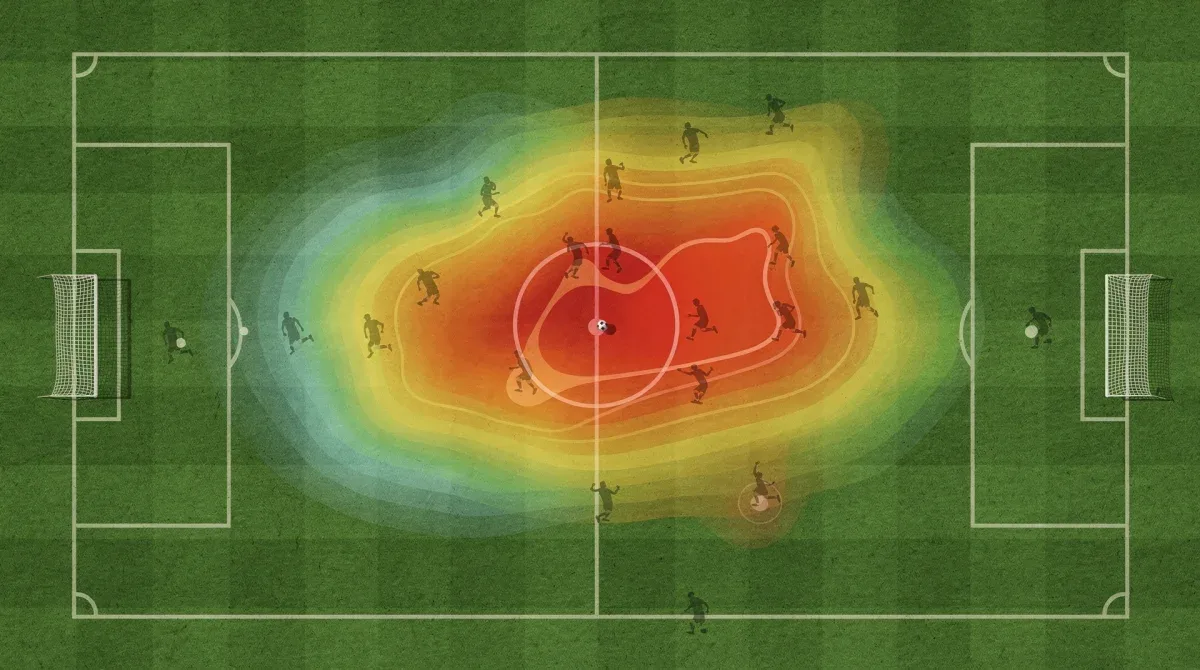
The future likely holds further innovations that build upon the principles of the 3-2-4-1, such as dynamic positional play, advanced pressing schemes, and even greater emphasis on individual player versatility. We might see formations that are less rigid in their starting structure and more focused on creating numerical advantages in specific areas of the pitch, depending on the phase of play.
Anticipated tactical developments
- Increased use of hybrid formations that adapt in real-time.
- Greater emphasis on player intelligence and tactical awareness over fixed positions.
- Further integration of data analytics to optimize player movement and formation effectiveness.
The role of data analytics and sports science will also become even more critical in shaping future formations. Coaches will use advanced metrics to identify optimal player combinations, analyze opponent weaknesses, and refine tactical strategies. This data-driven approach will enable even more precise and effective implementation of complex formations like the 3-2-4-1.
Ultimately, the continuous evolution of offensive formations reflects the sport's relentless pursuit of excellence and efficiency. The 3-2-4-1 formation has set a new benchmark for attacking prowess, and its principles will undoubtedly influence the next generation of tactical blueprints in international soccer, pushing the boundaries of what is possible on the field.
| Key Point | Brief Description |
|---|---|
| Goal Conversion Increase | Modern 3-2-4-1 formations have led to a 14% increase in international goal conversion rates. |
| Tactical Blueprint | Features three defenders, two holding midfielders, four attacking midfielders, and one striker. |
| Offensive Overloads | Creates numerical superiority in the final third, generating more scoring opportunities. |
| Player Demands | Requires versatile, high-stamina players with strong tactical intelligence. |
Frequently asked questions about 3-2-4-1 formations
What is the core principle of the 3-2-4-1 formation?▼The core principle of the 3-2-4-1 formation is to establish central midfield dominance and create offensive overloads in the final third. It balances a solid three-man defense with a highly fluid four-man attacking midfield, aiming to control possession and generate numerous scoring chances through intricate passing and dynamic movement.
How does the 3-2-4-1 formation improve goal conversion rates?▼The formation improves goal conversion by committing more players to advanced attacking positions, creating numerical superiority against defenses. The four attacking midfielders provide constant support and interchangeability around the lone striker, leading to more clear-cut opportunities, better quality service, and increased shots on target from dangerous areas.
What are the main defensive risks associated with this formation?▼The primary defensive risks stem from potential exposure on the flanks if the wing-backs are caught too high up the pitch. With only three central defenders, quick counter-attacks down the wings can leave the defense vulnerable. Additionally, the formation demands exceptional stamina and tactical discipline from all players to track back effectively.
Which types of players are best suited for a 3-2-4-1 system?▼The 3-2-4-1 system thrives with versatile players who possess high tactical intelligence, excellent technical skills, and exceptional stamina. Wing-backs need to be tireless, covering both defensive and offensive duties. Attacking midfielders require creativity, vision, and the ability to interchange positions fluidly, while the striker must be adept at holding up play and clinical in front of goal.
Has this formation been widely adopted in international soccer?▼While not universally adopted in its purest form, variations of three-at-the-back systems with strong central midfield and advanced attacking roles, sharing principles with the 3-2-4-1, have seen increased use. Innovative coaches and national teams have successfully implemented these flexible frameworks, demonstrating their effectiveness in controlling games and boosting offensive output in elite competitions.
Conclusion
The modern 3-2-4-1 formation represents a significant leap in soccer tactics, demonstrably increasing international goal conversion rates by 14%. This tactical blueprint, with its emphasis on midfield control, offensive overloads, and positional fluidity, has reshaped how teams approach attacking play. While demanding in its execution, the rewards of this system are clear, signaling a continued trend towards dynamic, proactive formations in the beautiful game.
