EuroLeague vs. FIBA Champions League: 2026 Schedule Consolidation
The potential 2026 schedule consolidation between the EuroLeague and FIBA Champions League aims to streamline European basketball, addressing player welfare, club interests, and fan engagement for a more unified future.
The basketball landscape in Europe is on the cusp of a significant transformation as discussions intensify regarding the potential EuroLeague vs. FIBA Champions League: Analyzing the 2026 Schedule Consolidation Talks. This pivotal moment could redefine the future of club competitions, promising a more streamlined and coherent calendar for players, clubs, and fans alike. The stakes are incredibly high, as the outcome will undoubtedly shape the sport's trajectory for decades to come.
The enduring rivalry: EuroLeague and FIBA Champions League
The competition between the EuroLeague and the FIBA Champions League has long been a defining characteristic of European basketball. For years, these two premier club competitions have operated in parallel, often leading to scheduling conflicts, player fatigue, and a divided fan base. Understanding the historical context of this rivalry is essential to appreciating the significance of the current consolidation talks.
Historically, the EuroLeague emerged as a breakaway competition, driven by elite clubs seeking greater autonomy and commercial control. It quickly established itself as the continent's top-tier league, attracting major talent and significant investment. FIBA, the sport's global governing body, later launched the Basketball Champions League (BCL) to reassert its influence and provide an alternative pathway for clubs across Europe.
Origins of the conflict
The fundamental disagreement stemmed from governance and commercial rights. EuroLeague clubs desired more control over their own destiny, believing a private entity could better manage the league's growth. FIBA, conversely, argued for a more inclusive, pyramid-style structure under its umbrella, emphasizing national federations and broader participation.
- Governance Disputes: EuroLeague operates independently, while FIBA Champions League is under FIBA's direct control.
- Commercial Models: Different revenue sharing and marketing strategies created distinct financial ecosystems.
- Club Participation: EuroLeague features a more exclusive, often permanent, club lineup, whereas BCL offers broader access through national league performance.
This duality has created a complex ecosystem where clubs, players, and national teams often face difficult choices. Players might be forced to choose between club commitments and national team duties, while fans are sometimes left to navigate overlapping schedules. The ongoing talks represent a genuine effort to overcome these historical divides and forge a path towards a more unified future.
The imperative for schedule consolidation in 2026
The year 2026 has become a focal point for potential schedule consolidation due to a confluence of factors, including expiring agreements, increasing calls for player welfare, and the strategic vision for European basketball's growth. The current fragmented calendar is unsustainable in the long term, impacting all stakeholders from grassroots to professional levels.
One of the most pressing concerns driving these talks is player fatigue and injury risk. Elite basketball players are currently subjected to grueling schedules that combine domestic league games, European club competitions, and international duties with their national teams. This relentless pace leaves little room for rest, recovery, or proper off-season training, directly affecting their performance and longevity.
Player welfare and club interests

Clubs, too, bear the brunt of the disjointed calendar. They invest heavily in their rosters, only to see their star players sidelined by injuries or unavailable for crucial domestic or European fixtures due to national team commitments. A consolidated schedule would allow for better planning, reducing travel burdens and ensuring players are at their peak for important matchups.
- Reduced Travel: A unified schedule could optimize travel logistics, cutting down on player fatigue.
- Fewer Conflicts: Minimizing overlaps between club and national team competitions is a key objective.
- Enhanced Performance: Well-rested players are more likely to perform at their best, benefiting both clubs and fans.
Beyond player welfare, the consolidation also seeks to enhance the commercial appeal of European basketball. A unified product, with fewer direct clashes and clearer pathways, would be more attractive to broadcasters, sponsors, and global audiences. This strategic move aims to elevate the sport's profile and unlock new revenue streams, ensuring its long-term financial health and growth.
Key stakeholders and their positions in the talks
The discussions surrounding the EuroLeague vs. FIBA Champions League: Analyzing the 2026 Schedule Consolidation Talks involve a complex web of stakeholders, each with their own interests, concerns, and negotiating positions. Understanding these dynamics is crucial to grasping the challenges and opportunities inherent in reaching a comprehensive agreement.
At the forefront are EuroLeague Basketball, representing the clubs participating in its competition, and FIBA, the global governing body for basketball. Both entities hold significant power and influence, and their collaboration is indispensable for any meaningful consolidation to occur. However, their historical differences mean negotiations are often delicate.
The role of national federations and players' associations
National federations, often aligned with FIBA, play a vital role as they oversee domestic leagues and national team programs. Their primary concern is to protect the interests of their national teams and ensure a balanced calendar that allows players to represent their countries without excessive club interference. Players' associations, on the other hand, advocate for player welfare, fair compensation, and reasonable workload management.
- EuroLeague Clubs: Seek autonomy, commercial growth, and a competitive environment.
- FIBA: Aims for a unified global calendar, safeguarding national team windows and grassroots development.
- National Federations: Prioritize national team success and the health of domestic leagues.
- Players' Associations: Focus on player health, fair scheduling, and contractual protections.
Mediating these diverse interests requires skillful diplomacy and a shared vision for the future of European basketball. Any successful agreement will need to address the core concerns of each stakeholder, ensuring that no single party feels disproportionately disadvantaged. The complexity of these negotiations underscores the difficulty, yet also the importance, of achieving a breakthrough.
Potential frameworks for a consolidated schedule
As the EuroLeague vs. FIBA Champions League: Analyzing the 2026 Schedule Consolidation Talks progress, various frameworks for a unified schedule are being explored. The goal is to create a calendar that accommodates all major competitions while minimizing conflicts and maximizing player availability. Several models are on the table, each with its own advantages and challenges.
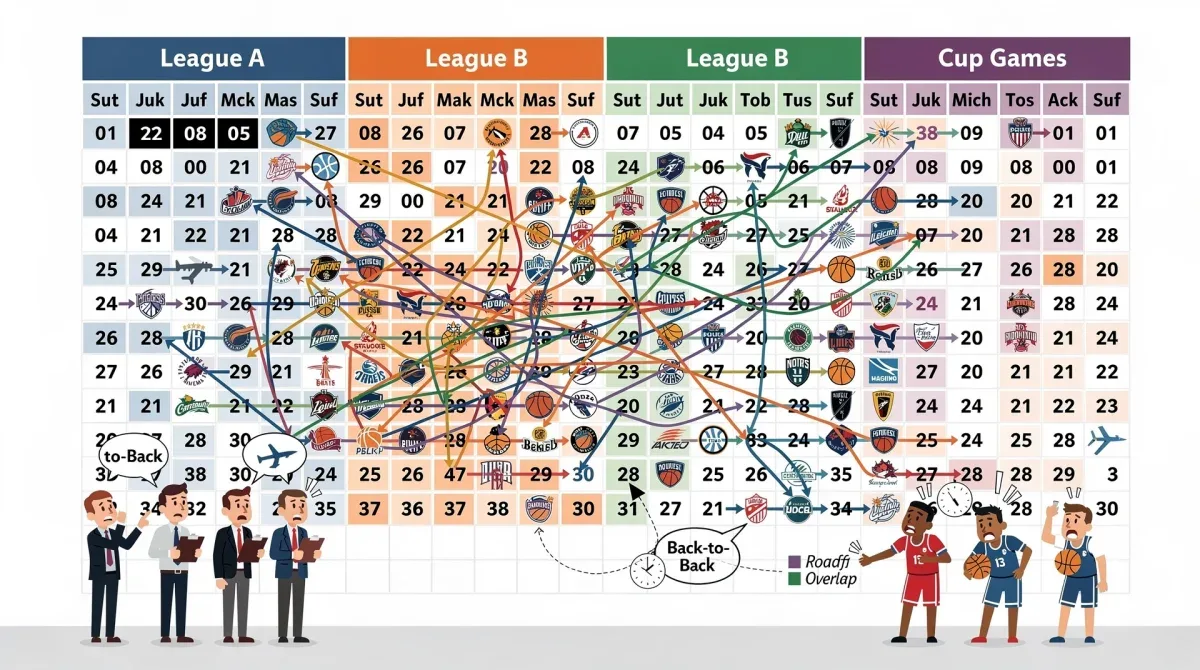
One prominent idea involves distinct windows for club and national team competitions. This model would designate specific periods in the season solely for EuroLeague and FIBA Champions League games, followed by dedicated windows for national team qualifiers and tournaments. This approach aims to eliminate direct clashes, allowing players to fulfill all their commitments without conflict.
Integrated calendar approaches
Another framework considers a more integrated approach, where the two competitions might run concurrently but with carefully coordinated scheduling to avoid overlaps on specific match days. This would require close cooperation between EuroLeague and FIBA, potentially involving a shared scheduling committee to manage the calendar dynamically. The challenge here lies in the sheer volume of games and the logistical complexities involved.
- Dedicated Windows: Separate blocks of time for club and national team games.
- Coordinated Concurrent Play: Leagues run simultaneously but with strategic scheduling to prevent direct conflicts.
- Reduced Game Load: Overall reduction in the number of games to alleviate player burden.
Furthermore, discussions may include proposals for a single, overarching European club competition or a tiered system where promotion and relegation between a EuroLeague and a FIBA-led second tier could be introduced. Such radical changes would require significant structural overhauls and a high degree of consensus among all parties. Regardless of the chosen model, the emphasis remains on creating a sustainable and equitable calendar for the future.
Expected impacts on clubs, players, and fans
The outcome of the EuroLeague vs. FIBA Champions League: Analyzing the 2026 Schedule Consolidation Talks will reverberate throughout the entire European basketball ecosystem, profoundly affecting clubs, players, and fans. A consolidated schedule promises numerous benefits, but also presents challenges that will need careful management.
For clubs, a unified calendar could lead to greater financial stability and predictability. With fewer scheduling conflicts, clubs can better plan their seasons, manage their rosters, and potentially reduce operational costs associated with player travel and injury management. There's also the prospect of increased revenue through a more attractive, unified media product, drawing in more sponsors and broadcasters.
Benefits for players and fans
Players stand to gain significantly from reduced physical and mental strain. A more rational schedule would mean fewer games, more rest, and better opportunities for recovery, leading to improved performance and extended careers. The clarity of a single calendar would also simplify their professional lives, reducing the stress of conflicting commitments.
- Enhanced Fan Experience: Clearer schedules, higher quality games, and less confusion for supporters.
- Improved Player Health: Reduced workload and better recovery times leading to fewer injuries.
- Increased Commercial Value: A unified product is more appealing to sponsors and media partners.
For fans, the consolidation could herald a golden era of European basketball. A streamlined schedule would mean fewer difficult choices between watching their favorite club and supporting their national team. Higher quality games, with star players consistently available, would elevate the overall spectacle and engagement. However, there might also be initial adjustments as fans adapt to a new structure, potentially with fewer games overall or changes in traditional formats. The long-term benefits, however, are expected to outweigh these initial hurdles.
Challenges and hurdles to a successful consolidation
While the potential benefits of consolidating the EuroLeague and FIBA Champions League schedules are clear, the path to achieving such an agreement is fraught with significant challenges and hurdles. The historical rivalry, divergent commercial interests, and the sheer complexity of coordinating multiple entities make this a formidable task.
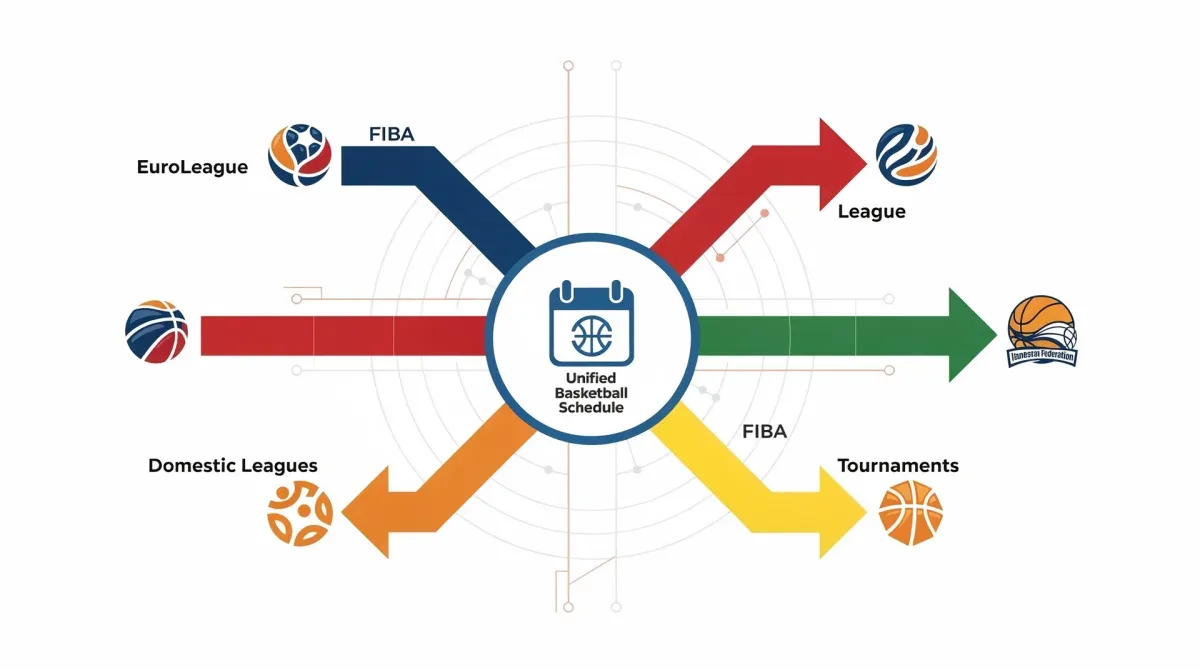
One of the primary obstacles is the commercial aspect. Both EuroLeague and FIBA Champions League have established their own revenue streams, broadcasting deals, and sponsorship agreements. Merging these financial models without disadvantaging either party, or the clubs involved, requires intricate negotiations and a willingness to compromise on potentially lucrative existing contracts. The distribution of future revenues will be a critical point of contention.
Navigating governance and power dynamics
The question of governance is equally challenging. Who will oversee the new consolidated schedule? Will it be a joint committee, or will one entity assume a more dominant role? Reconciling the independent, club-led model of the EuroLeague with FIBA's broader, federation-centric approach demands a fundamental shift in power dynamics. This often involves sacrificing a degree of autonomy for the greater good of the sport, which can be a difficult pill for powerful organizations to swallow.
- Commercial Agreements: Reconciling existing broadcasting and sponsorship deals is complex.
- Governance Structure: Deciding on a unified leadership model for the consolidated calendar.
- Club Buy-in: Ensuring all participating clubs agree to the terms and structure of the new system.
Furthermore, securing the buy-in from all 18 EuroLeague clubs, along with the numerous national federations and clubs participating in the FIBA Champions League, is a monumental task. Each entity has unique circumstances and priorities that must be considered. Overcoming these entrenched interests and fostering a spirit of genuine collaboration will be the ultimate test of the consolidation talks. The success of the 2026 consolidation hinges on the ability of all parties to find common ground and prioritize the long-term health and growth of European basketball over individual agendas.
| Key Point | Brief Description |
|---|---|
| Historical Rivalry | EuroLeague and FIBA BCL have historically competed, leading to scheduling conflicts and divided loyalties. |
| 2026 Consolidation Drive | Driven by player welfare, club stability, and commercial growth, aiming for a unified schedule by 2026. |
| Stakeholder Interests | EuroLeague clubs, FIBA, national federations, and player associations each have distinct concerns. |
| Challenges Ahead | Overcoming commercial disparities, governance disputes, and achieving universal club buy-in are major hurdles. |
Frequently asked questions about EuroLeague and FIBA schedule talks
Why is schedule consolidation between EuroLeague and FIBA Champions League necessary?▼Consolidation is crucial to address player fatigue, reduce scheduling conflicts between club and national team games, and enhance the overall commercial appeal of European basketball. It aims to create a more coherent and sustainable calendar for all stakeholders involved in the sport.
What are the main obstacles to achieving a unified schedule?▼Key obstacles include resolving commercial disagreements, establishing a unified governance structure, and securing consensus among all EuroLeague clubs, national federations, and FIBA. Historical rivalries and differing strategic visions also present significant hurdles to overcome.
How will players benefit from a consolidated schedule?▼Players will benefit from reduced workloads, fewer travel demands, and more dedicated rest periods, leading to improved physical and mental well-being. This can result in better on-court performance, extended careers, and a clearer pathway for national team participation without club conflicts.
What are the potential impacts on European basketball fans?▼Fans can expect a more streamlined viewing experience with fewer overlapping games and consistent availability of star players. A unified product could also lead to higher quality basketball and increased engagement, although there might be initial adjustments to new formats or schedules.
Why is 2026 a significant year for these consolidation talks?▼The year 2026 is significant because it aligns with the expiration of several key agreements and contracts, providing a natural window for implementing a new, unified schedule. This timing allows for strategic planning and negotiation to reshape the future of European club basketball effectively.
Conclusion
The ongoing EuroLeague vs. FIBA Champions League: Analyzing the 2026 Schedule Consolidation Talks represent a critical juncture for European basketball. While the path to a unified calendar is undoubtedly challenging, fraught with historical rivalries and complex stakeholder interests, the potential rewards are immense. A successful consolidation promises a healthier, more sustainable, and commercially vibrant future for the sport, benefiting players, clubs, and fans alike. The outcome will not only streamline schedules but also foster a stronger, more cohesive identity for basketball across the continent, setting a new standard for elite competition and cooperation.
