Goalkeeper Distribution Metrics: Comparing 8 Elite Number Ones
Analyzing goalkeeper distribution metrics provides critical insights into how eight international number ones influence their teams' play during high-stakes continental knockout stages, showcasing varied tactical roles beyond shot-stopping.
Have you ever considered the true impact of a goalkeeper beyond spectacular saves? In modern football, a goalkeeper's ability to distribute the ball effectively is as crucial as their shot-stopping prowess. This article delves into goalkeeper distribution metrics, comparing eight international number ones during continental knockout stages to uncover how their passing choices shape their teams' strategies and overall performance.
Understanding Goalkeeper Distribution Metrics
Goalkeeper distribution has evolved significantly, transitioning from simply clearing the ball to initiating complex attacking sequences. Modern analytics offer a deeper look into these actions, categorizing distributions by length, accuracy, and even the immediate outcome. This nuanced understanding allows us to appreciate the strategic decisions made under pressure.
The role of the goalkeeper as the first attacker is paramount. Their choices directly influence possession retention, build-up play, and the speed of transitions. Analyzing these metrics helps identify distinct playing styles and their suitability for different team philosophies, especially in the high-stakes environment of knockout football.
Key Distribution Categories
To accurately compare goalkeepers, we break down distribution into several key categories. These categories provide a framework for evaluating their impact beyond simple pass completion rates.
- Short Distributions: Passes under 30 yards, typically to defenders or midfielders in close proximity, emphasizing possession and build-up from the back.
- Medium Distributions: Passes between 30 and 50 yards, often aimed at bypassing the first line of press or finding wing-backs in advanced positions.
- Long Distributions: Passes over 50 yards, usually direct balls to forwards or wide players, designed for quick attacks or relieving pressure.
- Distribution Accuracy: The percentage of successful passes, irrespective of length, reaching an intended teammate.
These categories are essential for a comprehensive analysis, allowing us to see if a goalkeeper prioritizes safety and possession, or if they are more inclined to launch incisive, riskier passes that could lead to immediate attacking opportunities.
Ultimately, a goalkeeper's distribution metrics reflect their understanding of the game and their team's tactical approach. In knockout stages, where every decision is magnified, these choices can be the difference between advancing and elimination. It's not just about getting rid of the ball; it's about purposefully moving it to gain an advantage.

The Elite Eight: Goalkeepers Under the Microscope
Our analysis focuses on eight prominent international goalkeepers who have consistently performed at the highest level in continental knockout competitions. These players represent various clubs and national teams, each bringing a unique distribution style shaped by their team's philosophy and individual strengths.
The selection includes goalkeepers known for their exceptional footwork, tactical intelligence, and composure under pressure. From shot-stoppers who prefer short, intricate build-up to those who can launch pinpoint long balls, this group offers a rich dataset for comparison. Their performances in high-pressure scenarios provide a true test of their distribution capabilities.
Goalkeeper Profiles and Distribution Tendencies
Each goalkeeper possesses a distinct profile influencing their distribution choices. Some are integral to their team's possession-based play, while others are tasked with quickly transitioning from defense to attack.
- Alisson Becker (Brazil/Liverpool): Known for precise short and medium passes, rarely resorting to long clearances unless under extreme pressure, favoring build-up.
- Manuel Neuer (Germany/Bayern Munich): A pioneer of the 'sweeper-keeper' role, his distributions are often aggressive, seeking to initiate attacks quickly from deep positions.
- Ederson (Brazil/Manchester City): Renowned for his exceptional long-range passing accuracy, capable of launching direct attacks with incredible precision.
- Thibaut Courtois (Belgium/Real Madrid): Balances short passes with intelligent long distributions, often finding wide players or forwards to relieve pressure.
These tendencies are not merely personal preferences but are deeply embedded in their teams' tactical blueprints. A goalkeeper like Ederson, for instance, thrives in a system that values rapid transitions and direct attacking play, whereas Alisson fits perfectly into a team that emphasizes patient build-up and possession.
Examining these individual profiles helps us understand the context behind their numbers. A low percentage of long passes might indicate a team's commitment to playing out from the back, rather than a lack of ability from the goalkeeper. Conversely, a high volume of accurate long balls points to a tactical directive to exploit space quickly.
Short vs. Long Distributions: Tactical Implications
The choice between short and long distributions is a fundamental tactical decision, reflecting a team's overall strategy and their response to opponent pressing. In continental knockout stages, where margins are slim, this decision can dictate the flow of the game and create or relieve pressure.
Teams that prioritize possession and controlled build-up often instruct their goalkeepers to favor short passes to nearby defenders or midfielders. This approach aims to draw the opponent higher up the pitch, creating space in more advanced areas for subsequent attacks. It requires exceptional technical skill from the goalkeeper and composure from the outfield players.
Analyzing Short Pass Tendencies
Goalkeepers like Alisson and Ederson, despite their different overall styles, exhibit high short pass completion rates. This is primarily due to their teams' philosophy of playing out from the back. Their ability to calmly find teammates under pressure is crucial for maintaining possession and dictating tempo.
- Possession Retention: Short passes minimize the risk of losing the ball in dangerous areas, allowing the team to control the game.
- Build-Up Play: Initiates structured attacking moves, drawing opponents out of position.
- Press Resistance: Helps a team navigate high presses, creating numerical advantages.
However, an overreliance on short passes can be risky if the outfield players lack the technical ability or tactical awareness to handle intense pressing. A misplaced short pass in the defensive third can lead directly to a goal-scoring opportunity for the opposition, making the goalkeeper's decision-making paramount.
The Art of the Long Ball: Creating Attacking Opportunities
While short passes are vital for possession, the long ball remains a powerful weapon, especially when executed with precision. A well-placed long distribution can bypass an entire midfield, turning defense into attack in a matter of seconds. This strategy is particularly effective against teams that press high or leave space behind their defensive lines.
Goalkeepers who excel at long distributions, such as Ederson and Neuer, can fundamentally change the dynamic of a game. Their ability to pick out a forward or a winger with a precise kick creates immediate threats and can relieve pressure on their defense during periods of intense opposition attack.
Impact of Long Pass Accuracy
The effectiveness of a long ball is heavily dependent on its accuracy. A long pass that goes astray can quickly turn into a turnover, putting the team back under pressure. Therefore, goalkeepers with high long pass accuracy are highly valued.
- Direct Attacks: Launches quick counter-attacks, exploiting space left by an advancing opponent.
- Bypassing Pressure: Effectively circumvents a high press, moving the ball into less congested areas.
- Relieving Pressure: Clears the ball into safe zones or towards attacking players when the defense is under siege.
The tactical decision to use long distributions is often a response to the opponent's setup or a way to introduce unpredictability into the team's play. It requires not only a strong kick but also excellent vision and understanding of where teammates will be and where spaces will open up. The best goalkeepers can switch between short and long options seamlessly, keeping opponents guessing.
In knockout matches, the ability to switch play quickly with a long pass can be a game-changer, catching opponents off guard and creating crucial scoring chances. This versatility in distribution is a hallmark of elite goalkeepers.
Distribution Accuracy and Success Rates
Beyond the length of the pass, the accuracy and ultimate success of a distribution are paramount. A pass is only truly effective if it reaches a teammate and allows them to maintain possession or initiate a productive play. Analyzing distribution accuracy provides a clearer picture of a goalkeeper's reliability under pressure.
High distribution accuracy across all lengths indicates a goalkeeper's technical proficiency and decision-making quality. It suggests they are consistently making the right choices and executing them precisely, minimizing turnovers and maximizing their team's offensive potential.
Factors Influencing Accuracy
Several factors contribute to a goalkeeper's distribution accuracy, especially in the intense environment of continental knockout stages. Pressure from opposing forwards, the condition of the pitch, and the tactical positioning of teammates all play a role.
- Opponent Pressing: High defensive pressure significantly impacts decision-making and execution, often forcing rushed or less accurate passes.
- Player Positioning: The movement and availability of outfield players provide targets and influence the goalkeeper's passing lanes.
- Technical Ability: Fundamental kicking and throwing technique are crucial for consistent accuracy.
Goalkeepers with higher accuracy rates tend to be more composed and possess superior vision, allowing them to identify the best passing options even when under duress. This reliability is invaluable for teams aiming to control possession and build attacks methodically.
The success rate of distributions, which often considers whether the receiving player maintains possession or progresses the play, offers an even deeper insight. A high success rate means the goalkeeper is not just completing passes, but completing passes that contribute positively to the team's objectives.
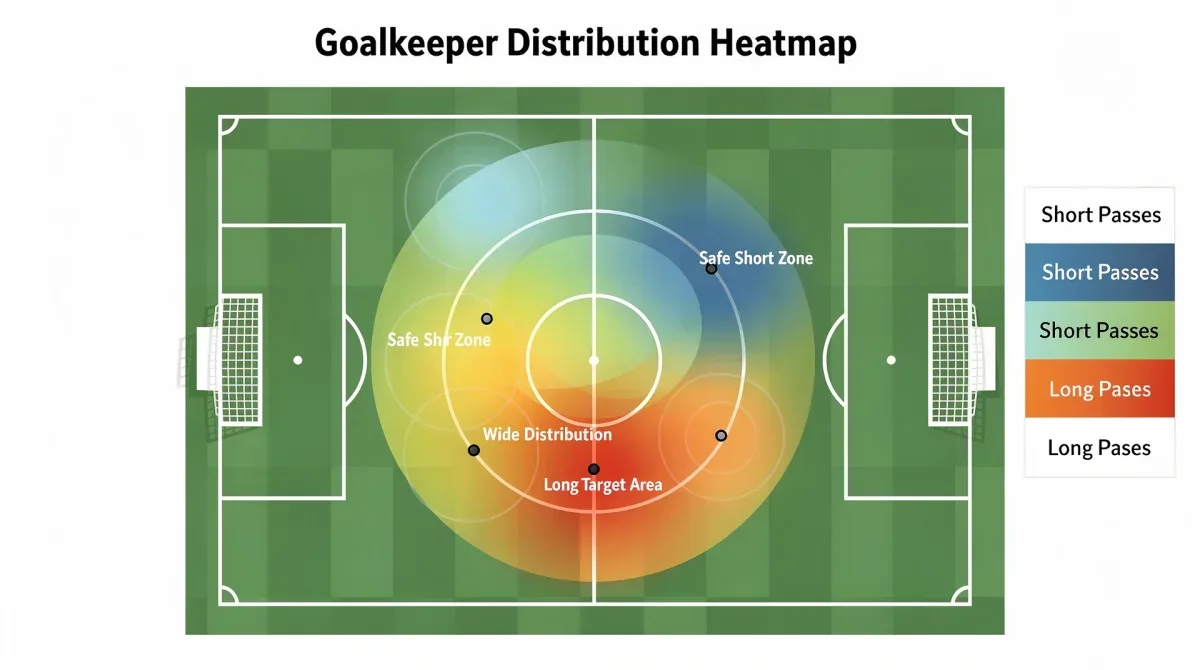
Impact on Team Possession and Offensive Build-Up
A goalkeeper's distribution choices have a direct and significant impact on their team's overall possession statistics and offensive build-up play. In modern football, where possession is often seen as a key indicator of control, the goalkeeper's role in initiating and maintaining possession from the back is crucial.
Goalkeepers who are adept at playing short, accurate passes allow their team to retain possession deep in their own half, inviting the opponent to press and creating space higher up the pitch. This methodical build-up is a hallmark of many top European clubs, enabling them to dictate the tempo and control the game.
Goalkeepers as Playmakers
Some goalkeepers effectively act as deep-lying playmakers, initiating attacks with their precise passing. Their ability to spot and exploit gaps in the opponent's press is a valuable asset.
- Initiating Attacks: Their passes can directly lead to goal-scoring opportunities by finding players in advanced positions.
- Controlling Tempo: By varying the speed and length of their distributions, goalkeepers can influence the pace of the game.
- Building Confidence: Reliable distribution instills confidence in outfield players, encouraging them to maintain possession and play out from the back.
The decision-making process for a goalkeeper in a possession-based system is complex. They must weigh the risks and rewards of each pass, considering the positioning of both teammates and opponents. A well-executed distribution can unlock an opponent's defense, while a poor one can lead to immediate danger.
Conversely, goalkeepers who primarily opt for long distributions can still contribute significantly to offensive build-up, especially if their team employs a more direct style of play. Their accurate long balls can bypass the midfield entirely, allowing forwards to challenge for aerial duels or run onto through balls, creating immediate attacking threats.
Case Studies: Contrasting Distribution Styles
To truly appreciate the nuances of goalkeeper distribution metrics, it's beneficial to look at specific case studies that highlight contrasting styles. Examining how different goalkeepers adapt their distribution in high-stakes continental knockout matches reveals much about their individual skill sets and their team's tactical flexibility.
Consider the difference between Alisson Becker and Ederson, both Brazilian international goalkeepers, yet with distinct distribution profiles. Alisson, at Liverpool, often prioritizes shorter, safer passes to initiate build-up play, aligning with Jurgen Klopp's emphasis on control and patient possession before unleashing rapid attacks. His distribution tends to be calculated, aiming to draw opponents out.
Alisson vs. Ederson: A Tale of Two Approaches
While both are world-class, their distribution tendencies reflect their club's tactical demands. Ederson, playing for Manchester City under Pep Guardiola, demonstrates an exceptional ability to execute long, precise passes that can instantly turn defense into attack, often finding wingers or strikers in advanced positions. His long pass accuracy is almost unparalleled.
- Alisson's Style: Focus on short to medium passes, high possession retention, integral to defensive build-up, less frequent long clearances.
- Ederson's Style: Master of long, accurate passes, direct attacking threat, capable of bypassing midfield, often initiating rapid transitions.
- Tactical Fit: Alisson suits Liverpool's controlled build-up; Ederson is perfect for City's quick, incisive attacks.
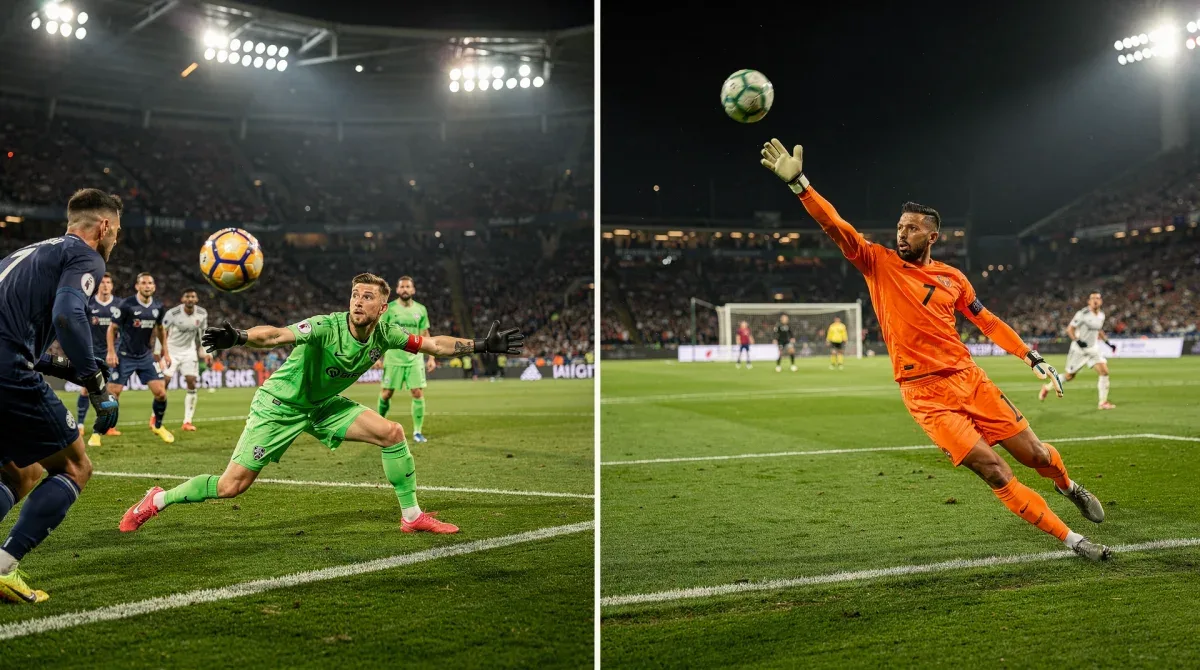
Another fascinating comparison involves Manuel Neuer and Thibaut Courtois. Neuer, the quintessential sweeper-keeper, often takes risks with his distributions, venturing far outside his box to intercept and immediately launch counter-attacks. His passes are often aggressive and forward-thinking, reflecting Bayern Munich's dominant, high-pressing style.
Courtois, on the other hand, while capable of excellent long passes, tends to be more conservative, balancing short passes with intelligent clearances that relieve pressure and find wide players. His approach at Real Madrid often involves a more measured build-up, with long passes used strategically to alleviate defensive pressure or quickly switch play when opportunities arise.
These case studies underscore that there is no single 'best' distribution style. Instead, the most effective goalkeepers are those whose distribution perfectly complements their team's tactical philosophy, allowing them to maximize their impact in crucial knockout games.
| Key Distribution Metric | Brief Description |
|---|---|
| Short Pass Percentage | Indicates preference for possession-based build-up from the back, minimizing risk. |
| Long Pass Accuracy | Measures effectiveness in launching direct attacks or bypassing opponent's press. |
| Distribution Success Rate | Overall percentage of completed passes that lead to maintained possession or positive play. |
| Progressive Passes | Passes that move the ball significantly closer to the opponent's goal, regardless of length. |
Frequently Asked Questions About Goalkeeper Distribution
Why are goalkeeper distribution metrics becoming so important in modern soccer?▼Goalkeeper distribution metrics are crucial because modern soccer demands goalkeepers to be the first attackers. Their ability to accurately distribute the ball, whether short or long, directly impacts a team's build-up play, possession retention, and ability to launch quick counter-attacks, making them integral to offensive strategy.
How do short and long distributions differ in their tactical implications?▼Short distributions prioritize possession and patient build-up, drawing opponents to create space. Long distributions, conversely, aim to bypass the midfield quickly, launching direct attacks or relieving defensive pressure. The choice depends on the team's philosophy and the opponent's pressing strategy.
Which goalkeepers are known for exceptional long-range distribution accuracy?▼Ederson (Manchester City) is widely recognized for his exceptional long-range distribution accuracy, capable of launching precise, game-changing passes. Manuel Neuer (Bayern Munich) also excels in this area, often initiating aggressive counter-attacks from deep positions with his powerful and accurate kicks.
Do continental knockout stages affect a goalkeeper's distribution style?▼Yes, continental knockout stages often lead to more cautious or more direct distribution styles due to increased pressure. Goalkeepers might prioritize safer short passes to maintain possession or, conversely, opt for more long balls to quickly relieve pressure and exploit any defensive gaps created by aggressive opponents.
What is a 'sweeper-keeper' and how does it relate to distribution?▼A 'sweeper-keeper' is a goalkeeper who actively participates in defensive play outside their penalty area, often intercepting through balls. This role heavily influences distribution, as they are frequently involved in initiating attacks from advanced positions, often with aggressive and forward-thinking passes, much like an outfield player.
Conclusion
The analysis of goalkeeper distribution metrics among eight international number ones across continental knockout stages reveals a fascinating evolution in the role of the modern goalkeeper. Far from being mere shot-stoppers, these elite athletes are integral to their teams' tactical strategies, influencing possession, build-up play, and offensive transitions with every pass. Their choices, whether favoring short, precise exchanges or launching ambitious long balls, are not arbitrary but are deeply embedded in their team's philosophy and their individual strengths. Understanding these metrics provides a richer appreciation for the tactical depth of modern football and the multifaceted contributions of its most prominent goalkeepers.
