Call of Duty League 2026: Hardpoint Shifts Boost Hold Times
The Call of Duty League 2026 season witnessed a pivotal shift in competitive dynamics as strategic Hardpoint rotation adjustments led to an average 22-second increase in team hold times, fundamentally reshaping gameplay.
The Hardpoint rotation shifts introduced in the Call of Duty League 2026 season have sparked considerable discussion and tactical re-evaluation among professional teams and analysts alike. This season has undeniably marked a significant evolution in competitive play, with noticeable changes in how teams approach the objective.
Understanding the Hardpoint Rotation Evolution
The Call of Duty League (CDL) has always been a crucible for tactical innovation, and the 2026 season has proven no different, particularly concerning Hardpoint. The subtle yet impactful adjustments to Hardpoint rotations have forced teams to completely rethink their setup, pushes, and defensive strategies, leading to a richer, more complex competitive landscape.
Historically, Hardpoint rotations were often predictable, allowing for established strategies to dominate. However, the 2026 season's changes aimed to disrupt this predictability, fostering a more dynamic and less static gameplay experience. These shifts weren't just about moving the objective; they were about altering the flow of the game, forcing adaptability over rote memorization.
The Mechanics of the New Rotations
The core of the Hardpoint changes involved tweaking the exact timing and positioning of objective shifts. Instead of uniform, predictable transitions, some rotations now feature variable timers or slightly altered spawn points for the attacking or defending teams, creating moments of intense uncertainty and opportunity.
- Variable Timers: Certain Hardpoints now have rotation timers that can subtly vary by a few seconds, preventing teams from perfectly timing their objective pushes.
- Adjusted Spawn Logic: Spawn points around rotated Hardpoints have been re-evaluated, sometimes favoring the team that clears the objective faster rather than simply being closer.
- Map-Specific Tweaks: Each map received unique adjustments, ensuring no single meta could universally dominate across all competitive environments.
These mechanical alterations have had a ripple effect, impacting everything from team compositions to individual player roles. The previous season's established wisdom on Hardpoint control is now largely obsolete, replaced by a need for constant adaptation and superior in-game communication.
The evolution of Hardpoint rotations in CDL 2026 represents a deliberate effort to enhance strategic depth and combat stale gameplay. By introducing elements of unpredictability and rewarding dynamic decision-making, the league has successfully invigorated one of its most iconic game modes, setting a new standard for competitive Call of Duty.
The 22-Second Increase: A Deep Dive into Hold Times
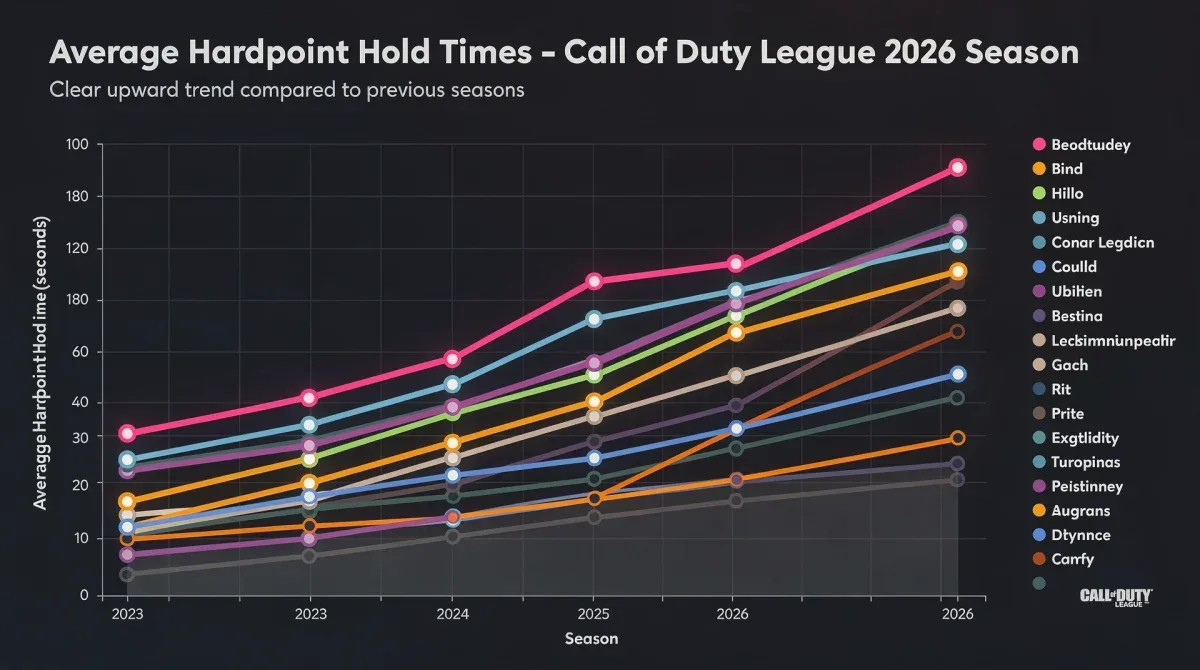
The most striking statistic emerging from the 2026 CDL season's Hardpoint changes is the average 22-second increase in hold times. This isn't merely a minor adjustment; it signifies a fundamental shift in how teams are able to secure and maintain control of objectives. Such a substantial increase points to deeper tactical and mechanical changes at play.

This 22-second surge suggests that teams are either becoming significantly more efficient at establishing initial control or are far more resilient in defending against pushes. It also implies that the new rotation mechanics are creating more defensible positions or disrupting offensive pushes more effectively, leading to extended periods of dominance for the holding team.
Factors Contributing to Extended Holds
Several interconnected factors appear to contribute to these extended hold times. These include improved team coordination, better utilization of power positions, and a renewed emphasis on early rotation. Teams that master these elements are consistently demonstrating longer Hardpoint control.
- Enhanced Team Synchronization: Teams are showing unprecedented levels of coordinated entry and defense, ensuring all angles are covered and re-takes are swiftly executed.
- Strategic Power Position Utilization: Players are more effectively using map geometry and elevated positions to control key sightlines, making it harder for opponents to break setup.
- Proactive Rotation Management: The most successful teams are initiating rotations earlier, sometimes sacrificing a few seconds on the current Hardpoint to secure a strong setup on the next.
The implications of this 22-second increase are profound. Matches are becoming more drawn out, requiring greater consistency and mental fortitude from players. Furthermore, the increased hold times mean that a single dominant Hardpoint setup can now yield a much larger score differential, making every rotation even more critical.
Ultimately, the 22-second increase in Hardpoint hold times is a testament to the effectiveness of the CDL's strategic adjustments. It has not only made matches more engaging but has also raised the skill ceiling for competitive play, demanding a higher degree of tactical acumen and execution from every team.
Tactical Adjustments and Team Strategies
The new Hardpoint rotation shifts have necessitated a complete overhaul of tactical adjustments and team strategies across the Call of Duty League. Teams can no longer rely on outdated playbooks; success in 2026 demands innovation, adaptability, and a deep understanding of the nuanced changes. This period of strategic flux has separated the truly adaptable teams from those struggling to keep pace.
From initial spawns to late-game pushes, every decision now carries amplified weight. Teams are experimenting with new roles, unconventional loadouts, and aggressive early rotations to gain even a slight advantage. The meta is constantly evolving, with each tournament revealing new layers of strategic depth.
The Role of Aggression Versus Defense
One of the most debated aspects of the new meta is the balance between aggressive pushes and disciplined defense. While extended hold times suggest a defensive advantage, teams that can effectively break a strong hold often gain significant momentum.
- Aggressive Flanks: Teams are employing more sophisticated flanking routes to disrupt established defenses, often sacrificing a player or two for a high-impact break.
- Layered Defense: Defending teams are adopting a layered approach, with players positioned to cover multiple entry points and provide cross-fire, making it harder to dismantle their setup.
- Counter-Rotation Plays: Some teams are developing specific strategies to counter opponents' early rotations, attempting to pinch them between Hardpoints.
The tactical adjustments extend beyond just individual plays; they permeate team communication and leadership. Shot callers are under immense pressure to make split-second decisions that can dictate the flow of an entire round. The ability to read the opponent's strategy and adapt on the fly has become paramount.
In summary, the 2026 season has become a masterclass in strategic adaptation. The Hardpoint rotation shifts have not only increased hold times but have also ignited a tactical arms race, pushing teams to their limits in pursuit of competitive dominance.
Player Adaptability and Individual Impact
Beyond team-wide strategies, the Call of Duty League 2026 season has profoundly highlighted the importance of individual player adaptability and impact, particularly in navigating the new Hardpoint rotation shifts. Players who can quickly adjust their playstyle, aim, and decision-making on the fly are proving invaluable, often being the linchpins in securing or breaking critical objective holds.
The increased hold times mean that individual duels within the Hardpoint are more frequent and carry greater significance. A single player holding a key lane for an extra few seconds can buy enough time for teammates to rotate or re-establish a defensive perimeter, directly contributing to those extended hold durations.
Key Attributes for Success in the New Meta
Certain player attributes have become even more critical for success in the 2026 Hardpoint meta. These go beyond raw gun skill and encompass a deeper understanding of game flow, map awareness, and clutch factor.
- Exceptional Map Awareness: Players who can predict enemy movements and rotations based on sound cues and mini-map information are consistently outmaneuvering opponents.
- Clutch Factor: The ability to perform under pressure in high-stakes situations, often in 1vX scenarios, is crucial for maintaining or breaking extended holds.
- Versatility: Players capable of effectively wielding multiple weapon classes and adapting their role mid-game provide invaluable flexibility to their team's strategy.
The individual impact is also evident in how players are utilizing utility, such as grenades and trophies. A perfectly timed stun or smoke can completely negate an enemy push, while a well-placed trophy system can prolong a hold against a barrage of tactical equipment. The micro-decisions of each player are now amplified in their effect on overall hold times.
Ultimately, the 2026 Hardpoint meta is a demanding test of both collective strategy and individual prowess. Players who demonstrate superior adaptability and consistent high-impact plays are not just surviving but thriving in this evolving competitive environment, directly influencing the observed increase in hold times.
Impact on Team Rosters and Coaching Staff
The significant shifts in Hardpoint dynamics in the Call of Duty League 2026 season have naturally had a profound impact on team rosters and coaching staff decisions. Teams are not just looking for raw talent but for players who can integrate seamlessly into complex new strategies and coaches who can dissect and adapt to an ever-evolving meta. This has led to a re-evaluation of what constitutes a 'perfect' roster.
Coaching staffs are working overtime, analyzing every rotation, every hold, and every break. The data analytics departments within organizations have become more crucial than ever, providing insights into optimal routes, power positions, and spawn manipulation tactics that were less critical in previous, more predictable seasons.
Roster Construction in the New Era
Building a roster for the 2026 season requires a different philosophy. Teams are prioritizing versatility, communication, and a strong understanding of game theory over individual flashy plays. The synergy between players, especially in critical Hardpoint rotations, is paramount.
- Strategic Role Players: Teams are valuing players who excel in specific, often less glamorous, roles like anchor or support, crucial for maintaining long holds.
- Communication Specialists: Players with exceptional in-game communication skills, able to call out enemy positions and coordinate rotations effectively, are highly sought after.
- Adaptable Flex Players: The ability to switch roles or weapon classes to counter specific enemy strategies is a key trait for new recruits.
Coaching staff responsibilities have also expanded. They are now tasked with not only strategizing but also with fostering an environment of continuous learning and adaptation. This includes conducting more rigorous VOD reviews, running specialized drills for rotation efficiency, and even consulting with external game theory experts to gain an edge.
In essence, the Hardpoint rotation shifts have reshaped the entire organizational structure around CDL teams. From the players on the field to the analysts behind the scenes, everyone is operating under a new paradigm, striving to master the intricacies of the 22-second hold time increase.
Looking Ahead: Future Implications and Meta Predictions
As the Call of Duty League 2026 season progresses and teams continue to grapple with the Hardpoint rotation shifts, the future implications for competitive Call of Duty are vast and fascinating. The 22-second increase in hold times is not merely a transient statistic; it represents a foundational change that will likely influence subsequent seasons and game development. Predicting the long-term meta is challenging, but certain trends are already emerging.
One major implication is the potential for even greater strategic depth. As teams refine their understanding of the current rotations, game developers might introduce further layers of complexity to keep the competitive scene fresh. This could involve more dynamic map elements or objective variations that respond to player actions.
Anticipated Meta Shifts
The current meta, heavily influenced by extended Hardpoint holds, is likely to continue evolving. We can anticipate several key shifts as teams become more proficient at exploiting the new mechanics.
- Emphasis on Early Engagements: Teams may prioritize winning early gunfights and securing map control even before a Hardpoint rotates, to establish dominant setups.
- Specialized Loadouts: Expect to see more highly specialized loadouts tailored for specific Hardpoint defenses or aggressive breaks, moving away from more generalized weapon choices.
- Data-Driven Decisions: The reliance on advanced analytics will only grow, with teams leveraging data to identify even minute advantages in rotation timing and player positioning.
Furthermore, the increased hold times could lead to a greater premium on individual player clutch potential. When a Hardpoint hold stretches for nearly a minute, the ability of a single player to win a crucial gunfight or execute a perfect re-take becomes incredibly valuable. This might shift player recruitment towards those with proven clutch records.
In conclusion, the Hardpoint rotation shifts of the CDL 2026 season have not only redefined the present but have also laid the groundwork for the future of competitive Call of Duty. The observed increase in hold times by 22 seconds is a clear indicator of a more strategically demanding and intricately balanced game mode, promising exciting developments for seasons to come.
| Key Aspect | Brief Description |
|---|---|
| Hardpoint Rotation Shifts | New mechanics in CDL 2026 altered objective timing and positioning, increasing strategic complexity. |
| 22-Second Hold Time Increase | Average increase in objective control duration, indicating stronger defense and better rotations. |
| Tactical Overhaul | Teams redesigned strategies, prioritizing early rotations, layered defense, and coordinated pushes. |
| Player Adaptability | Individual skill in map awareness, clutch plays, and versatility became even more crucial for success. |
Frequently asked questions about CDL 2026 Hardpoint
What exactly are the Hardpoint rotation shifts in CDL 2026?▼The Hardpoint rotation shifts in the Call of Duty League 2026 season refer to strategic adjustments made to the timing and location of objective transitions on various maps. These changes introduce more variability and unpredictability, aiming to create a more dynamic competitive environment and challenge established team strategies.
How did these shifts lead to a 22-second increase in hold times?▼The 22-second increase in hold times is attributed to teams adapting their strategies to the new rotations. This includes more effective early rotations, better utilization of power positions for defense, and improved team synchronization, making it harder for opposing teams to break established Hardpoint setups.
Which teams have benefited most from the new Hardpoint meta?▼Teams demonstrating superior adaptability, strong in-game communication, and a proactive approach to early rotations have generally benefited most. These teams quickly integrated the new Hardpoint dynamics into their playbooks, showcasing consistent longer hold times and better overall objective control throughout the season.
Will these Hardpoint changes be permanent for future CDL seasons?▼While specific changes might be tweaked, the underlying philosophy of dynamic and less predictable Hardpoint rotations is likely to influence future CDL seasons. The positive impact on strategic depth and viewer engagement suggests that the league will continue to explore ways to evolve competitive play, building on the success of the 2026 adjustments.
How does this affect individual player roles and responsibilities?▼Individual player roles have become more fluid and demanding. Players now require heightened map awareness, exceptional clutch potential, and versatility to adapt to rapidly changing situations within extended Hardpoint holds. The ability to perform under pressure and make quick, impactful decisions is more critical than ever.
Conclusion
The Call of Duty League 2026 season has undeniably marked a pivotal moment in competitive esports, largely driven by the strategic Hardpoint rotation shifts. The observed average increase of 22 seconds in hold times is not merely a statistical anomaly but a clear indicator of a deeper evolution in team strategies, player adaptability, and the overall tactical landscape of Call of Duty. This season has underscored the importance of continuous innovation, pushing teams and players to new heights of strategic acumen and execution, ultimately enriching the viewing experience and solidifying the CDL's status as a premier esports league.
