La Liga's 70% Spending Cap: Summer Transfer Threat
La Liga's stringent 70% financial fair play spending cap directly threatens summer transfer activity by severely limiting clubs' ability to sign new players and manage their wage bills effectively.
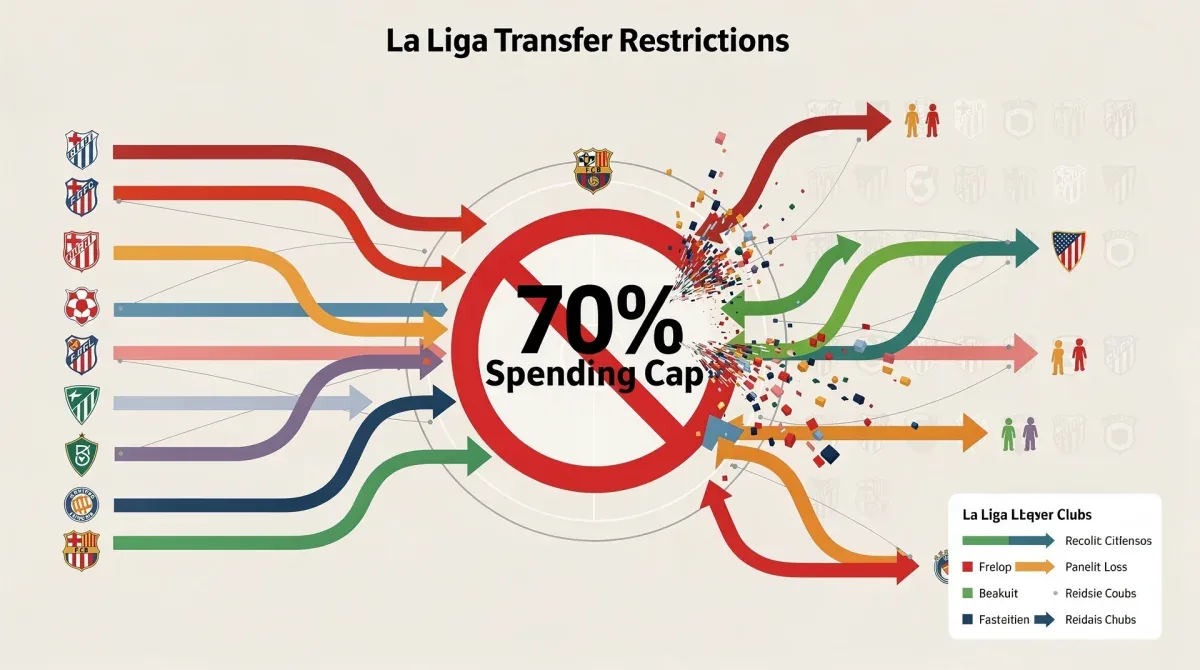
The summer transfer window is a period of immense anticipation for football fans, a time when dreams are built and squads are reshaped. However, for clubs in Spain's top flight, the excitement is often tempered by the rigid financial realities imposed by La Liga. Specifically, the league's strict La Liga spending cap, which dictates that clubs can spend no more than 70% of their projected revenue on player salaries and transfer fees, is profoundly threatening summer transfer activity. This regulation, while designed to foster financial stability, creates a complex landscape where even the biggest clubs must navigate a tightrope of fiscal prudence, often leading to frustrating limitations in the pursuit of top talent.
Understanding La Liga's Financial Fair Play Regulations
La Liga's financial fair play (FFP) rules are among the most stringent in European football, setting a high bar for fiscal responsibility. Unlike UEFA's FFP, which primarily focuses on break-even requirements over a three-year period, La Liga's regulations are far more proactive and granular, impacting clubs' operational budgets on an annual basis. These rules, implemented by Javier Tebas, aim to prevent clubs from spending beyond their means, thereby avoiding the financial crises seen in other leagues and ensuring the long-term viability of Spanish football.
The cornerstone of this system is the 'limit of sports squad cost,' more commonly known as the spending cap. This cap is calculated individually for each club based on their projected revenues, including broadcasting rights, commercial income, matchday revenue, and player sales, minus non-sporting expenses and debt repayments. The remaining figure is then subject to the 70% rule for player wages and transfer amortization. This bespoke approach means that each club operates under a unique financial ceiling, directly linking their on-field ambitions to their economic performance.

The Calculation Behind the Cap
The spending cap is not a static figure; it fluctuates annually based on a club's financial health. La Liga's economic control department meticulously reviews each club's accounts, projections, and financial plans. This detailed assessment ensures that the calculated cap accurately reflects the club's capacity to spend without incurring unsustainable debt. The process is transparent, with clubs submitting their budgets and projections for approval, fostering a culture of accountability.
- Revenue Streams: Includes TV rights, sponsorship deals, ticket sales, and player transfers.
- Deductible Costs: Non-sporting expenses, administrative costs, and debt servicing.
- 70% Rule: The final spending limit is 70% of the remaining 'eligible revenue' for player salaries and transfer fees.
This rigorous methodology ensures that clubs cannot simply spend their way out of trouble by taking on more debt. Instead, they are incentivized to generate sustainable income and manage their finances responsibly. While commendable for its foresight, this strict framework presents significant hurdles for clubs aiming to compete in the highly competitive transfer market, especially during the crucial summer window when major squad overhauls are typically planned. The implications extend beyond just signing new players, affecting contract renewals and the ability to retain key talent.
Impact on Summer Transfer Activity and Club Strategies
The 70% spending cap profoundly shapes La Liga clubs' strategies in the summer transfer window. It transforms player acquisition from a simple matter of desire and negotiation into a complex financial puzzle. Clubs cannot just identify a target; they must first ensure they have sufficient 'wage room' and 'transfer amortization budget' within their cap. This often means that player sales become a prerequisite for new signings, creating a domino effect across the market.
For example, a club might need to offload high-earning players or generate significant transfer income before they can even register a new signing. This pressure can lead to clubs being forced to sell players below market value or accept less favorable terms, simply to free up space under their cap. It also means that clubs with large wage bills, particularly those who have historically spent heavily, face the most significant challenges, often finding themselves in a perpetual cycle of selling to buy.
Challenges for Top Clubs
Even giants like Real Madrid and Barcelona are not immune to these restrictions. Barcelona, in particular, has faced immense pressure due to its historical wage bill and accumulated debt, often resorting to 'economic levers' – such as selling future TV rights or merchandising income – to create temporary spending capacity. These measures, while providing short-term relief, highlight the severity of the FFP constraints and the lengths clubs must go to remain competitive.
- Selling to Buy: Clubs must often sell players to create salary space and transfer budget.
- Wage Bill Management: Constant pressure to reduce high-earning players or renegotiate contracts.
- Limited Flexibility: Restricts the ability to make opportunistic signings or respond quickly to market changes.
The cap forces clubs to be incredibly strategic, focusing on cost-effective signings, youth development, and shrewd contract negotiations. It also encourages a more disciplined approach to squad building, prioritizing long-term sustainability over short-term splashes. However, this discipline can come at the cost of immediate competitiveness, especially when vying against clubs from leagues with less restrictive financial regulations.
The Dilemma of Player Registrations and Contract Renewals
Beyond new signings, La Liga's spending cap creates a significant dilemma for player registrations and contract renewals. It's not enough to simply agree to terms with a player; the club must also have the financial capacity within their cap to register them with the league. This issue has famously led to situations where players, even those already under contract, cannot be registered if the club exceeds its limit, highlighting the immediate and tangible impact of the regulations.
Contract renewals also become a delicate balancing act. Offering a key player a new, improved contract can push a club over its spending limit, forcing difficult decisions. Clubs might have to choose between retaining a star player and making a crucial new signing, or even offloading other squad members to accommodate the new wage. This constant pressure to manage the wage bill affects squad stability and can lead to discontent among players who feel their market value isn't being reflected in their club's offer due to FFP constraints.

Impact on Squad Cohesion
The constant need to balance the books can disrupt squad cohesion. Players may feel undervalued or insecure about their future if their club is consistently struggling to meet FFP requirements. This can lead to a higher turnover of players, making it difficult for coaches to build long-term strategies and foster a stable team environment. The emphasis shifts from purely sporting considerations to an intricate blend of sporting and financial engineering.
Clubs must therefore become adept at financial planning years in advance, anticipating future revenue streams and potential player movements. This proactive approach is essential to avoid last-minute crises during the transfer window. The regulations, while promoting fiscal health, undeniably add layers of complexity and anxiety to the otherwise exciting period of squad building, creating a unique challenge for La Liga teams compared to their European counterparts.
Comparing La Liga's FFP with Other European Leagues
La Liga's 70% spending cap stands out when compared to the financial fair play regulations in other major European leagues. While UEFA imposes its own FFP rules, which all European clubs must adhere to for continental competitions, individual leagues often have their own domestic frameworks. La Liga's system is notably more restrictive and immediate in its application, creating a distinct competitive environment.
For instance, the Premier League in England operates with a different set of financial rules, primarily focusing on profitability and sustainability rules (PSR). These rules monitor clubs' losses over a three-year period, allowing for a maximum permissible loss. While still aiming for financial prudence, the Premier League's approach offers clubs more flexibility in their annual spending, as long as they remain within the overall loss limits. This difference can lead to English clubs having a greater capacity to spend big on transfers without the same immediate constraints on their wage bill, creating a significant competitive advantage in the global transfer market.
Bundesliga and Serie A Approaches
The Bundesliga in Germany and Serie A in Italy also have their own financial oversight mechanisms, but none are as granular and strict as La Liga's 70% cap. German clubs, for example, are generally known for their sound financial management, often influenced by the '50+1 rule' which mandates fan ownership and prevents external investors from holding majority stakes. This fosters a more conservative financial culture but doesn't impose a direct spending cap on wages and transfers in the same way La Liga does.
- Premier League: Focus on profitability and sustainability over three years.
- Bundesliga: Emphasizes fan ownership and general financial prudence, less direct spending caps.
- Serie A: Has introduced stricter licensing requirements and monitoring but generally offers more flexibility than La Liga's 70% rule.
This disparity in FFP regulations means La Liga clubs often operate at a disadvantage when competing for top talent. Players and agents are aware of the financial limitations, which can influence their decision-making process. The cap, while ensuring La Liga's financial health, inadvertently makes it harder for its clubs to attract and retain the very best players against competitors from less regulated leagues.
Strategies for Navigating the 70% Spending Cap
Navigating La Liga's 70% spending cap requires clubs to adopt sophisticated and multi-faceted strategies. It's no longer just about scouting talent; it's about financial engineering, shrewd negotiation, and long-term planning. Clubs must be proactive in managing their wage bills, exploring innovative revenue streams, and making strategic player sales to create the necessary financial headroom for new acquisitions.
One primary strategy involves maximizing player sales. This isn't just about offloading unwanted players, but strategically selling valuable assets at their peak to generate significant transfer income. This income not only boosts the club's overall revenue but also directly contributes to increasing their spending cap for the following season. Youth academy development also becomes paramount, as home-grown talent represents cost-effective solutions that do not incur transfer fees and often command lower initial wages.
Innovative Revenue Generation
Clubs are increasingly looking beyond traditional revenue streams. This includes expanding global commercial partnerships, leveraging digital platforms for fan engagement and monetization, and exploring new sponsorship opportunities. Diversifying income sources is crucial to increasing the overall revenue base, which in turn elevates the spending cap. Successful clubs are those that can innovate financially as much as they innovate on the pitch.
- Strategic Player Sales: Generate income to increase spending capacity.
- Youth Academy Integration: Promote cost-effective talent from within.
- Global Commercial Expansion: Seek new markets and partnerships for increased revenue.
- Wage Bill Optimization: Renegotiate contracts, manage squad size, and avoid excessive salaries.
Furthermore, clubs must become experts in contract management, ensuring that player wages are sustainable and aligned with their financial projections. This might involve performance-based incentives rather than fixed high salaries, or structuring contracts to spread the financial impact over several years. The emphasis is on efficiency and sustainability, transforming clubs into financially astute entities that can thrive within the strict regulatory framework.
Future Outlook and Potential Adjustments to the Cap
The future of La Liga's 70% spending cap remains a topic of ongoing debate and potential adjustment. While the league maintains that the strict regulations are vital for financial stability and the long-term health of its clubs, there is increasing pressure from certain quarters to introduce more flexibility, particularly in light of competition from other European leagues. The current system, while fiscally sound, can sometimes stifle ambition and make it challenging for La Liga clubs to compete for top global talent.
There have been discussions about potential modifications, such as allowing for greater investment in certain areas or adjusting the percentage itself under specific circumstances. Any changes, however, would likely be introduced cautiously, given La Liga's commitment to maintaining financial prudence. The league's leadership has consistently prioritized financial health over short-term competitive boosts, a stance that has garnered both praise and criticism.
Balancing Stability and Competitiveness
The challenge for La Liga lies in finding a balance between ensuring financial stability and fostering an environment where its clubs can remain competitively attractive on the European stage. A complete overhaul is unlikely, but incremental adjustments could be considered to address specific pain points, such as allowing for more flexibility in amortization periods for big transfers or slightly easing wage bill restrictions for clubs demonstrating consistent profitability.
Ultimately, the objective will be to evolve the FFP rules in a way that continues to safeguard clubs from financial mismanagement while also enabling them to compete effectively in an increasingly globalized and financially driven football landscape. The ongoing dialogue between La Liga and its clubs will be crucial in shaping the future of these regulations, ensuring that Spanish football remains both economically robust and sporting vibrant for years to come.
| Key Aspect | Brief Description |
|---|---|
| 70% Spending Cap | Clubs can spend a maximum of 70% of projected revenue on player salaries and transfer amortization. |
| Transfer Impact | Significantly limits new player acquisitions, often requiring player sales to create financial space. |
| Registration Issues | Clubs must have sufficient cap space to register new or renewed players with the league. |
| Strategic Necessity | Forces clubs to prioritize youth development, strategic sales, and innovative revenue generation. |
Frequently Asked Questions About La Liga's Spending Cap
What is La Liga's 70% spending cap?▼La Liga's 70% spending cap is a financial fair play regulation limiting clubs to spending no more than 70% of their projected annual revenue on player salaries and transfer fee amortizations. This rule is designed to ensure financial stability and prevent clubs from accumulating excessive debt by overspending.
How does the cap affect summer transfers?▼The cap severely restricts clubs' ability to sign new players in the summer. Often, clubs must sell existing players or significantly reduce their wage bill to create enough financial headroom to register new signings. This creates a challenging 'sell-to-buy' market dynamic.
Do all La Liga clubs have the same spending cap?▼No, the spending cap is calculated individually for each club based on their specific projected revenues and expenses. This means larger clubs with higher incomes generally have a higher cap, but they are still bound by the 70% rule relative to their own financial performance.
What are the consequences of exceeding the spending cap?▼Exceeding the cap can lead to severe consequences, including restrictions on player registrations, inability to sign new players, and even potential financial penalties. Clubs must adhere strictly to their allocated limit to avoid these sanctions and maintain league compliance.
How do La Liga's FFP rules compare to other European leagues?▼La Liga's FFP rules, particularly the 70% spending cap, are generally considered more stringent and proactive than those in other major European leagues like the Premier League or Bundesliga, which often focus more on overall profitability over longer periods rather than annual spending limits.
Conclusion
La Liga's strict 70% financial fair play spending cap is an undeniable force shaping the landscape of Spanish football, particularly during the crucial summer transfer window. While designed to foster long-term financial stability and prevent clubs from spiraling into debt, its immediate effect is a significant constraint on transfer activity. Clubs are forced into intricate financial maneuvers, prioritizing player sales, wage bill management, and innovative revenue generation to navigate these tight regulations. This unique approach sets La Liga apart from other European leagues, presenting both challenges and opportunities for its clubs as they strive for competitive excellence within a framework of rigorous fiscal prudence. The ongoing debate surrounding the cap highlights the delicate balance between financial health and sporting ambition, a dynamic that will continue to define Spanish football's strategic direction.
