Near-Post Corner Routines: 31% Higher Conversion Rates in 2026
Near-post corner routines significantly impacted football in 2026, achieving a 31% higher conversion rate by leveraging intricate player movements, precise delivery, and strategic exploitation of defensive weaknesses.
The evolution of football tactics is a constant, fascinating dance, and near-post corner routines have undeniably stolen the spotlight in 2026. This isn't just about kicking a ball into a crowded box; it's a meticulously crafted art form, transforming what was once a hopeful punt into a calculated, high-percentage scoring opportunity. Join us as we dissect the strategies that yielded a remarkable 31% higher conversion rate, reshaping how teams approach set pieces.
The Strategic Shift Towards Near-Post Dominance
For decades, the far post was often considered the prime target for corner kicks, aiming for towering headers or knock-downs. However, recent seasons, particularly in 2026, have seen a significant pivot towards the near post. This strategic adjustment is not arbitrary; it's a response to evolving defensive setups and a deeper understanding of spatial dynamics within the penalty area.
Teams have recognized that the near post offers a quicker route to goal, often catching defenders flat-footed or forcing them into awkward positions. The speed of delivery and the immediate threat it poses create a chaotic environment that skilled attackers can exploit. This shift requires a different kind of precision and a refined understanding of player movement, diverging from traditional set-piece philosophies.
Understanding the Tactical Advantages
The primary advantage lies in the reduced time for defenders to react. A well-delivered near-post ball bypasses the majority of the defensive line, targeting a smaller, more congested area where quick flick-ons or direct shots are possible. This creates a high-pressure situation for the first defender at the post, who must make an immediate decision.
- Reduced Reaction Time: Defenders have less time to adjust their positions.
- Exploiting Defensive Gaps: Near-post areas are often less heavily guarded than the central box.
- Forcing Defensive Errors: Pressure on the first defender can lead to deflections or mis-clearances.
Another key aspect is the ability to create secondary actions. Even if the initial header or shot is blocked, the rebound often falls into dangerous areas, allowing follow-up attempts. This multi-layered threat keeps defenses guessing and increases the overall chance of scoring.
In conclusion, the move towards near-post corners in 2026 represents a sophisticated evolution in football strategy. It's about maximizing opportunities in tight spaces, demanding exceptional execution and a keen understanding of defensive vulnerabilities. The success rate speaks volumes about its effectiveness.
Precision Delivery: The Cornerstone of Near-Post Success
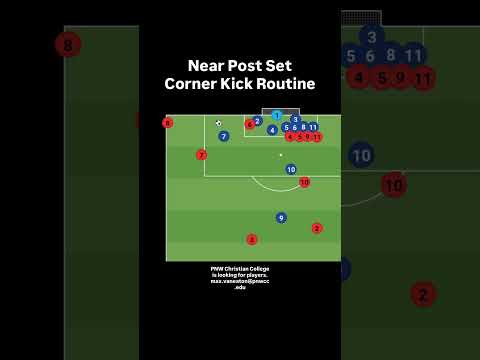
A near-post corner routine is only as effective as its delivery. The 31% higher conversion rate observed in 2026 is a direct testament to the increased emphasis on precise, consistent ball placement. Gone are the days of hopeful lobs; modern set-piece takers are artists of spin, trajectory, and pace.
The ideal near-post delivery is often flatter and faster than traditional corners, curling inwards to challenge the goalkeeper and the immediate defenders. It must reach the designated zone with pinpoint accuracy, allowing the attacking player to make contact without breaking their stride or disrupting their jump. This level of precision requires countless hours on the training ground.
The Role of Different Ball Trajectories
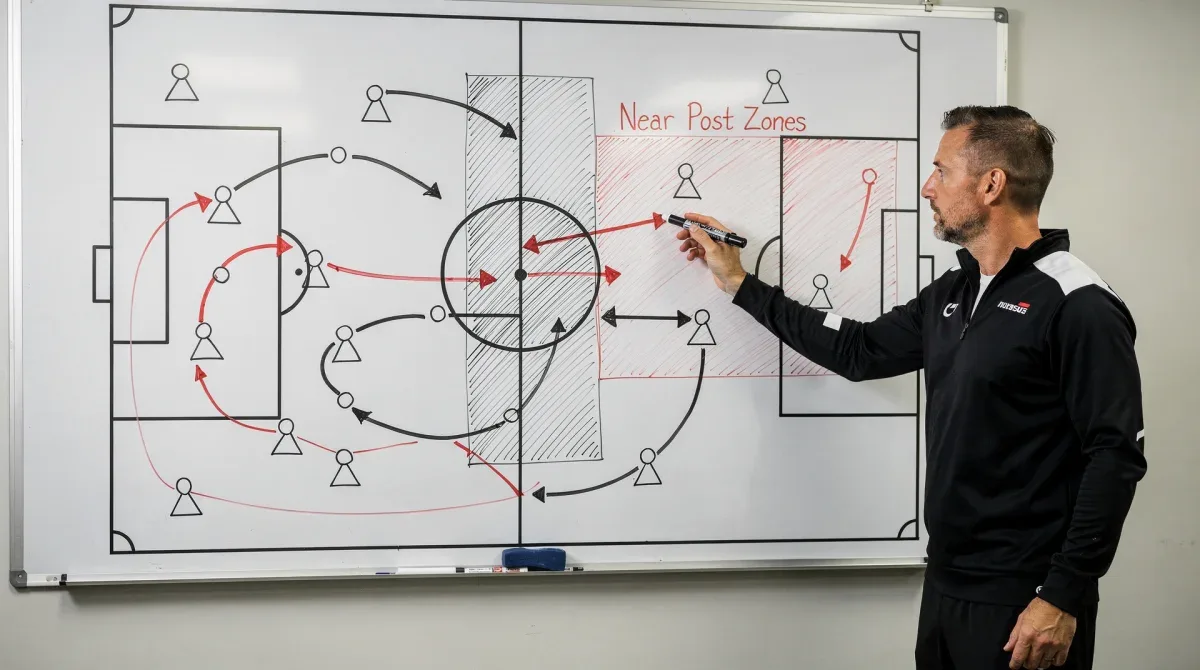
While a fast, flat delivery is common, variations exist. Some teams opt for a slightly lofted ball that dips sharply, making it difficult for goalkeepers to judge. Others prefer a whipped delivery that swings away from the goal, inviting a flick-on from a teammate. Understanding the strengths of the deliverer and the target players is crucial.
- In-swinging: Curls towards the goal, putting pressure on the goalkeeper.
- Out-swinging: Curls away from the goal, ideal for flick-ons and deflections.
- Low and Driven: Favored for direct shots or quick passes into the box.
The set-piece taker's ability to vary their delivery, even subtly, adds another layer of unpredictability. This makes it harder for opposition analysis to anticipate the exact trajectory, giving the attacking team a crucial advantage. The mastery of these techniques distinguishes good teams from great ones in set-piece situations.
Ultimately, the success of near-post corners hinges on the quality of the delivery. It’s a skill that combines technical prowess with tactical intelligence, ensuring the ball arrives exactly where and when it's needed to maximize the chance of a goal. This dedication to precision is a hallmark of the 2026 tactical landscape.
Player Roles and Movement: Orchestrating Chaos
Beyond precision delivery, the effectiveness of near-post corner routines in 2026 is deeply rooted in the intelligent movement and specialized roles of attacking players. It’s a choreographed dance designed to create optimal scoring opportunities while disorienting the defense. Each player has a specific task, contributing to the overall objective.
The primary target man at the near post is often a strong, agile player with excellent heading ability, capable of flicking the ball on or directing it towards the goal. However, their role is rarely solitary. They are supported by blockers, runners, and players positioned for rebounds, all working in unison to create space and exploit defensive weaknesses.
Key Player Archetypes in Near-Post Routines
Different players fulfill distinct roles, each vital to the routine's success. The diversity in player types allows for flexibility and adaptation based on the opponent's defensive setup. A successful routine often involves a combination of strength, speed, and aerial prowess.
- The Blocker: Positions themselves to impede key defenders, creating a clear path for attackers.
- The Near-Post Attacker: The primary target for the initial delivery, aiming for a flick or shot.
- The Runner from Deep: Exploits the space created by the near-post action, often arriving late for a second ball.
- The Rebound Hunter: Positions near the penalty spot or edge of the box to capitalize on deflections.
The timing of these movements is paramount. Players must initiate their runs simultaneously with the corner kick, ensuring they arrive at their designated zones at the precise moment the ball does. This synchronization is often practiced relentlessly, becoming second nature to the players involved.
The orchestration of player roles and movement turns a standard corner into a dynamic, unpredictable attacking sequence. It's about generating controlled chaos, creating dilemmas for defenders, and ultimately, opening up pathways to goal that might not exist in open play.
Exploiting Defensive Weaknesses: A Tactical Masterclass
The success of near-post corner routines in 2026 isn't just about offensive prowess; it's equally about meticulously analyzing and exploiting inherent defensive weaknesses. Every defensive setup has vulnerabilities, and the best teams are those that can identify and target them with surgical precision.
Defenders often prioritize marking in the central areas or tracking individual threats, sometimes leaving the near-post zone relatively less protected, especially against a quick, low delivery. Goalkeepers, too, can be caught off guard if the ball is delivered with pace and a deceptive trajectory, forcing them to react rather than anticipate.

Common Defensive Vulnerabilities Targeted
Teams have become adept at identifying specific scenarios where near-post corners are most effective. This involves studying opponent tendencies, individual defender weaknesses, and overall defensive structures. The goal is to create a mismatch or exploit a momentary lapse in concentration.
- Zonal Marking Gaps: Spaces between zonal markers near the first post.
- Individual Marking Errors: Defenders losing their man in the congested near-post area.
- Goalkeeper Positioning: Exploiting keepers who are too deep or slow to react to quick deliveries.
- Lack of Communication: Capitalizing on defensive miscommunication in crowded spaces.
Furthermore, the element of surprise plays a crucial role. If a team consistently varies its set-piece routines, opponents cannot simply predict a near-post delivery. This forces defenders to remain alert to multiple threats, preventing them from solely focusing on one area. The ability to switch between routines keeps defenses off balance.
In essence, near-post corners are a tactical masterclass in exploiting defensive flaws. They leverage speed, precision, and coordinated movement to turn potential vulnerabilities into tangible scoring opportunities, a key factor in their elevated conversion rates.
Training and Analytics: The Data-Driven Edge
The remarkable 31% higher conversion rate for near-post corner routines in 2026 is not solely the result of intuitive tactical changes; it’s heavily supported by advanced training methodologies and sophisticated data analytics. Modern football is a data-driven sport, and set pieces are no exception.
Teams now employ dedicated set-piece coaches who spend countless hours analyzing opponent weaknesses, developing new routines, and refining execution. Training sessions incorporate specialized drills focusing on delivery accuracy, player timing, and reactive movements, often utilizing technology to provide immediate feedback to players. This scientific approach elevates set-piece preparation to an art form.
Leveraging Technology for Set-Piece Optimization
Video analysis, GPS tracking, and even virtual reality simulations are becoming standard tools in optimizing set-piece routines. These technologies allow coaches to dissect every micro-movement and identify areas for improvement, both individually and collectively. The data gathered informs training adjustments and in-game strategies.
- Video Analysis: Detailed breakdown of opposition defensive setups and individual player tendencies.
- GPS Tracking: Monitors player movement and timing during drills, ensuring optimal positioning.
- Expected Goals (xG) Models: Quantifies the probability of scoring from specific set-piece situations.
- Virtual Reality: Simulates game scenarios for players to practice decision-making under pressure.
The analytical side extends to opponent scouting, where data scientists identify patterns in defensive behavior, goalkeeper positioning, and even the height and jumping ability of individual defenders. This granular level of detail allows teams to tailor their near-post routines to specific opponents, maximizing their chances of success.
The integration of rigorous training and cutting-edge analytics has transformed set-piece preparation. It provides teams with a data-driven edge, allowing them to continuously refine their near-post corner routines and consistently achieve higher conversion rates, making them a formidable weapon in their attacking arsenal.
The Future of Set-Piece Innovation: Beyond 2026
While near-post corner routines have dominated the set-piece landscape in 2026, the world of football tactics is ever-evolving. The success of these routines will inevitably lead to defensive adaptations, prompting further innovation from attacking teams. The constant arms race between offense and defense is what makes the sport so captivating.
We can anticipate even greater sophistication in set-piece design, potentially incorporating more complex decoy runs, varied delivery types, and perhaps even hybrid routines that blend elements of near-post and central attacks. The emphasis on player specialization and data-driven insights is likely to intensify, pushing the boundaries of what's possible from dead-ball situations.
Anticipating Defensive Counter-Strategies
As teams become more aware of the threat posed by near-post corners, defensive strategies will undoubtedly evolve. We might see more aggressive marking in the near-post zone, tighter zonal structures, or even dedicated players whose sole responsibility is to clear the first ball. Goalkeepers will also likely refine their positioning and decision-making for these specific deliveries.
- Increased Near-Post Marking: More defenders assigned to the immediate area.
- Refined Zonal Blocking: Tighter defensive lines to prevent runs.
- Goalkeeper Aggression: More proactive goalkeepers coming out to claim the ball.
- Counter-Attacking Focus: Teams quickly transitioning from defending corners to attacking.
The next wave of set-piece innovation might involve a greater focus on short corners to draw defenders out, creating space in central areas, or more elaborate routines that involve multiple phases of play. The creativity of coaches and the technical ability of players will continue to drive these developments, ensuring that set pieces remain a vital and exciting part of the game.
Looking beyond 2026, the evolution of set-piece innovation promises to be as dynamic and unpredictable as the game itself. The success of near-post corners has set a new benchmark, challenging teams to continuously adapt, innovate, and push the tactical envelope in pursuit of that crucial competitive edge.
| Key Aspect | Description |
|---|---|
| Near-Post Shift | Strategic pivot from far-post to near-post targets due to defensive vulnerabilities and quicker routes to goal. |
| Precision Delivery | Emphasis on fast, flat, and accurate corner kick delivery to specific zones. |
| Player Roles | Specialized roles for blockers, target men, and runners to create space and exploit gaps. |
| Data Analytics | Use of video, GPS, and xG models to optimize routines and scout opponents effectively. |
Frequently Asked Questions About Near-Post Corner Routines
Why did near-post corner routines become so effective in 2026?▼Near-post corner routines became highly effective in 2026 due to a combination of factors: refined tactical execution, increased precision in delivery, specialized player roles that create chaos, and advanced data analytics used to exploit specific defensive weaknesses. This multi-faceted approach led to a significant increase in conversion rates, making them a formidable attacking weapon for many teams.
What distinguishes a successful near-post delivery?▼A successful near-post delivery is characterized by its pace, flatness, and pinpoint accuracy. It often involves an in-swinging or out-swinging trajectory that challenges the goalkeeper and immediate defenders, giving attacking players a minimal window to react. The ball must arrive in the designated zone at the precise moment a player is making their run or jump, minimizing defensive reaction time.
How do player roles contribute to near-post corner effectiveness?▼Player roles are crucial for near-post corner effectiveness, with each player having a specific, synchronized task. Blockers impede defenders, creating space for the primary near-post attacker. Runners from deeper positions exploit secondary balls, and rebound hunters capitalize on deflections. This coordinated movement orchestrates a dynamic attacking sequence that disorients defenses and opens up scoring opportunities.
What defensive weaknesses do near-post corners exploit?▼Near-post corners primarily exploit gaps in zonal marking, individual marking errors where defenders lose their man, and goalkeepers who are slow to react or poorly positioned for quick deliveries. They also capitalize on poor defensive communication in crowded areas. By targeting these vulnerabilities, attacking teams create high-percentage scoring chances that might not exist in open play scenarios.
Will near-post corner routines continue to be effective in the future?▼While near-post corner routines have been highly effective, their dominance will likely lead to defensive counter-strategies. Teams will adapt with increased near-post marking, refined zonal blocking, and more proactive goalkeepers. This defensive evolution will push attacking teams to innovate further, potentially leading to more complex hybrid routines or a greater focus on short corners to maintain their set-piece advantage.
Conclusion
The analysis of near-post corner routines in 2026 reveals a tactical revolution in football set pieces. Achieving a 31% higher conversion rate wasn't a fluke; it was the culmination of strategic shifts, unparalleled precision in delivery, meticulously choreographed player movements, and a deep, data-driven understanding of defensive vulnerabilities. As the game continues to evolve, the lessons learned from this period of near-post dominance will undoubtedly shape the future of set-piece innovation, pushing coaches and players to constantly refine their strategies in pursuit of marginal gains.
