Frame Data Guide: Punishing Minus-6 in Modern Fighting Games
Mastering fighting game frame data is crucial for competitive success, enabling players to precisely identify and exploit minus-6 frame disadvantages to execute optimal punishes in modern 2026 titles, turning defensive moments into offensive gains.
Welcome to the intricate world of competitive fighting games, where every millisecond counts. This fighting game frame data guide: step-by-step analysis on punishing minus-6 frame disadvantages in modern 2026 titles is designed to elevate your understanding and execution. For those looking to climb the ranks and dominate the digital arena, grasping the nuances of frame data is not just an advantage; it's a necessity. This guide will demystify the concept of minus-6 situations, providing actionable strategies to turn your opponents' mistakes into your winning opportunities.
Understanding the fundamentals of frame data
Frame data forms the bedrock of high-level fighting game strategy. It quantifies the speed and recovery of every action a character performs, from a simple jab to a devastating super move. Without this knowledge, players are often left guessing, reacting solely on visual cues, which can be too slow in the fast-paced environment of modern fighting games. Understanding frame data allows for precise decision-making, transforming reactive play into calculated aggression.
At its core, frame data tells you how many frames an attack takes to start (startup frames), how long it is active (active frames), and how long your character is vulnerable after it finishes (recovery frames). Crucially, it also indicates the advantage or disadvantage a character has after an attack hits or is blocked. Positive frames mean you recover faster and can act before your opponent; negative frames mean your opponent recovers faster and can act before you. This distinction is vital for understanding when and how to punish.
What are frames and why do they matter?
A frame is the smallest unit of time in a video game, typically 1/60th of a second for most fighting games running at 60 frames per second (fps). Every action in a fighting game, from walking to attacking, is measured in these frames. Knowing the frame values of your character's moves, and more importantly, your opponent's, is akin to having an X-ray vision into the game's mechanics. It allows you to identify openings that are invisible to the untrained eye and capitalize on them with perfect timing.
- Startup frames: The time it takes for an attack to become active after input.
- Active frames: The duration an attack can hit an opponent.
- Recovery frames: The time your character is vulnerable after an attack finishes.
- Block advantage/disadvantage: The frame difference after an attack is blocked.
- Hit advantage/disadvantage: The frame difference after an attack hits.
In conclusion, a solid grasp of frame data is not just for advanced players; it's a foundational skill that allows you to move beyond button mashing and truly understand the intricate dance of offense and defense in fighting games. It empowers you to make informed decisions, predict outcomes, and ultimately, control the flow of the match.
Identifying minus-6 frame disadvantages
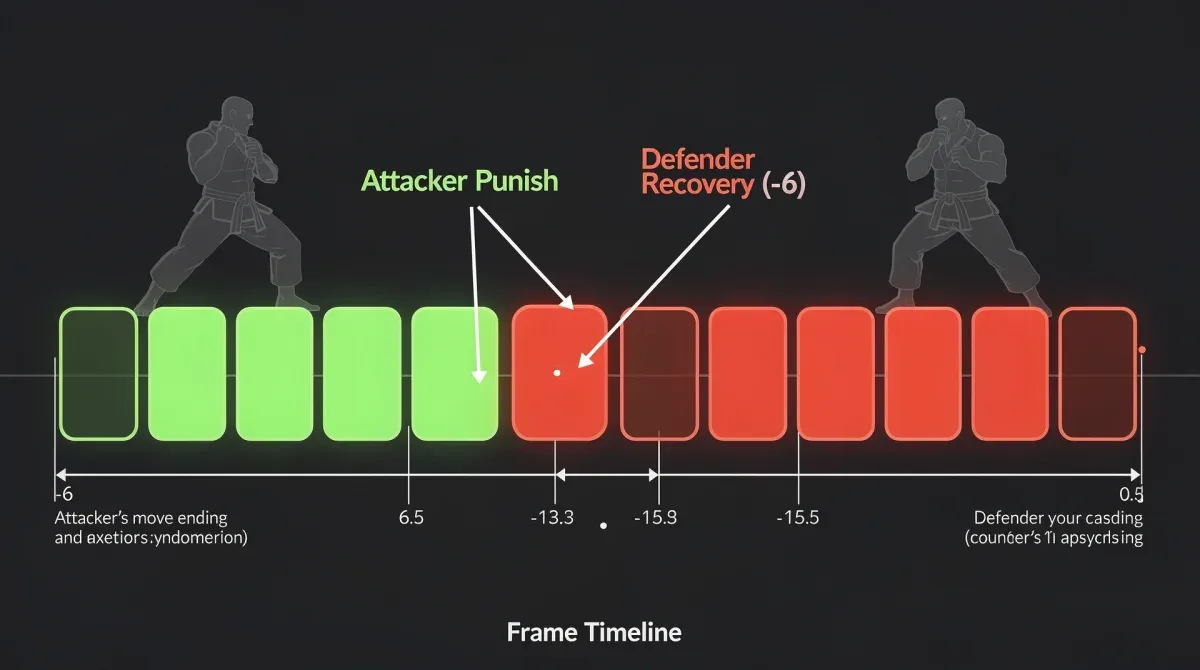
A minus-6 frame disadvantage signifies a critical opening in your opponent's defense. When an opponent's move is minus-6 on block, it means they are vulnerable for six frames longer than you are after their attack is blocked. This short window is often just enough time for you to execute a guaranteed counter-attack, known as a punish. Identifying these specific situations requires both knowledge of character matchups and keen observation during gameplay.
In modern fighting games, developers often design certain moves to be slightly negative on block to prevent players from endlessly pressuring. These moves, while potentially safe in isolation, become punishable when an opponent knows their frame data. A common example is a character's heavy attack or a special move that pushes the opponent back but leaves the attacker at a slight disadvantage. Learning which of these moves are minus-6 is your first step towards exploiting them.
Tools and techniques for identification
Identifying minus-6 situations isn't always easy in the heat of a match. Fortunately, modern fighting games offer several tools to help. Training mode is your best friend here. Most games now feature detailed frame data displays, allowing you to see the exact frame values of every move. You can set the dummy opponent to block specific attacks and observe the frame advantage/disadvantage in real-time. This hands-on approach is invaluable for building muscle memory and recognition.
- Training mode analysis: Use the game's built-in frame data display to test moves.
- Character guides: Consult online resources and community guides for specific character frame data.
- Replay analysis: Watch your matches and identify moments where you or your opponent were vulnerable.
- Audio/visual cues: Develop an ear and eye for the subtle cues that indicate a punishable situation.
The ability to identify a minus-6 frame disadvantage is a skill honed through practice and dedicated study. It's about combining theoretical knowledge with practical application, ensuring that when the opportunity arises, you're ready to seize it. This foundational understanding sets the stage for effective punishment.

Choosing the right punish for minus-6
Once you've identified a minus-6 frame disadvantage, the next crucial step is selecting the optimal punish. Not all attacks are created equal, and choosing the right move is paramount to maximizing damage and maintaining pressure. An ideal punish for a minus-6 situation is typically a fast, high-damage starter that can lead into a reliable combo. The key is to have a move with a startup of 6 frames or less to ensure it connects before your opponent recovers.
Many characters have a reliable 4-frame or 5-frame jab or light attack that serves as an excellent punish starter. While these individual hits may not deal significant damage, they often lead into more powerful combo routes. The goal is to convert that initial quick hit into a substantial damage output, potentially leading to a knockdown, corner carry, or even a lethal blow. This requires not only knowing your character's fastest moves but also their optimal combo extensions.
Selecting optimal punish starters and combos
The choice of punish depends heavily on your character's toolkit and the specific situation. For a minus-6 disadvantage, you're looking for moves that are quick enough to connect. Your character's fastest light attacks are usually the go-to. Once that initial hit connects, you transition into a pre-practiced combo. The goal isn't just to hit them; it's to make them pay dearly for their mistake.
- Fastest normal attacks: Typically 3-5 frame startup moves like jabs or light kicks.
- Special moves: Some characters have fast special moves that can be used for punishes.
- Combo routes: Learn specific combos that start with your fastest punish moves.
- Situational awareness: Consider character positioning (corner vs. midscreen) when choosing a combo.
Choosing the right punish is a blend of character knowledge, combo execution, and situational awareness. It's about turning a brief moment of vulnerability into a significant advantage, demonstrating your mastery of fighting game frame data. This strategic decision-making is what separates good players from truly great ones.
Executing precise punishes consistently
Identifying the opportunity and knowing the correct punish are only half the battle; consistent execution is what truly wins matches. Even a perfect understanding of frame data is useless without the ability to input the commands accurately and on time. Executing precise punishes for minus-6 situations requires rigorous practice, developing muscle memory, and maintaining composure under pressure.
The margin for error in a minus-6 punish is extremely small. You have exactly six frames to input your attack after your opponent's move is blocked. This means you cannot hesitate. Your inputs must be clean, deliberate, and almost instantaneous. This level of precision comes from countless hours in training mode, drilling the specific punish combos until they become second nature. It's about reacting not just to what you see, but to what you know will happen based on frame data.
Drilling techniques for perfect timing
To achieve consistent execution, incorporate specific drills into your training regimen. Set the training dummy to perform the minus-6 move, then practice blocking it and immediately inputting your punish. Start slowly, focusing on clean inputs, then gradually increase your speed. You can also vary the timing of the dummy's attacks to simulate real match conditions, forcing yourself to react rather than anticipate.
- Set dummy to perform minus-6 moves: Practice blocking and punishing repeatedly.
- Focus on clean inputs: Ensure your commands are precise, avoiding misinputs.
- Gradual speed increase: Start slow, then build up to real-time execution.
- Vary dummy's actions: Practice reacting to unpredictable timing.
- Mental preparation: Stay calm and focused during intense moments.
Consistent execution of precise punishes is a testament to dedicated practice and mental fortitude. It's about translating theoretical knowledge into tangible results, making every minus-6 opportunity count. This mastery of timing and input is a hallmark of advanced fighting game players.
Advanced considerations and matchup specifics
While the general principles of punishing minus-6 frame disadvantages apply across most fighting games, truly mastering this skill involves delving into advanced considerations and matchup-specific knowledge. Different characters have different fastest moves, varying combo damage potential, and unique ways of creating or dealing with negative frame situations. Understanding these nuances can significantly enhance your ability to exploit openings.
For instance, some characters might have a 4-frame jab that leads into a simple, low-damage combo, while others might have a 5-frame normal that, when connected, opens up a high-damage, meter-intensive combo. Knowing these differences for every character in the roster allows you to tailor your punish strategy. Furthermore, character-specific mechanics, such as parries, counters, or unique movement options, can sometimes alter the effective frame advantage or disadvantage, requiring an adaptive approach.
Character-specific punish strategies
Each character in a fighting game presents a unique puzzle. A character with a strong defensive toolkit might be less susceptible to minus-6 punishes if they have a fast reversal option. Conversely, a character known for aggressive pressure might frequently leave themselves at minus-6, becoming prime targets for your punish game. Studying these individual characteristics is crucial.
- Character archetypes: Understand how different character types approach frame data.
- Specific move properties: Learn which of your opponent's moves are minus-6 and how they recover.
- Optimal character combos: Identify the highest damage or most advantageous combos for each character's minus-6 punish.
- Resource management: Consider meter usage for enhanced punishes or reversals.
Advanced considerations and matchup specifics elevate your frame data knowledge from theoretical understanding to practical mastery. It's about adapting your strategy to the opponent, leveraging every piece of information to gain an edge. This detailed approach is what defines truly exceptional players in modern fighting games.
Adapting to modern 2026 fighting game titles
The landscape of fighting games is constantly evolving, and modern 2026 titles bring new mechanics, character designs, and balance changes that can impact how frame data is applied. While the core principles remain the same, developers are always experimenting with new ways to make gameplay fresh and exciting. This means players must remain adaptable, continuously learning and re-evaluating their strategies to stay competitive.
New game engines might introduce slight variations in input lag or frame rendering, affecting the feel of execution. Character rosters expand, bringing new matchups and moves to analyze. Furthermore, developer patches and balance updates can alter frame data values, making previously safe moves punishable or vice versa. Staying current with these changes is essential for maintaining a strong competitive edge in the ever-changing world of fighting games.
Embracing new mechanics and meta shifts
Modern fighting games often introduce unique mechanics like parry systems, 'drive' gauges, or 'assist' characters that can interact with frame data in complex ways. A seemingly minus-6 situation might be negated by a perfectly timed new mechanic, or a new character's move might create a previously unseen minus-6 opportunity. Adapting to these new layers of gameplay is crucial for success.
- Study patch notes: Stay informed about frame data changes and balance updates.
- Experiment with new mechanics: Understand how new systems interact with frame advantage/disadvantage.
- Watch high-level play: Observe how professional players adapt to new titles and meta shifts.
- Engage with the community: Discuss strategies and findings with other players.
Adapting to modern 2026 fighting game titles means embracing change and continuously refining your understanding of frame data within new contexts. It's about being a perpetual student of the game, always seeking to optimize your strategies and stay ahead of the curve. This ongoing learning process is vital for long-term success in the competitive fighting game scene.
The psychological advantage of frame data mastery
Beyond the technical benefits, mastering frame data provides a significant psychological advantage over opponents. When you consistently punish their unsafe moves, you instill fear and uncertainty, forcing them to play more cautiously and predictably. This mental pressure can lead to more mistakes, creating a snowball effect in your favor. Knowing you have a guaranteed punish for their common mistakes empowers you to play more confidently and aggressively.
Conversely, an opponent who doesn't understand frame data will often feel helpless, unable to comprehend why their attacks are being consistently punished. This can lead to frustration, tilt, and ultimately, a breakdown in their gameplay. By leveraging your knowledge, you're not just winning rounds; you're winning the mental game, which is often just as important in high-stakes competition.
Breaking down opponent confidence
The psychological impact of frame data mastery is profound. When an opponent's go-to pressure tools become liabilities, they are forced to reconsider their entire game plan. This hesitation opens up new opportunities for you to apply your own pressure, mix-ups, and offensive sequences. It transforms the match into a chess game where you're always one step ahead, dictating the pace and flow.
- Force cautious play: Punishing unsafe moves makes opponents hesitant.
- Create mental pressure: Opponents doubt their strategies and choices.
- Induce frustration: Consistent punishes can lead to opponent tilt.
- Boost your confidence: Knowing you can exploit openings empowers your play.
- Dictate match pace: Control the flow by punishing and pressuring effectively.
The psychological advantage derived from frame data mastery is a powerful tool in your competitive arsenal. It's about more than just numbers; it's about controlling the narrative of the match and breaking your opponent's will to fight. This strategic layer adds another dimension to the competitive experience, making every victory earned and every defeat a lesson.
| Key Aspect | Brief Description |
|---|---|
| Frame Data Basics | Quantifies move speed and recovery, crucial for precise decision-making. |
| Minus-6 Identification | Recognizing 6-frame vulnerabilities after an opponent's blocked attack. |
| Punish Selection | Choosing fastest, highest-damage combo starters (6 frames or less). |
| Consistent Execution | Drilling precise inputs for reliable punish combos under pressure. |
Frequently asked questions about frame data
What exactly is frame data in fighting games?▼Frame data quantifies the timing of all actions in a fighting game, measured in frames (1/60th of a second). It details startup, active, and recovery frames for moves, as well as the frame advantage or disadvantage after an attack hits or is blocked. This information is crucial for understanding openings and optimal counter-attacks.
Why is punishing a minus-6 frame disadvantage important?▼Punishing a minus-6 frame disadvantage is critical because it guarantees a counter-attack. The opponent is vulnerable for six frames after their blocked move, allowing you to hit them with any move that has a startup of 6 frames or less. This turns their offensive attempt into a major opening for you, leading to significant damage.
How can I identify minus-6 situations in modern fighting games?▼You can identify minus-6 situations primarily through a game's training mode, which often features a frame data display. Set the dummy to perform specific moves and observe the frame advantage/disadvantage on block. Additionally, consulting character guides and analyzing replays can help you learn common minus-6 scenarios for different characters.
What kind of moves should I use to punish a minus-6 situation?▼For a minus-6 punish, you should use your character's fastest attacks, typically light punches or kicks with a startup of 6 frames or less. These quick moves guarantee a hit and can often be chained into more damaging combos. The goal is to maximize the damage or positional advantage from that initial, guaranteed hit.
Does frame data change with game updates or new titles?▼Yes, frame data can definitely change with game updates, balance patches, or new titles. Developers frequently adjust move properties to balance the game or introduce new mechanics. It's crucial to stay informed by reading patch notes, experimenting in training mode, and engaging with the community to keep your frame data knowledge current.
Conclusion
Mastering fighting game frame data, particularly the art of punishing minus-6 frame disadvantages, is an indispensable skill for anyone aspiring to excel in modern 2026 titles. This guide has traversed the journey from understanding basic frame concepts to executing precise punishes, delving into advanced character-specific strategies, and adapting to the evolving landscape of fighting game mechanics. By internalizing these principles and committing to consistent practice, players can transform their gameplay, not only by maximizing damage and gaining strategic advantages but also by wielding a potent psychological weapon against their opponents. The intricate dance of frames is a continuous learning process, but one that undeniably separates the casual competitor from the true champion, empowering you to dominate the digital arena with calculated precision.
