Saudi Pro League Squad Restrictions: New Under-21 Quotas & Foreign Player Limits for 2026
The Saudi Pro League is implementing new squad restrictions by 2026, including mandatory Under-21 quotas and revised foreign player limits, aiming to bolster local talent development and reshape club strategies.
The landscape of professional football is constantly evolving, and the Saudi Pro League is at the forefront of significant changes. As we approach 2026, new regulations regarding Saudi Pro League squad restrictions are set to redefine how clubs operate, focusing on developing local talent while carefully managing the influx of international stars. These imminent shifts promise to reshape team compositions and strategic planning for years to come.
Understanding the Saudi Pro League's Strategic Vision
The Saudi Pro League's strategic vision extends beyond merely attracting global superstars. It’s a long-term plan aimed at elevating the overall quality of Saudi football, fostering indigenous talent, and ensuring sustainable growth. The upcoming squad restrictions are a crucial component of this ambitious endeavor, designed to create a more balanced and competitive league environment.
This forward-thinking approach seeks to strike a delicate balance: maintaining the league's newfound international appeal while simultaneously nurturing a robust domestic player base capable of competing at the highest levels. The changes are not arbitrary; they reflect a deliberate effort to build a stronger footballing ecosystem from the ground up, ensuring that the league's success is sustainable and deeply rooted in local development.
The impetus behind the new regulations
The primary driver behind these new regulations is the desire to enhance the Saudi national team's performance on the global stage. By increasing opportunities for young Saudi players, the league aims to create a larger pool of experienced and high-quality domestic talent. This strategic investment in youth is expected to yield significant dividends in future international competitions.
- National Team Enhancement: Providing more playtime for Saudi nationals to improve the national squad.
- Sustainable Growth: Building a long-term foundation for the league's success, rather than relying solely on foreign imports.
- Talent Development: Creating structured pathways for young Saudi players to progress.
- Competitive Balance: Ensuring clubs invest in local development rather than just outspending competitors on foreign players.
Ultimately, these regulations are a testament to the league's commitment to its future. They signify a shift from an acquisition-heavy model to one that prioritizes organic growth and the cultivation of homegrown talent, ensuring that the Saudi Pro League remains a powerhouse in Asian football and continues to gain respect globally.
The New Under-21 Quotas: A Game Changer for Youth Development
One of the most impactful aspects of the impending Saudi Pro League squad restrictions for 2026 is the introduction of stringent Under-21 quotas. This mandate requires clubs to include a specific number of young, Saudi players in their matchday squads and provide them with meaningful playing time. This isn't just about filling spots; it's about actively integrating youth into the core of team strategies.
The aim is clear: to accelerate the development of the next generation of Saudi football stars. By guaranteeing exposure to high-level competition at an earlier age, these quotas are designed to bridge the gap between youth academies and senior professional football, a transition that can often be challenging for promising talents.

Impact on club academies and scouting networks
The new Under-21 quotas will necessitate a significant overhaul of club academy structures and scouting networks. Clubs will be compelled to invest more heavily in identifying, nurturing, and retaining young Saudi talent from a much younger age. This includes enhancing coaching staff, improving training facilities, and establishing robust development pathways.
- Increased Investment: Clubs will allocate more resources to youth academies and development programs.
- Expanded Scouting: Greater emphasis on identifying promising young Saudi players across the country.
- Specialized Coaching: Recruitment of coaches with expertise in youth development and age-specific training.
- Pathway Creation: Clearer routes for academy graduates to progress into senior squads.
The ripple effect will be felt throughout the entire footballing infrastructure in Saudi Arabia. Local leagues and youth tournaments are expected to gain more prominence as clubs actively seek out future stars. This systemic shift promises a brighter future for Saudi football, creating a sustainable pipeline of talent that can serve both club and country.
Revised Foreign Player Limits: Balancing Star Power and Local Opportunity
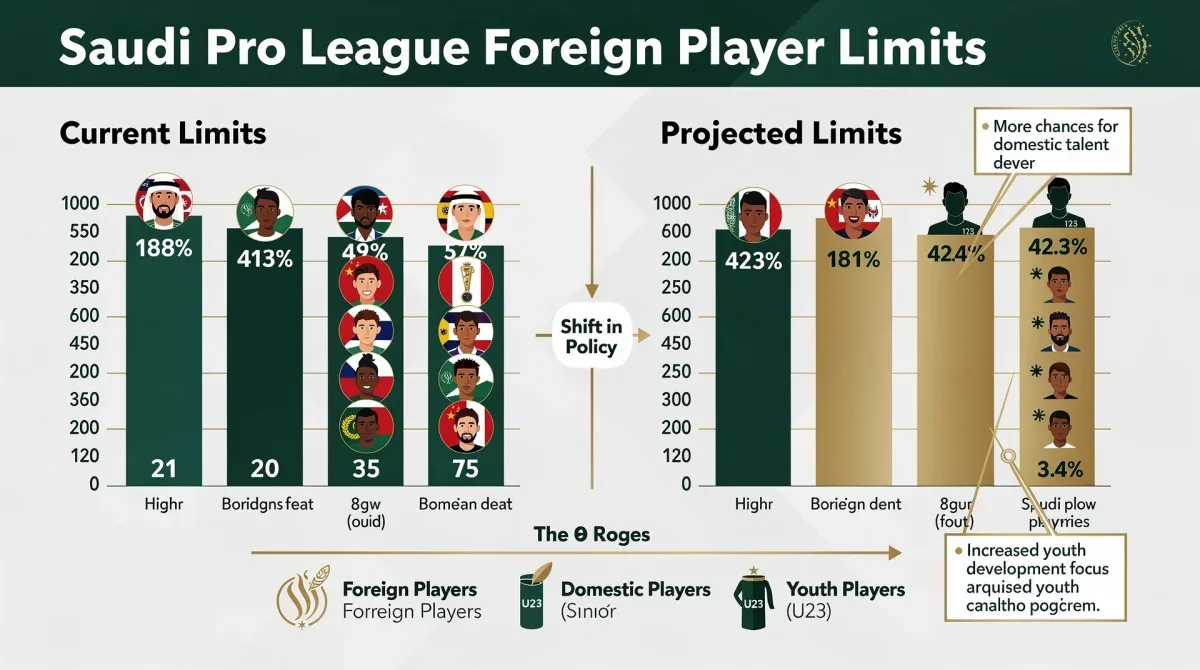
Alongside the Under-21 quotas, the Saudi Pro League is also adjusting its foreign player limits, a move that will significantly impact club recruitment strategies and team composition. The goal is to find an optimal balance: maintaining the league's ability to attract world-class international talent while simultaneously ensuring ample opportunities for domestic players to thrive.
These revised limits are not about excluding foreign players entirely; rather, they are about refining their integration. Clubs will need to be even more judicious in their selection of international stars, prioritizing those who bring exceptional quality, experience, and a willingness to contribute to the overall development of the league.
Strategic implications for international transfers
The tightening of foreign player quotas means that every international transfer will carry greater weight. Clubs will have to conduct more thorough scouting and due diligence, ensuring that each foreign signing offers maximum value and fits seamlessly into their tactical plans. The days of simply accumulating high-profile names may be drawing to a close.
Furthermore, this shift could lead to a greater focus on quality over quantity. Instead of signing multiple average foreign players, clubs might opt for fewer, but truly elite, international talents who can elevate the performance of the entire squad and mentor younger Saudi players. This could also drive up the transfer fees and wages for the very best foreign players, as competition for their services intensifies within the new framework.
The revised limits are expected to foster a more competitive domestic talent pool. With fewer foreign slots available, Saudi players will have increased opportunities to secure starting positions and showcase their abilities, which is a crucial step towards their professional growth and international recognition.
The 2026 Deadline: What Clubs Need to Do Now
The 2026 deadline for the implementation of the new Saudi Pro League squad restrictions is fast approaching, and clubs cannot afford to be complacent. Proactive planning and strategic adjustments are paramount to ensure a smooth transition and maintain competitive advantage. This isn't a task that can be left until the last minute; it requires immediate and concerted effort across all levels of club management.
Clubs that begin adapting early will undoubtedly be better positioned to navigate these changes successfully. Those that delay risk falling behind, potentially facing challenges in squad building, talent acquisition, and overall league performance. The clock is ticking, and preparation is key.
Rethinking squad building and recruitment strategies
Clubs must fundamentally rethink their squad building and recruitment strategies. This involves a comprehensive review of current rosters, identifying players who fit the new criteria, and planning for future acquisitions. It's not just about signing players; it's about developing a sustainable talent pipeline that aligns with the league's long-term vision.
- Early Talent Identification: Intensifying efforts to scout and sign promising young Saudi players.
- Academy Investment: Allocating more resources to enhance youth academies and development programs.
- Strategic Foreign Signings: Prioritizing foreign players who offer exceptional quality and leadership.
- Contract Management: Reviewing existing player contracts and planning for renewals or departures in line with new quotas.
The transition period will also highlight the importance of player development within the club. Investing in coaching, sports science, and player welfare programs for both youth and senior Saudi players will be crucial. This holistic approach ensures that homegrown talent is not only identified but also nurtured to reach its full potential, making them valuable assets under the new regulations.
Potential Challenges and Opportunities for Clubs
The introduction of the new Saudi Pro League squad restrictions presents a mixed bag of challenges and opportunities for clubs. While the changes are designed to foster long-term growth, the immediate transition period will undoubtedly test the adaptability and strategic acumen of club managements. Navigating these complexities effectively will be crucial for sustained success.
Clubs that embrace the changes proactively and creatively will likely reap significant rewards, both on and off the pitch. Those that resist or fail to adapt efficiently may find themselves struggling to keep pace in an increasingly competitive environment.
Addressing the talent gap and market adjustments
One of the immediate challenges will be addressing any potential talent gap, particularly in the short term. As clubs scramble to meet the Under-21 quotas, there might be increased competition for top young Saudi prospects, potentially driving up their market values. Clubs will need to invest wisely and strategically to secure the best emerging talents.
Simultaneously, the reduced number of foreign player slots could lead to a more discerning transfer market for international players. Clubs will seek out truly impactful foreign signings, those who can make an immediate difference and contribute significantly to team performance. This could mean a shift towards a higher quality, albeit smaller, pool of foreign talent in the league.

Long-Term Impact on Saudi Football and Beyond
The long-term impact of the Saudi Pro League squad restrictions is poised to be profound, not just for Saudi football but potentially for the wider Asian football landscape. These regulations represent a significant policy shift, moving towards a model that prioritizes sustainable development and homegrown talent alongside global star power. The reverberations of these changes will be felt for years to come, shaping the identity and competitiveness of the league.
This strategic pivot is expected to elevate the overall standard of play within Saudi Arabia, making the league a more formidable force in continental competitions and enhancing the national team's prospects on the international stage. It’s a bold statement of intent, signaling a commitment to building a footballing legacy that is both deep-rooted and globally recognized.
Shaping the future of player development and recruitment
The new quotas will undoubtedly reshape how player development and recruitment are approached. Academies will become even more vital, serving as the bedrock for cultivating future stars. The emphasis on identifying and nurturing young Saudi talent will lead to a more professionalized and structured youth football system across the country. This could also inspire other leagues in the region to consider similar models, fostering a broader trend of domestic talent investment.
- Enhanced Youth Systems: A more robust and professionalized youth football infrastructure.
- Increased Domestic Talent Pool: A larger and higher quality pool of Saudi players for clubs and the national team.
- Regional Influence: Potentially inspiring similar development models in other Asian leagues.
- Global Recognition: Elevating the Saudi Pro League's reputation as a league that develops its own stars.
Ultimately, these restrictions are a strategic investment in the future of Saudi football. They aim to create a self-sustaining ecosystem where local talent can flourish, supported by world-class infrastructure and guided by experienced international players. The journey to 2026 will be a fascinating one, observing how clubs adapt and how these changes contribute to the league's enduring success.
| Key Point | Brief Description |
|---|---|
| Under-21 Quotas | Mandatory inclusion of young Saudi players to foster domestic talent development by 2026. |
| Foreign Player Limits | Revised limits on international players to balance star power with opportunities for local talent. |
| Strategic Vision | A long-term plan to elevate Saudi football quality and enhance national team performance. |
| Club Adaptation | Clubs must proactively adjust scouting, academy investments, and recruitment strategies by 2026. |
Frequently Asked Questions About Saudi Pro League Restrictions
What are the main changes in Saudi Pro League squad restrictions for 2026?▼The primary changes include mandatory Under-21 quotas, requiring clubs to feature a certain number of young Saudi players, and revised limits on the total number of foreign players allowed in club squads. These regulations aim to promote local talent development and ensure sustainable growth for the league.
Why is the Saudi Pro League implementing Under-21 quotas?▼The Under-21 quotas are designed to accelerate the development of young Saudi football players. By guaranteeing them playing time and exposure to top-level competition, the league intends to strengthen the national team, create a robust talent pipeline, and foster a sustainable football ecosystem.
How will foreign player limits impact club strategies?▼Clubs will need to be more strategic and selective in their foreign player acquisitions, prioritizing quality over quantity. This shift will likely lead to more thorough scouting and a focus on acquiring elite international talents who can significantly impact team performance and mentor younger domestic players effectively.
What should clubs do to prepare for the 2026 restrictions?▼Clubs should proactively review their current rosters, increase investment in youth academies, enhance scouting networks for local talent, and meticulously plan future recruitment. Early adaptation and strategic restructuring are crucial to comply with the new regulations and maintain competitive standing.
What is the long-term vision behind these new regulations?▼The long-term vision is to elevate the overall quality of Saudi football, both at club and national team levels. By nurturing homegrown talent and creating a balanced league, the Saudi Pro League aims to become a self-sustaining powerhouse in Asian football, recognized globally for its development pathways and competitive strength.
Conclusion
The impending Saudi Pro League squad restrictions for 2026, encompassing new Under-21 quotas and revised foreign player limits, mark a pivotal moment for football in the region. These strategic adjustments are not merely regulatory hurdles but a deliberate, forward-thinking investment in the future of Saudi football. By prioritizing youth development and carefully managing the integration of international talent, the league is setting a course for sustainable growth and heightened competitiveness. The coming years will undoubtedly showcase the transformative power of these regulations, shaping a stronger, more vibrant footballing landscape for generations to come. Clubs that embrace these changes with foresight and strategic planning will be the ones to thrive in this evolving environment, contributing to a richer tapestry of talent and success within the Saudi Pro League and beyond.
