Top 5 Independent Soccer Leagues US & 2026 Pyramids
The top 5 independent soccer leagues in the United States are pivotal in shaping the sport's future, contributing significantly to the developing 2026 pyramid structure by fostering talent and expanding grassroots participation.
The landscape of American soccer is undergoing a dynamic transformation, with independent leagues playing an increasingly vital role. Understanding the Top 5 Independent Soccer Leagues in the United States and How Their 2026 Pyramids Function is crucial for anyone following the sport's evolution towards the momentous 2026 World Cup. These leagues are not just stepping stones; they are foundational pillars.
The evolving US soccer landscape and independent leagues
The United States soccer landscape is a complex and fascinating ecosystem, characterized by a blend of established professional leagues and a burgeoning network of independent organizations. This intricate structure is constantly evolving, driven by a collective ambition to elevate the sport's profile and develop a robust talent pipeline, especially with the 2026 World Cup on the horizon. Independent leagues, often operating outside the direct purview of Major League Soccer (MLS) or the USL Championship, serve as critical incubators for talent, community hubs, and crucial testing grounds for innovative club models.
These leagues are not merely secondary competitions; they are integral components of a broader, often unofficial, soccer pyramid that influences player development, coaching standards, and fan engagement at the local level. Their independence allows for greater flexibility in structure, finances, and community integration, often leading to unique operational philosophies that resonate strongly with local supporters. The growth and stability of these independent entities are directly linked to the overall health and future trajectory of American soccer.
Defining the independent league concept
Independent soccer leagues in the US are typically characterized by their financial and operational autonomy from the major professional organizations. They often operate with varying levels of professionalization, from fully professional setups to semi-professional or amateur structures. This independence fosters innovation but also presents unique challenges.
- Financial Autonomy: Clubs are largely self-funded or rely on local investment and sponsorships, rather than being centrally funded or subsidized by a larger entity.
- Operational Freedom: Leagues and clubs have significant leeway in determining their competition format, player contracts, and local market strategies.
- Community Focus: Many independent clubs are deeply embedded in their local communities, drawing strong grassroots support and volunteer involvement.
The 2026 World Cup catalyst
The impending 2026 World Cup, co-hosted by the United States, Canada, and Mexico, has amplified the urgency and focus on developing all tiers of American soccer. This global event serves as a powerful catalyst, encouraging investment, infrastructure development, and a renewed emphasis on creating a cohesive national soccer identity. Independent leagues are directly impacted by this, as they contribute to the overall player pool, fan base, and cultural immersion necessary for a successful hosting nation. Their ability to provide competitive environments for aspiring professionals and engage diverse communities is more critical than ever.

In conclusion, the independent league sector is a dynamic and essential part of the US soccer ecosystem. Its evolving nature, driven by autonomy and a strong community focus, positions it as a key player in the nation's soccer development, particularly in the lead-up to the 2026 World Cup. Understanding these foundational aspects is crucial before delving into specific league operations.
NPSL: grassroots foundation and national reach
The National Premier Soccer League (NPSL) stands as one of the largest and most enduring independent soccer leagues in the United States, renowned for its extensive grassroots network and broad national footprint. Often described as a crucial stepping stone for collegiate athletes and aspiring professionals, the NPSL provides a competitive environment during the summer months, bridging the gap between amateur and professional play. Its structure, composed of numerous regional conferences, allows for localized rivalries and community engagement while maintaining a national championship playoff structure.
The league's decentralized model empowers individual clubs to operate with significant autonomy, fostering diverse organizational approaches and catering to specific local market demands. This independence is a double-edged sword, offering flexibility but also requiring robust local management and financial stability from each team. The NPSL's commitment to player development is evident in its ability to consistently produce talent that moves on to higher professional tiers, both domestically and internationally. It serves as a vital platform for young players to gain experience and exposure.
NPSL's 2026 pyramid function
As the 2026 World Cup approaches, the NPSL's role in the American soccer pyramid becomes even more pronounced. Its function is primarily that of a vital developmental league, sitting at the foundational level, often considered a "fourth division" equivalent within the broader, unofficial US soccer hierarchy. The league's strength lies in its ability to scout and develop talent that might otherwise be overlooked by larger organizations. Its widespread presence means that soccer development is happening in diverse communities across the country.
- Talent Identification: NPSL provides a vast network for identifying raw talent from various geographical regions, feeding players into higher divisions.
- Player Development: Offers a competitive summer league for college players to maintain form and for non-college players to hone their skills.
- Community Engagement: Establishes strong local fan bases, building a broader appreciation and culture for soccer at the grassroots level.
Challenges and opportunities for growth
While the NPSL's extensive reach is a significant asset, it also faces challenges related to consistency in club standards and financial sustainability across its diverse membership. The sheer number of teams and regional variations can lead to disparities in competition quality and operational professionalism. However, these challenges also present opportunities for growth. The league is continuously working to standardize best practices, enhance its brand, and forge stronger affiliations with professional clubs, thereby solidifying its position within the evolving US soccer pyramid. Its independent nature allows for experimentation with new models.
In summary, the NPSL remains a cornerstone of independent soccer in the US, providing essential grassroots development and a broad national platform. Its decentralized structure, while presenting challenges, is also its strength, enabling widespread talent identification and community engagement, critical elements for American soccer's future.
UPSL: expanding access and competitive pathways
The United Premier Soccer League (UPSL) has rapidly emerged as a significant force in the independent soccer landscape, distinguishing itself through its aggressive expansion model and commitment to providing accessible, competitive pathways for a vast array of players and clubs. Founded on the principle of promoting local soccer, the UPSL operates with a robust divisional structure, featuring both a Premier Division and a Division 1, allowing for promotion and relegation within its own ecosystem. This internal pyramid creates a dynamic competitive environment, pushing clubs to constantly strive for higher standards.
The league's rapid growth has led to a presence in nearly every state, making it one of the most geographically diverse independent leagues. This widespread reach ensures that competitive soccer is available in areas that might otherwise be underserved, fostering local talent and creating new fan bases. The UPSL's independent nature allows it to be highly responsive to market demands and local club needs, often providing a more flexible and cost-effective alternative to more established professional pathways. Its focus on local ownership and operation empowers community-based clubs.
UPSL's role in the 2026 pyramid
The UPSL plays a critical role as a lower-tier developmental and competitive league, often positioned as a "fourth or fifth division" within the broader US soccer pyramid. Its extensive network means it acts as a primary entry point for many aspiring players and clubs into organized soccer. The league's dual-division structure facilitates player progression and offers a clear competitive ladder, even if it is primarily internal. This helps prepare players for the rigors of higher-level competition, whether within the UPSL or in other leagues.
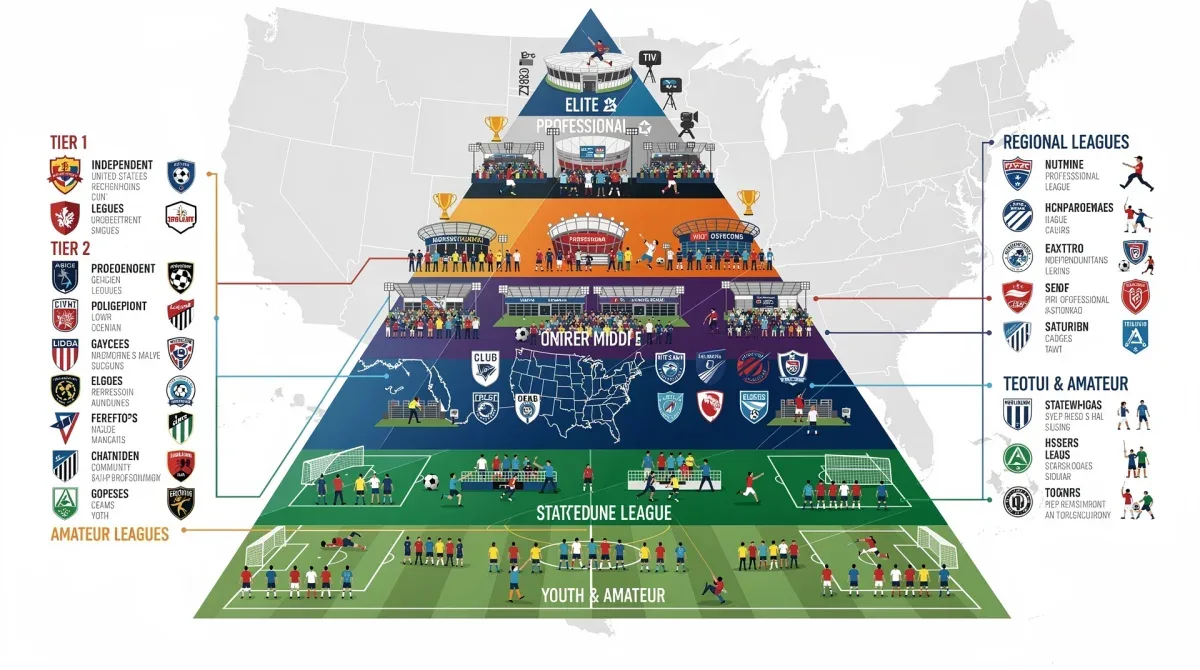
The league's contribution to the 2026 World Cup preparations lies in its ability to broaden the talent pool and deepen soccer's roots across the nation. By providing structured competition at a local level, the UPSL helps cultivate a larger base of skilled players and informed fans, contributing to the overall soccer culture. Its accessibility makes it a significant contributor to the democratization of soccer development in the US.
Impact on player progression and club development
The UPSL's impact on player progression is substantial, offering a platform for players who may not fit the traditional collegiate or academy pathways. Many players use the UPSL to showcase their abilities, hoping to attract attention from scouts in higher divisions. For clubs, the league provides a framework for professionalization, even at a semi-professional level, encouraging best practices in management, marketing, and player welfare. The internal promotion/relegation system motivates clubs to invest in their infrastructure and squads.
- Path to Pro: Offers a viable route for players to gain experience and exposure, potentially leading to professional contracts.
- Club Sustainability: Provides a structured league environment for clubs to develop sustainable business models and community ties.
- Geographic Reach: Expands competitive soccer into diverse regions, fostering talent in previously underserved areas.
In conclusion, the UPSL's rapid expansion and commitment to accessible, competitive soccer make it an indispensable part of the independent league landscape. Its role in broadening the talent pool and fostering club development is vital for the continued growth of soccer in the United States, especially as the nation looks towards 2026.
MLS NEXT Pro: the professional development arm
While technically affiliated with Major League Soccer, MLS NEXT Pro operates with a significant degree of independence from its parent league, positioning itself as a vital developmental and professional pathway within the broader US soccer pyramid. Launched in 2022, its primary objective is to bridge the gap between MLS academies and the first team, providing a high-level competitive environment for young players on the cusp of professional careers. Each team in MLS NEXT Pro is either directly owned by or affiliated with an MLS club, ensuring a clear pathway for talent progression.
The league distinguishes itself through its focus on professional standards, player development, and tactical sophistication. It implements specific roster rules designed to promote the growth of young domestic talent, including requirements for U-22 players and homegrown talent. This structured approach aims to accelerate the development curve of future MLS stars, ensuring they receive consistent, high-quality competition against peers and experienced professionals. Its independence from the traditional USL Championship structure allows it to tailor its competition to MLS's specific developmental needs.
MLS NEXT Pro's 2026 pyramid integration
MLS NEXT Pro is strategically positioned as a critical component of the professional soccer pyramid in the United States, effectively serving as a "third division" below MLS and the USL Championship. Its direct affiliation with MLS clubs ensures a seamless integration into the top tier of American soccer, providing a clear and direct pathway for players to progress from youth academies to professional contracts. This structured development is paramount as the US prepares for the 2026 World Cup, necessitating a robust pipeline of top-tier domestic talent.
The league's role in the 2026 context is to cultivate players who are technically proficient, tactically astute, and mentally prepared for the demands of international competition. By providing consistent high-level matches, MLS NEXT Pro aims to produce players who can contribute to both MLS clubs and potentially the senior national team. It represents a significant investment by MLS in its own player development system, aiming to elevate the overall quality of American soccer from within.
Player pathways and strategic objectives
MLS NEXT Pro offers a structured pathway for young players, including those graduating from MLS academies, to gain valuable professional experience. The league focuses on developing players in a competitive environment, with an emphasis on tactical understanding and physical conditioning. Its strategic objectives extend beyond simply developing players for MLS; it also aims to grow the fan base, expand the geographic footprint of professional soccer, and raise the overall standard of play in the country.
- Academy Integration: Provides a direct professional step for MLS academy graduates, minimizing the leap to the first team.
- Youth Development: Focuses on developing U-22 players, ensuring a pipeline of young, promising talent.
- Professional Standards: Upholds high professional standards in coaching, facilities, and player welfare, preparing players for top-tier competition.
In conclusion, MLS NEXT Pro, while tied to MLS, operates with the independence and focus necessary to serve as a crucial developmental league. Its strategic positioning within the pyramid, coupled with its commitment to professional standards, makes it an indispensable component of American soccer's future, particularly in nurturing the talent required for 2026 and beyond.
NISA: independent professional ambition
The National Independent Soccer Association (NISA) represents a unique and ambitious venture within the US soccer landscape, dedicated to establishing a truly independent professional league structure with a strong emphasis on club autonomy and a commitment to open-system principles. Unlike many other leagues, NISA explicitly champions the concept of promotion and relegation, even if its implementation is currently limited to its internal structure and potential affiliations. Its philosophy is rooted in the belief that an open system fosters greater competition, accountability, and ultimately, a more vibrant soccer culture.
NISA operates as a professional third-division league, aiming to provide a viable alternative pathway for clubs seeking a different operational model than those offered by MLS or USL. The league encourages local ownership, community engagement, and sustainable business practices, often attracting clubs with deep roots in their respective cities. This focus on independence and local identity resonates with a segment of the American soccer community that desires a less centralized, more organic growth model for the sport.
NISA's 2026 pyramid vision
NISA's vision for the 2026 soccer pyramid is one that is more open, dynamic, and interconnected, allowing for movement between divisions based on sporting merit. While the full implementation of a national promotion/relegation system remains a long-term goal for US soccer, NISA actively advocates for and builds towards this future. Its current position as a professional third division is critical for providing a competitive league for clubs that align with its independent philosophy. It offers a professional environment for players who may thrive in a different organizational culture.
For the 2026 World Cup, NISA contributes by broadening the professional player pool and offering diverse competitive experiences. By fostering independent clubs, NISA also helps to grow the overall professional soccer footprint in the US, engaging new communities and developing a wider array of professional talent. Its existence challenges the traditional closed-system model, promoting a more meritocratic approach to league structure.
Embracing club autonomy and open systems
A core tenet of NISA is the empowerment of its member clubs. The league structure is designed to give clubs significant input into league operations and strategic direction, fostering a sense of collective ownership. This club-centric approach aims to create a more resilient and responsive league that can adapt to the unique challenges and opportunities of the American sports market. The commitment to open-system principles, even if currently within its own ecosystem, is a defining characteristic.
- Promotion/Relegation Advocacy: NISA actively champions an open system, seeking to integrate with lower and higher divisions based on merit.
- Club-Centric Model: Emphasizes club autonomy and local ownership, allowing for diverse operational strategies.
- Professional Alternative: Provides a professional third-division option for clubs and players seeking an independent pathway.
In conclusion, NISA stands out for its bold independent professional ambition and its steadfast commitment to an open-system philosophy. As the US soccer pyramid evolves towards 2026, NISA's role in offering an alternative professional pathway and advocating for merit-based movement between divisions is crucial for fostering a more dynamic and competitive landscape.
USL League Two: developing collegiate talent
USL League Two, formerly known as the Premier Development League (PDL), is a cornerstone of player development in the United States, specifically catering to collegiate athletes during their summer break. While it operates under the umbrella of the United Soccer League (USL), its independent club operations and focus on amateur status for collegiate players position it firmly within the independent league discussion. The league provides a highly competitive environment for players to maintain their fitness, hone their skills, and gain exposure to professional scouts without jeopardizing their NCAA eligibility.
With teams spread across numerous divisions and conferences throughout the country, USL League Two offers a vast network for talent identification and development. Its summer schedule aligns perfectly with the collegiate calendar, making it an ideal platform for aspiring professionals to test themselves against high-level competition. Many current and former professional players, including national team members, have honed their craft in USL League Two, underscoring its importance as a developmental pathway. The league's structure allows for regional play, minimizing travel and fostering local rivalries, which contributes to community engagement.
USL League Two's 2026 developmental contribution
USL League Two's contribution to the 2026 soccer pyramid is primarily as a critical developmental link, often considered a "fourth division" equivalent for amateur and collegiate players. It serves as a proving ground where young talent can gain invaluable experience in a structured, competitive setting. The league's ability to attract top collegiate players means it plays a significant role in preparing the next generation of American soccer stars for the demands of professional play. This development is crucial for building a strong talent pool for the future, including potential national team players for 2026.
The league's focus on amateur status ensures that it can attract a wide array of college players, providing them with a platform to continue their development during the off-season. This makes it an indispensable part of the overall player pathway, complementing MLS academies, independent clubs, and other developmental initiatives. Its widespread presence means that talent development is occurring in numerous communities, broadening the base of skilled players across the nation.
Pathways to professionalism and higher divisions
For many players, USL League Two is a direct pathway to professional contracts, either within the USL Championship, MLS, or even international leagues. Scouts from various professional clubs regularly attend League Two matches, identifying promising talent. The league's reputation for high-quality competition and player development makes it a respected feeder system for higher divisions. Clubs within League Two often have affiliations or informal relationships with professional teams, further facilitating player movement.
- NCAA Eligibility: Allows collegiate athletes to play competitively during the summer without compromising their amateur status.
- Scouting Platform: Provides a national stage for players to showcase their talents to professional scouts and agents.
- Professional Preparation: Offers a taste of professional-level competition and demands, preparing players for higher tiers.
In conclusion, USL League Two remains a vital independent league, playing an instrumental role in developing collegiate talent and serving as a key feeder system for professional soccer. Its extensive reach and commitment to high-level amateur competition make it an indispensable part of the American soccer pyramid, especially as the nation builds towards the 2026 World Cup.
The future of independent leagues and the 2026 pyramid
The trajectory of independent soccer leagues in the United States is inextricably linked to the broader evolution of the sport, particularly with the 2026 World Cup looming large. These leagues, from grassroots development to aspiring professional tiers, are not just surviving; they are thriving and adapting, demonstrating remarkable resilience and innovation. Their future role in the American soccer pyramid is likely to become even more pronounced as the demand for diverse player pathways, community engagement, and sustainable club models continues to grow.
The fragmented nature of the US soccer pyramid, while often criticized, also presents unique opportunities for independent leagues to carve out distinct niches and offer alternative philosophies. The push towards a more integrated and potentially open system, even if gradual, will likely see these independent entities playing a more formal and recognized role. Their ability to foster local talent, cultivate dedicated fan bases, and operate with financial prudence positions them as crucial partners in the long-term health of American soccer. The lessons learned and innovations pioneered in these leagues will undoubtedly influence the entire ecosystem.
Challenges and opportunities for integration
Integrating these diverse independent leagues into a more cohesive national pyramid presents both significant challenges and immense opportunities. The challenges include standardizing operational requirements, ensuring financial stability across various tiers, and establishing clear mechanisms for promotion and relegation that are accepted by all stakeholders. However, the opportunities are equally compelling.
- Talent Pipeline: A more integrated system would create a seamless flow of talent from grassroots to professional levels, benefiting all tiers.
- Increased Competition: Promotion and relegation would inject greater competitive intensity and drama throughout the pyramid, enhancing fan interest.
- Sustainable Growth: A well-structured pyramid could lead to more sustainable club models, with clear pathways for growth and development.
The enduring spirit of independence
Despite the potential for greater integration, the core spirit of independence that defines many of these leagues is likely to endure. This independence fosters innovation, allows for local specificities, and often leads to deeper community ties than more centralized models. The strength of American soccer in 2026 and beyond will not only depend on its top professional leagues but also on the vibrant, diverse, and independent ecosystem that underpins it. These leagues are laboratories for new ideas, community anchors, and essential proving grounds for the next generation of players and coaches.
In conclusion, the future of independent soccer leagues in the US is bright and vital to the sport's continued growth, especially as the nation prepares for the 2026 World Cup. Their unique contributions to player development, community engagement, and the ongoing evolution of the soccer pyramid underscore their indispensable role in shaping the American soccer landscape for years to come.
| Key Independent League | Primary Role in US Soccer Pyramid |
|---|---|
| NPSL | Grassroots development, summer league for collegiate and aspiring pros. |
| UPSL | Accessible competitive pathways, rapid expansion, local club focus. |
| MLS NEXT Pro | Professional development arm for MLS academies, bridging to first teams. |
| NISA | Independent professional third division, advocating for open system. |
Frequently asked questions about independent US soccer leagues
What defines an independent soccer league in the US?▼Independent soccer leagues in the US operate with financial and operational autonomy, distinct from major professional entities like MLS or USL. They often rely on local funding and community engagement, allowing for diverse operational models and a focus on grassroots development. This independence fosters innovation and tailored approaches to local markets.
How do independent leagues contribute to the 2026 World Cup preparations?▼Independent leagues significantly contribute by broadening the talent pool, providing competitive environments for aspiring players, and deepening soccer's roots across diverse communities. They serve as crucial developmental platforms, helping to identify and cultivate the next generation of American soccer talent, fostering a stronger national soccer culture ahead of the 2026 World Cup.
Do independent leagues have promotion and relegation?▼While a national promotion and relegation system is not fully established in the US, some independent leagues, like the UPSL, implement internal promotion and relegation within their own divisions. NISA also champions the concept of an open system and aims to integrate with other leagues based on sporting merit, advocating for a more dynamic pyramid structure in the future.
What is the role of MLS NEXT Pro in the US soccer pyramid?▼MLS NEXT Pro serves as a professional developmental league, bridging the gap between MLS academies and first teams. It provides a high-level competitive environment for young players on the cusp of professional careers, ensuring a direct pathway for talent progression. It focuses on accelerating the development of future MLS stars with professional standards and tactical sophistication.
How can fans support independent soccer leagues?▼Fans can support independent soccer leagues by attending local matches, purchasing team merchandise, and engaging with clubs on social media. Volunteering with local teams, spreading awareness, and encouraging community involvement are also impactful ways to contribute to the growth and sustainability of these vital organizations, fostering a thriving local soccer scene.
Conclusion
The independent soccer leagues in the United States are far more than just peripheral competitions; they are foundational elements shaping the sport's future, particularly as the nation gears up for the 2026 World Cup. From the grassroots development fostered by NPSL and UPSL to the professional ambitions of NISA and the specialized pathways of MLS NEXT Pro and USL League Two, these entities collectively form a dynamic and essential part of the American soccer pyramid. Their commitment to local communities, player development, and diverse operational models underscores their indispensable role in cultivating talent, expanding fan bases, and ultimately elevating the standard of soccer across the country. As the sport continues to evolve, the strength and innovation of these independent leagues will be paramount to achieving sustained success and a truly integrated national soccer landscape.
