Top 5 Young European Playmakers: 2.8+ Key Passes per 90
This analysis highlights the top 5 young European playmakers who consistently average over 2.8 key passes per 90 minutes, demonstrating their crucial role in offensive creation and setting up scoring opportunities for their teams across various leagues.
In the fast-evolving landscape of modern soccer, identifying talent that can consistently unlock defenses is paramount. This article delves into an in-depth analysis of the top 5 young European playmakers currently averaging over 2.8 key passes per 90 minutes, highlighting their unique abilities and significant impact on their respective teams' offensive strategies. Their vision and execution are not just impressive; they are foundational to success.
The evolving role of the modern playmaker
The role of a playmaker in soccer has undergone significant transformation over the years. No longer confined to a static number 10 position, modern playmakers are dynamic, often operating from deeper midfield roles, wide areas, or even as false nines. Their primary objective remains constant: to create goal-scoring opportunities through incisive passing, intelligent movement, and exceptional vision. The metric of 'key passes per 90 minutes' serves as a critical indicator of a player's ability to consistently provide these chances, making it a cornerstone for evaluating true offensive architects.
Understanding the nuances of this role involves more than just raw numbers; it requires an appreciation for the context in which these players operate. Factors such as team tactics, league strength, and individual support cast all influence a playmaker's output. However, maintaining a high volume of key passes, especially for young players, speaks volumes about their inherent talent and adaptability. It signifies not just a flash of brilliance, but a consistent ability to influence the game's decisive moments, often under immense pressure. This consistency is what separates good players from truly exceptional ones, especially in the demanding environment of top-tier European football.
Defining key passes and their importance
- What is a key pass? A key pass is defined as the final pass or pass-equivalent (e.g., a cross or through ball) leading to a shot at goal from a teammate. It’s a direct contribution to a scoring opportunity.
- Why is it important? A high number of key passes indicates a player's consistent ability to break down defenses, create dangerous situations, and directly contribute to their team's attacking output, making them invaluable assets.
- Contextual value: While assists are often celebrated, key passes highlight the creation aspect, even if the shot isn't converted. It measures the potential for goals, rather than just the successful outcome.
The ability to consistently deliver key passes is a testament to a player's technical prowess, decision-making under pressure, and understanding of the game. It’s a skill that requires both precision and creativity, often in tight spaces with limited time. For young players, achieving a high rate in this metric suggests a maturity in their playmaking that belies their age, hinting at a promising future where they could become central figures for elite clubs. This foundational skill set is what scouts and coaches eagerly seek when identifying the next generation of footballing maestros.
Methodology: identifying Europe's elite young playmakers
Our selection process for identifying the top 5 young European playmakers was rigorous, focusing on a specific set of criteria to ensure accuracy and relevance. We began by filtering players under the age of 23 playing in Europe's top five leagues (Premier League, La Liga, Serie A, Bundesliga, Ligue 1), as well as other prominent European leagues known for developing talent. The primary statistical benchmark was an average of 2.8 or more key passes per 90 minutes, a threshold that signifies a truly elite level of chance creation.
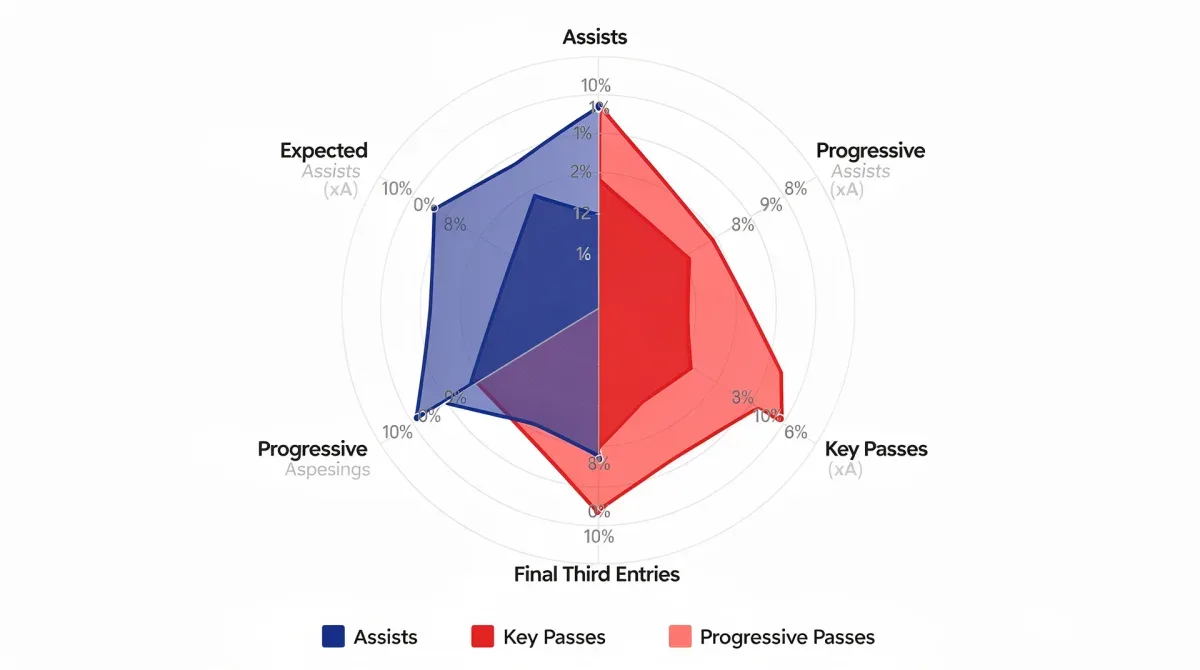
Beyond raw numbers, we also considered other advanced metrics such as expected assists (xA), progressive passes, and successful dribbles, to provide a holistic view of their offensive contribution. These supplementary statistics help paint a more complete picture, differentiating players who merely accumulate passes from those who truly drive their team's attack with purpose and penetration. The aim was to move beyond surface-level observations and delve into the statistical underpinnings of their playmaking excellence.
Data sources and filtering criteria
Our data was primarily sourced from leading football analytics platforms, ensuring a robust and reliable foundation for our analysis. These platforms compile extensive data on player performance, allowing for granular examination of various metrics. The filtering criteria were strict: players had to have played a minimum of 1000 minutes in the current season to ensure a significant sample size, preventing any anomalies from small appearances skewing the data. This minimum playtime ensures that the statistics reflect sustained performance rather than fleeting moments of brilliance.
- Age limit: Players must be 22 years old or younger at the time of data collection.
- League eligibility: Must play in one of Europe's top 10 leagues, prioritizing the top 5.
- Key pass threshold: A minimum of 2.8 key passes per 90 minutes.
- Minimum minutes played: At least 1000 minutes in the league season to ensure statistical relevance.
The combination of these quantitative and qualitative measures allowed us to identify a select group of players who not only meet the statistical benchmark but also demonstrate a profound influence on their team's attacking play. This methodical approach ensures that our list is not merely a collection of names, but a carefully curated selection of players whose performances genuinely stand out in the highly competitive world of European football. Their ability to consistently deliver under these stringent conditions underscores their potential for future stardom.
The top 5 young European playmakers
Here, we spotlight the five exceptional young European playmakers who have distinguished themselves by consistently averaging over 2.8 key passes per 90 minutes. Each player brings a unique set of skills and attributes to their respective teams, making them indispensable to their club's attacking endeavors. Their performances are not just a glimpse into their individual talent but also a reflection of modern tactical trends in creating offensive momentum.
These individuals represent the pinnacle of youth playmaking in Europe, showcasing an advanced understanding of space, timing, and execution. Their ability to consistently pick out teammates in dangerous positions, often with a single pass, is what elevates them above their peers. We will delve into their specific contributions, highlighting what makes each of them a standout talent in their league.
Player 1: Florian Wirtz (Bayer Leverkusen)
Florian Wirtz has emerged as one of the most exciting talents in the Bundesliga, consistently demonstrating an unparalleled ability to dictate play from midfield. His vision, coupled with exceptional close control and dribbling, allows him to navigate congested areas and deliver pinpoint passes. Wirtz's average of over 3.0 key passes per 90 minutes is a testament to his creative output, often being the catalyst for Bayer Leverkusen's attacking thrusts. He combines technical brilliance with a keen tactical understanding, making him a nightmare for opposing defenses.
- Key strengths: = Dribbling, vision, final third passing, tactical intelligence.
- Impact: Crucial in breaking down low blocks and initiating counter-attacks.
- Future outlook: Widely considered a future Ballon d'Or contender, his trajectory is steep.
Player 2: Jamal Musiala (Bayern Munich)
Jamal Musiala's ascent at Bayern Munich has been meteoric, showcasing a blend of elegance and effectiveness that few young players possess. Operating primarily as an attacking midfielder or wide forward, Musiala's ability to glide past defenders and create opportunities is remarkable. His key pass statistics underscore his importance in Bayern's star-studded lineup, often providing the crucial link between midfield and attack. His agility and close control make him incredibly difficult to dispossess, allowing him to hold onto the ball and find the perfect pass.
Player 3: Gavi (FC Barcelona)
Despite his tender age, Gavi has become a central figure in FC Barcelona's midfield, embodying the club's traditional passing philosophy with a modern aggressive edge. His tenacity, work rate, and surprisingly mature decision-making are complemented by an impressive key pass rate. Gavi's ability to thread passes through tight defensive lines, often under immense pressure, highlights his composure and technical skill. He's not just a creator but also a relentless ball-winner, adding another dimension to his playmaking profile.
Player 4: Xavi Simons (RB Leipzig/PSG)
Xavi Simons has enjoyed a phenomenal rise, showcasing his talents across different European leagues. His loan spell at RB Leipzig particularly highlighted his exceptional playmaking abilities, where he consistently delivered a high volume of key passes. Simons possesses an uncanny ability to find pockets of space, receive the ball, and quickly distribute it to dangerous areas. His versatility allows him to operate effectively in various attacking roles, making him a dynamic and unpredictable threat.
Player 5: Gabri Veiga (Al-Ahli/Celta Vigo)
Gabri Veiga, prior to his move to Al-Ahli, was a revelation in La Liga with Celta Vigo, demonstrating a flair for goal-scoring and chance creation from midfield. His energetic runs from deep, combined with a powerful shot and an eye for a killer pass, made him one of the most sought-after young talents. While now playing outside of Europe's top leagues, his European performances set a benchmark, and his key pass statistics during his time in La Liga were consistently among the best for players his age. His ability to impact games from a central midfield role was exceptional.
These five players exemplify the future of European football, showcasing a blend of technical skill, tactical awareness, and consistent creative output. Their impressive key pass statistics are not just numbers; they are a clear indication of their profound influence on their teams' offensive capabilities, setting them apart as truly elite young playmakers.

Tactical impact of high key pass volume
A high volume of key passes from a single player significantly alters a team's tactical approach and offensive potency. These playmakers become central to breaking down resilient defenses, especially in games where space is at a premium. Their ability to consistently find gaps, exploit weaknesses, and deliver precise passes into dangerous areas means opponents cannot afford to ignore their presence. This forces defensive adjustments, often creating more space for other attackers to exploit, thereby enhancing the overall team's attacking efficiency.
Furthermore, the presence of such a prolific creator can also influence team morale and confidence. Knowing that a teammate can consistently provide scoring opportunities empowers forwards to make more adventurous runs, knowing the ball is likely to arrive. This symbiotic relationship between creator and finisher is crucial for sustained attacking success. It transforms a team from one that hopes for chances to one that actively engineers them, game after game.
How playmakers dictate offensive flow
- Tempo control: Elite playmakers often dictate the pace of attack, knowing when to accelerate play with a quick pass or slow it down to maintain possession and find an opening.
- Defensive disruption: Their incisive passes force defenders to make quick decisions, often leading to defensive errors or creating numerical advantages in attacking zones.
- Versatility: Many modern playmakers can operate from various positions, making them harder to mark and allowing for flexible tactical setups.
The tactical implications extend beyond just attacking phases. A playmaker who consistently creates can also alleviate pressure on the defense by keeping the ball in advanced areas. This sustained offensive threat means opponents spend more time defending and less time attacking, indirectly contributing to defensive stability. Their influence is multifaceted, touching every aspect of a team's performance, solidifying their status as the architects of victory.
Challenges and development for young playmakers
While the talent of these young playmakers is undeniable, their journey is far from over. They face numerous challenges in their development, from adapting to new tactical systems and handling increased physical demands to managing the immense pressure and expectations placed upon them. The transition from promising youth to established world-class talent requires continuous learning, resilience, and a commitment to refining their craft. For many, the biggest hurdle will be maintaining consistency at the highest level.
Moreover, the physical toll of modern football is significant. Playmakers are often targeted by opposition defenses, facing aggressive marking and tackles. Developing the physical robustness to withstand these challenges, coupled with intelligent movement to evade pressure, is crucial for their longevity and continued effectiveness. It's a balance between protecting their creative spark and building a foundation that can endure the rigors of elite competition.

Areas for continued growth
For these young talents, continuous improvement is non-negotiable. While their key pass numbers are impressive, there are always areas to refine. Enhancing defensive contributions, improving shot conversion (for those who also score), and developing leadership qualities on the pitch are common objectives. The ability to influence games even when not directly involved in the final pass is a hallmark of truly elite playmakers, requiring a broader understanding of game management and tactical discipline.
- Physical conditioning: Building strength and endurance to withstand the demands of a full season.
- Defensive responsibilities: Improving pressing triggers, tackling, and positional awareness to contribute to team defense.
- Mental fortitude: Developing resilience to handle pressure, maintain focus, and learn from mistakes.
- Tactical versatility: Adapting to different formations and roles, becoming more unpredictable for opponents.
The pathway to sustained greatness is paved with dedication and a willingness to evolve. For these young playmakers, the challenge is not just to maintain their current high standards but to elevate their game further, adding new dimensions to their play. Coaches and mentors play a vital role in guiding them through these developmental stages, ensuring they reach their full potential and continue to mesmerize fans with their creative brilliance.
The future of European playmaking
The emergence of these young European playmakers averaging over 2.8 key passes per 90 minutes signals an exciting future for football. Their presence ensures a steady supply of creative talent, vital for the continued evolution of attacking strategies across various leagues. As football becomes increasingly tactical and defenses grow more organized, the ability to unlock these defensive structures with intelligent passing becomes even more valuable. These players are not just performing well now; they are setting new standards for what is expected from a modern attacking midfielder.
Their development will be closely watched, as they are poised to become the next generation of global superstars. The impact of their performances extends beyond their individual clubs, influencing national team setups and inspiring countless aspiring young footballers. The blend of technical skill, tactical awareness, and sheer creative audacity they display is a testament to the quality of youth development in Europe and the enduring appeal of intelligent, attacking football.
Trends in playmaking development
Several trends are observable in the development of these young playmakers. There's a noticeable emphasis on versatility, with many capable of playing multiple roles, from a deep-lying orchestrator to a high-pressing attacking midfielder. Furthermore, data analytics now plays a crucial role in identifying and nurturing these talents, allowing clubs to pinpoint specific attributes and tailor training programs to maximize their potential. The focus is not just on raw talent, but on how that talent can be optimized within a team structure.
- Data-driven scouting: Analytics are increasingly used to identify players with high creative output metrics.
- Holistic development: Training programs focus on technical, tactical, physical, and psychological aspects.
- Positional fluidity: Playmakers are encouraged to be versatile and occupy different attacking zones.
- Early integration: Top talents are often integrated into senior teams at a younger age, accelerating their development.
The future promises even more dynamic and influential playmakers, shaped by advanced training methods and a deeper understanding of the game's complexities. These young talents are not just players; they are innovators, pushing the boundaries of what is possible on the field and ensuring that the beautiful game continues to evolve in captivating ways. Their journey is a narrative of talent, hard work, and the relentless pursuit of footballing excellence.
The global appeal of European playmakers
The appeal of European playmakers, particularly those exhibiting high creative output, extends far beyond the continent's borders. These players are often the subject of intense global scouting and transfer speculation, coveted by clubs worldwide for their ability to transform an offense. Their performances in the UEFA Champions League and top domestic leagues serve as a global showcase, drawing attention from fans, analysts, and potential suitors from every corner of the footballing world. This international interest underscores the universal value placed on players who can consistently create scoring chances.
For fans in the United States, following the careers of these young European stars offers a fascinating glimpse into the highest echelons of international soccer. The intricate playmaking, tactical battles, and individual brilliance these players bring to the pitch are a major draw, contributing to the growing popularity of European football across the Atlantic. Their ability to deliver moments of magic, often against the sport's toughest defenses, captivates audiences and fosters a deeper appreciation for the nuanced artistry of the game.
Why these talents resonate globally
- Exceptional skill: Their technical ability and vision are universally admired.
- Game-changing impact: They possess the power to alter the outcome of matches with a single pass.
- Future potential: Many are seen as future legends, generating excitement about their long-term careers.
- Tactical influence: They exemplify modern football's strategic depth and creative evolution.
The global reach of European football, amplified by digital media and extensive broadcasting, ensures that the exploits of these young playmakers are witnessed by millions. Their stories, from humble beginnings to the grand stages of European competition, resonate with a diverse audience, transcending cultural and geographic boundaries. As they continue to develop and leave their mark on the game, their global appeal will only intensify, solidifying their status as true international icons of the sport.
| Playmaker | Key Contribution |
|---|---|
| Florian Wirtz | Exceptional vision and dribbling, crucial for Leverkusen's attack. |
| Jamal Musiala | Elegant ball control and goal-creating passes for Bayern. |
| Gavi | Tenacious midfielder with mature decision-making and precise passes. |
| Xavi Simons | Dynamic and versatile, excels in finding space and distributing. |
Frequently asked questions about young European playmakers
What defines a 'key pass' in soccer statistics?▼A key pass is the final pass, cross, or pass-equivalent that directly leads to a teammate taking a shot on goal. It's a crucial metric for evaluating a player's ability to create scoring opportunities, regardless of whether the shot results in a goal or not.
Why is 2.8 key passes per 90 minutes considered a high benchmark for young players?▼This benchmark signifies exceptional and consistent creative output. For young players, maintaining such a high average indicates not only innate talent and vision but also a mature understanding of the game, placing them among the elite chance creators in European football.
How do these young playmakers influence team tactics?▼Their high key pass volume forces opponents to adjust defensive strategies, opening up space for other attackers. They dictate offensive tempo, break down defenses with incisive passes, and provide a reliable source of goal-scoring opportunities, enhancing overall team attacking efficiency.
What challenges do young playmakers face in their development?▼They face challenges such as adapting to higher physical demands, managing immense pressure and expectations, maintaining consistency, and refining defensive contributions. Developing mental fortitude and tactical versatility are also crucial for sustained success at the elite level.
Are these players likely to become future global superstars?▼Given their current performance levels and consistent creative output, many of these young playmakers are on a trajectory to become global superstars. Their blend of technical skill, tactical intelligence, and game-changing abilities makes them highly sought after and influential figures in international soccer.
Conclusion
The analysis of the top 5 young European playmakers averaging over 2.8 key passes per 90 minutes reveals a cohort of exceptional talents who are not just contributing to their teams but are actively shaping the future of football. Their ability to consistently create chances, often under immense pressure, underscores their importance in modern tactical setups. As they continue to develop, these players are poised to become the driving forces of their respective clubs and national teams, cementing their legacy as the next generation of footballing maestros. Their journey highlights the critical role of vision, precision, and consistent creative output in achieving success at the highest levels of the beautiful game.
