USMNT Performance: 5 Tactical Adjustments for Top 10 Teams
To elevate their game against FIFA Top 10 ranked teams, the USMNT must implement five specific tactical adjustments, focusing on defensive solidity, midfield control, attacking efficiency, set-piece strategy, and mental resilience, crucial for consistent international success.
Tracking USMNT performance against Top 10 FIFA Rankings: 5 tactical adjustments required for international matches is more than just an academic exercise; it's a critical look at how the United States Men's National Team can genuinely compete at the highest level. The aspiration for consistent international success demands a rigorous evaluation of current strategies and a willingness to adapt. This article delves into the specific tactical shifts necessary for the USMNT to not just participate, but truly challenge the world's elite.
Understanding the Current USMNT Landscape Against Elite Opposition
The USMNT has made significant strides in recent years, cultivating a promising generation of talent playing in top European leagues. However, the true litmus test for any aspiring global football power lies in its ability to consistently perform and secure results against the very best. Historically, matches against FIFA Top 10 ranked nations have often exposed tactical deficiencies and a gap in experience and execution.
Analyzing past encounters reveals a pattern where the USMNT, while showing flashes of brilliance, struggles with sustained pressure, tactical discipline over 90 minutes, and converting opportunities into goals against opponents who punish every mistake. These matches are not merely about individual skill, but about collective tactical intelligence, resilience, and the ability to adapt in real-time. The learning curve is steep, and every encounter with a top-tier team offers invaluable lessons for future development.
To bridge this gap, a deep dive into specific tactical frameworks is essential. It's about moving beyond general observations and pinpointing the exact areas where adjustments can yield tangible improvements. This understanding forms the bedrock upon which any successful strategic overhaul must be built.
Tactical Adjustment 1: Enhancing Defensive Solidity and Pressing Schemes
Against top-ranked teams, defensive solidity is paramount. The USMNT often finds itself vulnerable to quick transitions and intricate passing movements that exploit spaces between lines. A more organized and aggressive pressing scheme, combined with disciplined defensive positioning, is crucial to disrupt opponents' rhythm and win back possession in dangerous areas.
This isn't just about individual defenders; it's a collective effort involving midfielders and even forwards. The aim is to reduce the time and space available to creative playmakers and to force opponents into mistakes in their own half. Implementing a high-press system requires immense fitness and coordination, but the rewards—disrupted attacks and opportunities for quick counter-attacks—are significant.
Implementing a Coordinated High Press
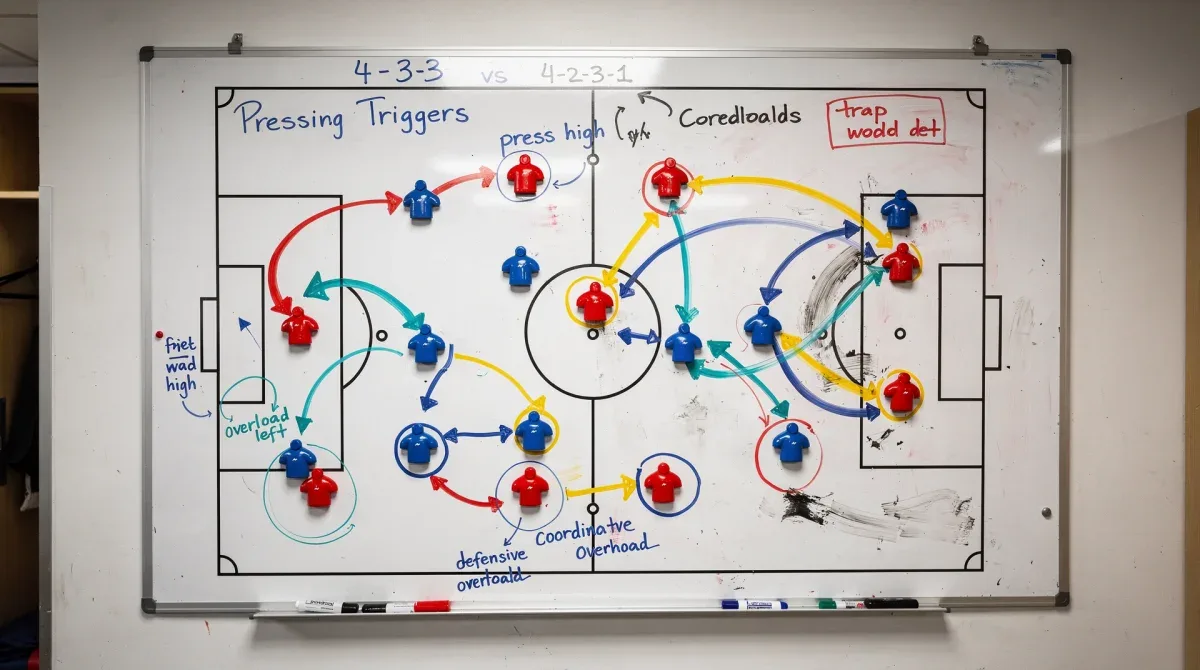
A successful high press demands synchronization across the entire team. Forwards initiate the press, funneling opponents into specific areas, while midfielders step up to cut off passing lanes. Defenders must push high to condense space, trusting their teammates to cover any gaps.
- Triggering the press: Identify clear triggers, such as a backward pass or a heavy touch from an opponent, for the entire team to initiate the press simultaneously.
- Cover shadows: Players must use their cover shadows to block passing lanes, effectively making the field smaller for the opponent.
- Intensity and endurance: Maintain high intensity throughout the pressing phase, requiring excellent physical conditioning from all players.
Furthermore, when the high press is bypassed, the team must quickly transition into a compact, low block to protect the goal. This defensive flexibility, moving seamlessly between aggressive pressing and disciplined defending, is a hallmark of elite international teams. It minimizes scoring chances for opponents while conserving energy for offensive transitions.
Tactical Adjustment 2: Dominating the Midfield Battle Through Positional Play
The midfield is often the engine room of any successful team, and against FIFA Top 10 opponents, controlling this area is non-negotiable. The USMNT needs to refine its positional play to ensure numerical superiority and effective ball retention in the central channels. This involves intelligent movement, quick passing, and players consistently offering passing options.
Dominating the midfield is not just about holding possession; it’s about controlling the tempo of the game, dictating where and how the opponent plays, and creating platforms for attacking transitions. When the USMNT can effectively circulate the ball through the midfield, they can draw opponents out of position and create space in wider or more advanced areas.
Improving Ball Retention and Progression
Effective positional play requires more than just passing; it demands an understanding of angles, spacing, and when to accelerate the play. Midfielders must be comfortable receiving the ball under pressure and making quick, incisive decisions to progress play.
- Triangle and diamond formations: Utilize these shapes in midfield to create passing options and overload opponents in specific zones.
- Body orientation: Players should receive the ball with an open body shape, allowing them to see the entire field and make forward passes quickly.
- Third-man runs: Encourage off-the-ball movement, particularly third-man runs, to break lines and create numerical advantages in attacking areas.
By mastering positional play, the USMNT can reduce the number of turnovers in critical areas, build attacks more patiently, and ultimately wear down even the most formidable opponents. This tactical adjustment shifts the focus from reactive play to proactive control, a vital step towards competing at the highest international level.
Tactical Adjustment 3: Maximizing Attacking Efficiency and Clinical Finishing

Against elite defenses, scoring opportunities are often few and far between. The USMNT must become more clinical in front of goal, converting a higher percentage of their chances. This involves not only improving individual finishing skills but also refining attacking patterns of play to create higher-quality opportunities.
Maximizing attacking efficiency also means being more decisive in the final third, whether through quick combinations, intelligent runs, or effective crosses. The ability to break down organized defenses requires creativity, precision, and a ruthless mentality. It's about making every touch and every pass count when within striking distance of the opponent's goal.
Developing Diverse Attacking Strategies
Relying on a single attacking approach makes a team predictable. The USMNT needs to develop a diverse set of attacking strategies to keep opponents guessing and exploit different defensive vulnerabilities.
- Central penetration: Practice intricate passing combinations and through balls to breach central defenses.
- Wide play and crossing: Utilize wingers and fullbacks to create width, deliver accurate crosses, and attack the box with multiple runners.
- Set-piece creativity: Design sophisticated set-piece routines that pose a genuine threat and create direct scoring opportunities.
Furthermore, the USMNT should focus on quick transitions from defense to attack. When possession is won, immediately look for opportunities to launch direct attacks before the opponent can reorganize defensively. This requires speed, vision, and precise passing in transition moments, turning defensive solidity into offensive potency.
Tactical Adjustment 4: Optimizing Set-Piece Strategies on Both Ends
Set pieces—corners, free kicks, and throw-ins—represent a significant portion of goals scored in modern football, especially at the international level. For the USMNT, optimizing both offensive and defensive set-piece strategies is a low-hanging fruit for immediate improvement against Top 10 teams. These moments can be game-changers, either securing vital goals or preventing costly concessions.
On the offensive side, creative routines can exploit defensive weaknesses, while defensively, a disciplined and well-drilled approach can nullify even the most dangerous threats. The marginal gains from perfecting set-piece execution can often be the difference between a draw and a win, or a clean sheet and conceding a soft goal. This area often reflects the team's attention to detail and tactical preparation.
Crafting Effective Offensive Set Pieces
Offensive set pieces should be varied and designed to create confusion and space. This involves specific player movements, designated takers, and clear targets.
- Varied delivery: Mix short corners, inswinging, outswinging, and direct free kicks to keep opponents guessing.
- Blocking and screening: Utilize players to block defenders and create space for key attacking headers or shots.
- Second ball anticipation: Position players strategically to win second balls and capitalize on deflections or clearances.
Defensively, the USMNT needs a clear system for marking, whether zonal or man-to-man, and players must be aware of their responsibilities. Preventing easy headers, blocking shots, and clearing danger effectively are non-negotiable. Consistent practice and clear communication are key to minimizing threats from opposition set pieces.
Tactical Adjustment 5: Cultivating Mental Resilience and Adaptability
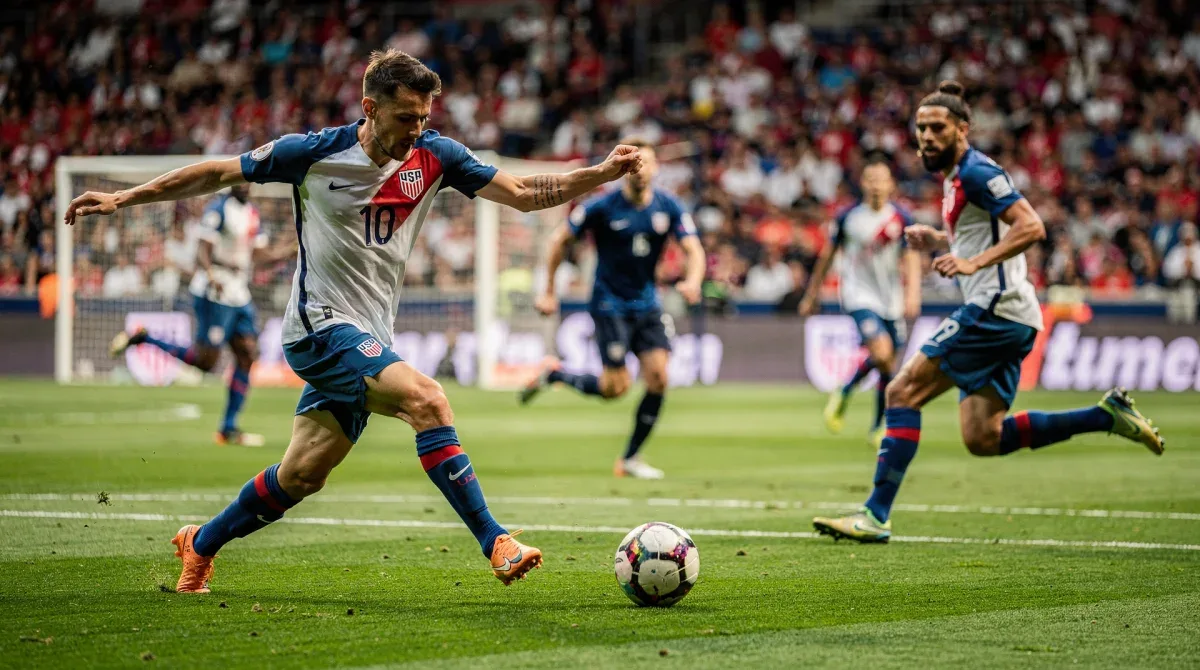
Beyond the technical and tactical aspects, mental resilience and adaptability are critical for the USMNT when facing Top 10 FIFA ranked teams. These matches are often high-pressure environments where the momentum can shift rapidly. The ability to maintain composure, stick to the game plan, and adapt to unforeseen circumstances is a hallmark of elite teams.
Against superior opposition, the USMNT will inevitably face periods of intense pressure. How they react to conceding a goal, to a controversial referee decision, or to a tactical shift from the opponent can define the outcome of the match. Cultivating a strong collective mentality, where players trust each other and remain focused on their objectives, is as important as any tactical diagram.
Building a Resilient Team Culture
Mental resilience isn't something that can be taught overnight; it's built through consistent training, challenging experiences, and strong leadership. The coaching staff plays a crucial role in fostering this culture.
- Scenario training: Simulate high-pressure game scenarios in training to prepare players for adverse situations.
- Psychological support: Provide mental conditioning and sports psychology resources to help players manage stress and maintain focus.
- Leadership development: Empower on-field leaders to guide the team through difficult moments and reinforce tactical instructions.
Furthermore, the ability to adapt tactically during a game is vital. This means players understanding multiple roles, being comfortable in different formations, and executing in-game adjustments quickly. The coaching staff must also be prepared to make bold substitutions or formation changes when the initial plan isn't working, demonstrating proactive leadership and tactical flexibility.
Integrating Adjustments for Cohesive Team Performance
Implementing these five tactical adjustments is not about isolated changes; it's about integrating them into a cohesive team philosophy that enhances overall performance. Defensive solidity must feed into effective midfield control, which then creates platforms for clinical attacking efficiency. Optimized set pieces can provide crucial breakthroughs, and all of this is underpinned by robust mental resilience and adaptability.
The challenge for the USMNT coaching staff, led by Gregg Berhalter, is to drill these concepts into the players, ensuring that each individual understands their role within the broader tactical framework. This requires consistent training, clear communication, and opportunities to test these adjustments against high-caliber opposition. The ultimate goal is to develop a team that is tactically sophisticated, physically dominant, and mentally unshakeable on the international stage.
Success against FIFA Top 10 teams is a marathon, not a sprint. It involves continuous learning, refinement, and a commitment to evolution. The tactical adjustments discussed here represent a roadmap for the USMNT to not only compete but to genuinely thrive in the demanding world of international soccer. The journey will be challenging, but the potential rewards—consistent success and a stronger global standing—are well worth the effort.
| Key Tactical Area | Brief Adjustment Description |
|---|---|
| Defensive Solidity | Implement coordinated high pressing and flexible low block transitions to disrupt opponents. |
| Midfield Control | Enhance positional play for numerical superiority, ball retention, and tempo dictation. |
| Attacking Efficiency | Develop diverse attacking patterns and improve clinical finishing in the final third. |
| Mental Resilience | Cultivate composure and adaptability under pressure through scenario training and leadership. |
Frequently Asked Questions About USMNT Tactics
Why is tracking USMNT performance against Top 10 FIFA teams important?▼Tracking performance against elite teams serves as a crucial benchmark for the USMNT's progress. It highlights areas where the team excels and, more importantly, exposes tactical and technical deficiencies that need addressing to compete consistently at the highest international level, informing future development strategies.
What does "defensive solidity" entail for the USMNT?▼Defensive solidity for the USMNT means a well-organized defense that is difficult to break down. This involves coordinated pressing, disciplined positioning, and effective transitions between high-press and low-block defensive structures. The goal is to minimize opponent scoring chances and regain possession efficiently, protecting the goal effectively.
How can the USMNT improve its midfield dominance?▼To improve midfield dominance, the USMNT needs to enhance its positional play. This includes creating numerical superiorities, improving ball retention under pressure, and making quick, intelligent passes to progress play. Mastering these aspects allows the team to control game tempo and create attacking platforms.
What are some key aspects of maximizing attacking efficiency?▼Maximizing attacking efficiency involves improving clinical finishing, developing diverse attacking patterns (central penetration, wide play, set-piece creativity), and executing quick transitions from defense to attack. The team must be more decisive in the final third, converting a higher percentage of their limited chances against elite opposition.
Why is mental resilience important for the USMNT in big matches?▼Mental resilience is crucial because high-stakes international matches are often characterized by intense pressure and rapid momentum shifts. The USMNT must maintain composure, stick to their game plan, and adapt to adversity. A strong collective mentality helps players manage stress and perform optimally even under challenging circumstances.
Conclusion
The journey for the USMNT to consistently challenge and defeat FIFA Top 10 ranked teams is an ongoing process demanding strategic evolution and unwavering commitment. By focusing on these five tactical adjustments—enhancing defensive solidity, dominating the midfield, maximizing attacking efficiency, optimizing set-piece strategies, and cultivating mental resilience—the team can lay a robust foundation for future success. This comprehensive approach, integrating technical skill with a sophisticated tactical framework, will be instrumental in elevating the USMNT's standing on the global stage and realizing its full potential in international competitions.
