100-Minute Game: New Rules Alter Physical Output by 15%
New stoppage-time rules extend soccer matches to a 100-minute average, demanding a 15% increase in player physical output and profoundly reshaping tactical approaches and athletic preparation across the sport.
The introduction of extended stoppage time in soccer has ushered in a new era, fundamentally transforming the game. This shift demands a comprehensive analysis of the 100-minute game, revealing how new rules are altering physical output by an estimated 15%. How are players, coaches, and tactics adapting to this significant increase in playing time?
The Genesis of the Extended Game: Understanding New Stoppage-Time Rules
The recent changes to stoppage time in soccer were implemented to ensure more actual playing time and reduce time-wasting. This initiative, spearheaded by governing bodies, aims to make the game fairer and more continuous, directly impacting match duration. It's not just about adding minutes; it's about reclaiming lost time due to substitutions, goal celebrations, injuries, and VAR reviews.
The Rationale Behind the Reforms
Before these new rules, the average effective playing time in a 90-minute match often hovered around 55-60 minutes. This discrepancy led to widespread calls for reform to ensure fans and players experienced a more continuous spectacle. The reforms seek to penalize deliberate time-wwasting more effectively, ensuring that the clock truly reflects the action on the pitch.
- Increased Match Duration: Matches now frequently extend beyond 90 minutes, often reaching 100 minutes or more.
- Fairer Play: Reduces incentives for teams to waste time, promoting a more fluid game.
- VAR Impact: Time spent on video assistant referee decisions is now more accurately accounted for.
- Player Welfare: Raises questions about the long-term physical toll on athletes.
These new rules represent a significant philosophical shift in how soccer is officiated and played. The intent is clear: maximize active playing time. However, the practical implications for player physiology and team strategy are still being fully understood and adapted to across various leagues and competitions. The transition has been challenging for some, but many see it as a necessary evolution for the sport.
Quantifying the Physical Impact: The 15% Increase in Output
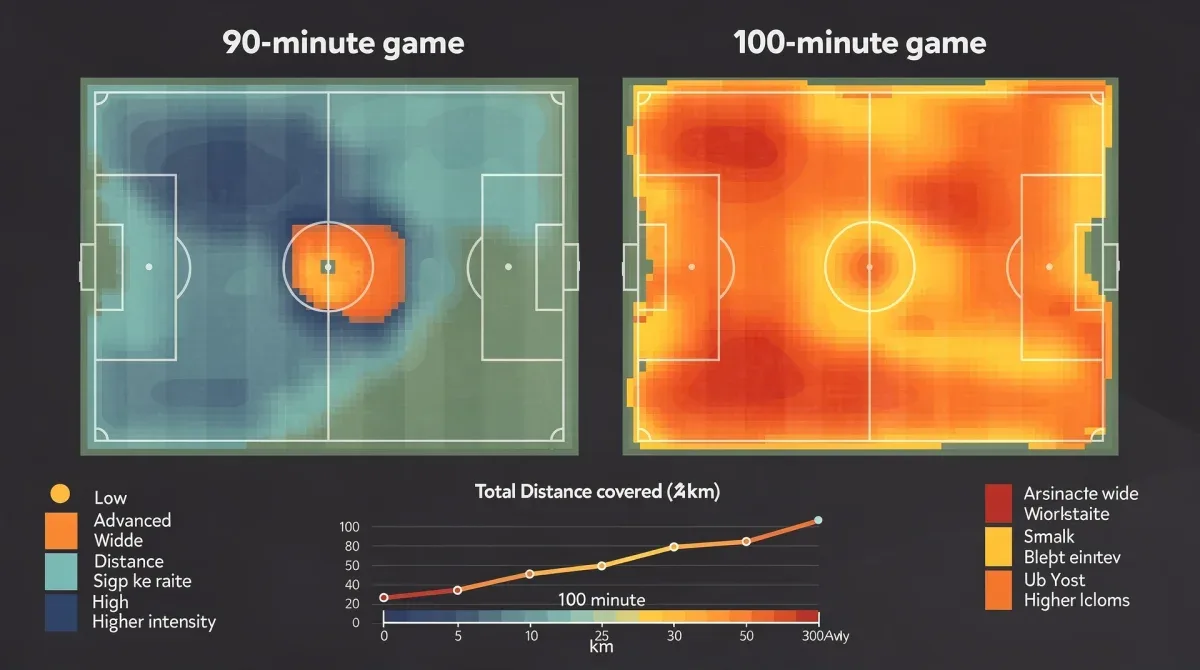
The most striking consequence of the 100-minute game is the measurable increase in physical demands placed on players. Early analyses suggest an average 15% rise in total physical output per match, encompassing distance covered, sprints, and high-intensity actions. This isn't merely an anecdotal observation but a data-driven conclusion emerging from various sports science studies.
Metrics of Increased Demand
Sports scientists are diligently tracking various metrics to understand this surge in output. GPS tracking data, heart rate monitors, and accelerometers provide granular insights into player movements and physiological responses during these extended periods. The additional 10 minutes, when played at match intensity, are proving to be far more strenuous than simply adding extra training time.
- Total Distance Covered: Players run significantly further over the course of a match.
- High-Intensity Runs: The number of sprints and rapid accelerations increases.
- Fatigue Accumulation: Players experience higher levels of fatigue later into the game.
- Recovery Needs: Post-match recovery protocols are becoming even more crucial.
The 15% increase is an average, with individual positions experiencing varying levels of additional strain. Midfielders and full-backs, who typically cover the most ground, often see the most substantial increases in distance and high-intensity efforts. Strikers and central defenders also face augmented demands, particularly in defensive transitions and aerial duels late in the game. This increase is not linear; the final minutes of an extended game are often played under extreme physiological stress, leading to more errors and potential injuries.
Adapting Training Regimens for the Extended Match Duration
With the advent of the 100-minute game, traditional training methodologies are undergoing a significant overhaul. Clubs are now focusing on conditioning programs that prepare players for sustained high-intensity efforts over longer periods, moving beyond the conventional 90-minute benchmark. This adaptation is crucial for maintaining performance levels and mitigating injury risks.
New Approaches to Physical Preparation
Modern training now incorporates more scenario-based drills that simulate the latter stages of an extended match, often with players already fatigued. Emphasis is placed on anaerobic endurance, repeated sprint ability, and tactical decision-making under duress. The goal is to build resilience, both physically and mentally, for the final, demanding minutes of a game.
- Extended Drills: Training sessions now include longer periods of continuous play.
- Fatigue Management: Greater focus on recovery strategies and nutritional support.
- Positional Specificity: Tailoring conditioning to the unique demands of each playing position.
- Mental Toughness: Preparing players to maintain concentration and decision-making under extreme fatigue.
Beyond just physical conditioning, nutrition and hydration strategies are also being refined. Players are now more meticulously monitored for their caloric intake and electrolyte balance, especially during periods of intense fixture congestion. Sports psychologists are also playing a more prominent role, helping players cope with the increased mental pressure of longer matches and the need for sustained focus. The holistic approach to player preparation is becoming the standard, acknowledging that the 100-minute game impacts every facet of an athlete's life.
Tactical Shifts and Strategic Adjustments in the 100-Minute Era

Coaches and technical staff are recalibrating their tactical approaches to account for the extended duration of matches. The final 10-15 minutes, once considered 'injury time' or a period for last-ditch efforts, are now a significant phase of the game where tactical nuances can decide outcomes. This requires a more dynamic and flexible approach to game management.
Evolving Game Management and Substitutions
The timing of substitutions has become even more critical. Coaches are strategically holding back substitutions to inject fresh legs into the game during the extended period, aiming to exploit opponent fatigue or shore up defensive lines. The impact of the five-substitute rule, which coincided with the new stoppage time rules, has provided a crucial tactical advantage. This allows for more rotational play and better management of player energy throughout the match.
- Strategic Substitutions: Maximizing impact by introducing fresh players late in the game.
- Energy Conservation: Teams adopting periods of lower intensity to conserve energy for the extended minutes.
- Defensive Solidity: Reinforced defensive structures to withstand late pressure.
- Attacking Opportunities: Exploiting fatigued defenses in the additional time.
Furthermore, tactical patterns are evolving. Some teams might adopt a more conservative approach in the initial 75-80 minutes, knowing they need to preserve energy for a strong finish. Others might press high early, hoping to gain a lead and then manage the game more carefully. The role of set pieces in the extended period also gains prominence, as tired players are more prone to errors in concentration. The mental fortitude required to maintain tactical discipline for an extra 10-15 minutes is a new challenge for every squad.
Injury Risks and Player Welfare Concerns in the Extended Game
While the objective of increasing active playing time is laudable, the extended duration of matches raises significant concerns regarding player welfare and increased injury risks. The additional 15% physical output directly translates to greater physiological stress and potential for muscle fatigue and overuse injuries. This is a critical area that requires ongoing monitoring and intervention from medical staff.
Mitigating the Health Impact
Clubs are investing more in sports medicine, physiotherapy, and recovery technologies. Proactive injury prevention strategies, including load management, personalized recovery plans, and advanced screening for muscular imbalances, are becoming standard practice. The aim is to detect early signs of fatigue or potential issues before they escalate into serious injuries.
- Increased Muscle Fatigue: Higher incidence of hamstring and calf strains due to prolonged exertion.
- Joint Stress: Greater impact on knees and ankles over the extended period.
- Concussion Risk: Sustained high-intensity play potentially increases collision rates.
- Burnout: Mental and physical exhaustion from the cumulative effect of longer matches and shorter recovery windows.
The cumulative effect of playing longer matches, especially in congested fixture schedules, is a major concern. Leagues and governing bodies are under pressure to balance the desire for more playing time with the need to protect the athletes. Discussions around squad rotation, mandatory rest periods, and even potential adjustments to the number of matches played per season are becoming more frequent. Ensuring player longevity and career health is paramount, and the long-term impact of the 100-minute game on injury rates will be a defining metric of its success or failure.

The Future Landscape: Long-Term Implications for Football
The adoption of the 100-minute game is not just a temporary adjustment; it represents a significant evolutionary step for football. Its long-term implications will shape player development, league structures, and the overall spectacle of the sport. Understanding these potential future trends is crucial for all stakeholders.
Impact on Player Development and Recruitment
Youth academies will likely adapt their training programs to prepare young players for the increased physical demands from an earlier age. The profile of a desirable player might also shift, favoring athletes with exceptional stamina and resilience alongside technical skill. Recruitment strategies could place a greater emphasis on physical data and injury history. The emphasis on comprehensive athletic development will become even more pronounced.
- Youth Academy Adjustments: Earlier focus on endurance and robust physical conditioning.
- Scouting Profile Evolution: Greater emphasis on stamina, resilience, and injury resistance.
- Technological Integration: More reliance on sports science and data analytics for player assessment.
- Rule Refinements: Potential further tweaks to stoppage time rules based on ongoing data and feedback.
Furthermore, the commercial aspects of the game could also be influenced. Longer matches mean more broadcast time, potentially leading to increased revenue opportunities for broadcasters and clubs. However, it also means a greater commitment from fans, which could impact attendance and viewership if not managed correctly. The balance between entertainment, player welfare, and commercial viability will continue to be a delicate act. The success of the 100-minute game will ultimately depend on its ability to enhance the sport without compromising the health of its most valuable assets: the players.
| Key Aspect | Brief Description |
|---|---|
| New Stoppage Rules | Implemented to increase effective playing time, leading to matches often exceeding 100 minutes. |
| Physical Output Increase | Players experience an average 15% rise in total physical demands, including distance and sprints. |
| Training Adaptations | Clubs now focus on extended endurance drills and enhanced recovery for sustained high-intensity play. |
| Tactical Shifts | Coaches adjust substitution timing and game management to leverage fresh legs and exploit late-game fatigue. |
Frequently Asked Questions About the 100-Minute Game
Why were the new stoppage-time rules introduced?▼The new rules were implemented to increase the actual playing time in soccer matches and reduce time-wasting. The aim is to make the game more continuous and fairer by accurately accounting for time lost due to substitutions, goal celebrations, injuries, and VAR reviews.
How much has player physical output increased?▼Early analyses indicate an average 15% increase in total physical output per match. This includes greater distances covered, more high-intensity runs, and increased fatigue accumulation due to the extended playing duration beyond the traditional 90 minutes.
What changes have teams made to training?▼Training regimens now incorporate extended drills and scenario-based simulations to prepare players for sustained high-intensity efforts over longer periods. There is a greater focus on anaerobic endurance, recovery strategies, and mental toughness for the demanding final minutes of games.
How are tactics and strategy affected?▼Coaches are recalibrating tactical approaches, making more strategic use of substitutions to introduce fresh legs late in the game. Teams might also adjust energy conservation strategies throughout the match to ensure they can maintain performance during the extended period.
What are the main concerns regarding player welfare?▼The primary concerns include increased injury risks due to muscle fatigue and overuse, greater joint stress, and potential burnout from the cumulative demands of longer matches. Clubs are enhancing medical support and recovery protocols to mitigate these health impacts.
Conclusion
The shift to the 100-minute game marks a profound evolution in soccer, driven by new stoppage-time rules designed to maximize active play. While achieving its goal of increasing effective match duration, this change has imposed a significant 15% surge in player physical output, reshaping every facet of the sport from training methodologies and tactical game plans to player welfare and long-term development strategies. As football continues to adapt, understanding and mitigating the increased demands on athletes will be paramount to preserving the integrity of the game and the health of its stars.
