3-2-4-1 Inverted Fullback: Modern Soccer's Tactical Guide
The 3-2-4-1 inverted fullback system is a prevalent tactical setup in modern soccer, offering robust defensive stability and dynamic offensive transitions through central midfield occupation.
Welcome to a deep dive into one of modern soccer's most impactful tactical innovations: the 3-2-4-1 inverted fullback system. This guide will unravel how this formation has revolutionized gameplay, offering a blend of defensive solidity and offensive fluidity that has become a cornerstone for success in elite clubs globally.
Understanding the 3-2-4-1 Inverted Fullback System
The 3-2-4-1 inverted fullback system represents a significant evolution in soccer tactics, moving away from traditional wing-back roles to create numerical superiority in central areas. This setup fundamentally alters how teams build play, defend transitions, and exploit space.
The core concept of inversion
At its heart, the inversion of fullbacks means these players, traditionally operating wide, drift into central midfield areas when the team is in possession. This creates an additional layer of central presence, allowing for better ball retention, quicker progression through the middle, and enhanced defensive cover against counter-attacks.
- Central Midfield Overload: By moving fullbacks centrally, teams create a 4-man midfield block, making it difficult for opponents to press effectively or control the middle of the park.
- Defensive Stability: Inverted fullbacks provide an extra shield in front of the three central defenders, offering immediate protection against central penetrations.
- Build-up Play: Their central positioning facilitates shorter passing options and intricate triangular movements, aiding in bypassing high presses.
This tactical choice isn't merely about player positioning; it's about redefining roles and responsibilities to achieve a specific game model. The fullbacks become hybrid players, capable of contributing defensively in wide areas when necessary, but primarily tasked with influencing the game from central zones.
In essence, the 3-2-4-1 system with inverted fullbacks is a sophisticated response to the demands of modern football, where control of the midfield is often the key to dominance. It allows teams to transition seamlessly between defensive solidity and offensive creativity, making them unpredictable and challenging to nullify.
Historical Context and Evolution of the System
While the 3-2-4-1 inverted fullback system might seem like a recent phenomenon, its roots can be traced back to earlier tactical innovations that emphasized central control and positional flexibility. Understanding this lineage helps to appreciate its current prominence.
Early precursors and influences
Tactics like the 'WM' formation in the 1930s, or even the fluid systems championed by Rinus Michels' Total Football, hinted at the idea of players occupying multiple roles. However, the specific concept of fullbacks moving centrally gained significant traction with coaches like Pep Guardiola and Louis van Gaal, who sought to create numerical superiorities in specific zones.
Guardiola's Barcelona and Bayern Munich teams, for instance, often utilized fullbacks (like Dani Alves or Philipp Lahm) who would drift inside to support the midfield, creating passing triangles and disrupting opposition pressing schemes. This laid much of the groundwork for the more defined 3-2-4-1 structure we see today.

- Total Football Principles: Emphasized positional interchangeability and fluid movement, allowing players to occupy spaces based on the game's demands rather than rigid positions.
- Guardiola's Influence: Pioneered the use of inverted fullbacks to create central overloads and facilitate intricate build-up play, particularly against high-pressing teams.
- Van Gaal's Adaptations: Further refined the role, often using fullbacks to provide stability and progression from deeper central areas, especially in a back-three system.
The evolution wasn't linear; it involved continuous experimentation and adaptation by various coaches responding to the increasing intensity and tactical sophistication of the game. The desire to control the ball, break lines, and defend effectively against quick transitions propelled the development of systems like the 3-2-4-1.
This historical journey underscores that modern football tactics are rarely entirely new but rather refined and reinterpreted versions of previous ideas, adapted to contemporary challenges and player profiles. The 3-2-4-1 inverted fullback system is a testament to this ongoing tactical evolution.
Key Player Roles and Responsibilities
The success of the 3-2-4-1 inverted fullback system hinges on specific player profiles and a clear understanding of their multifaceted roles. Each position carries unique responsibilities that contribute to the system's overall effectiveness.
The central defenders (the '3')
The three central defenders form the foundation of this system. They must be comfortable on the ball, capable of initiating attacks from the back, and possess excellent positional awareness. Their primary role is to provide defensive solidity and cover, but also to be the first point of distribution.
One central defender often acts as a sweeper, providing cover, while the other two are tasked with marking and stepping into midfield when appropriate. Their ability to manage transitions and distribute accurately is paramount.
The holding midfielders (the '2')
These two players are the pivot of the team. They provide a crucial link between defense and attack, shielding the back three, breaking up play, and dictating the tempo of the game. They must possess exceptional passing range, tactical intelligence, and strong defensive capabilities.
One holding midfielder might be more defensively oriented, while the other offers more progressive passing. Their partnership is vital for maintaining balance and controlling the central corridors.
The inverted fullbacks (part of the '4')
This is where the system truly distinguishes itself. The inverted fullbacks are dynamic players who operate in wide areas defensively but tuck into central midfield when the team has possession. They provide numerical superiority in midfield, aiding in ball retention and progression.
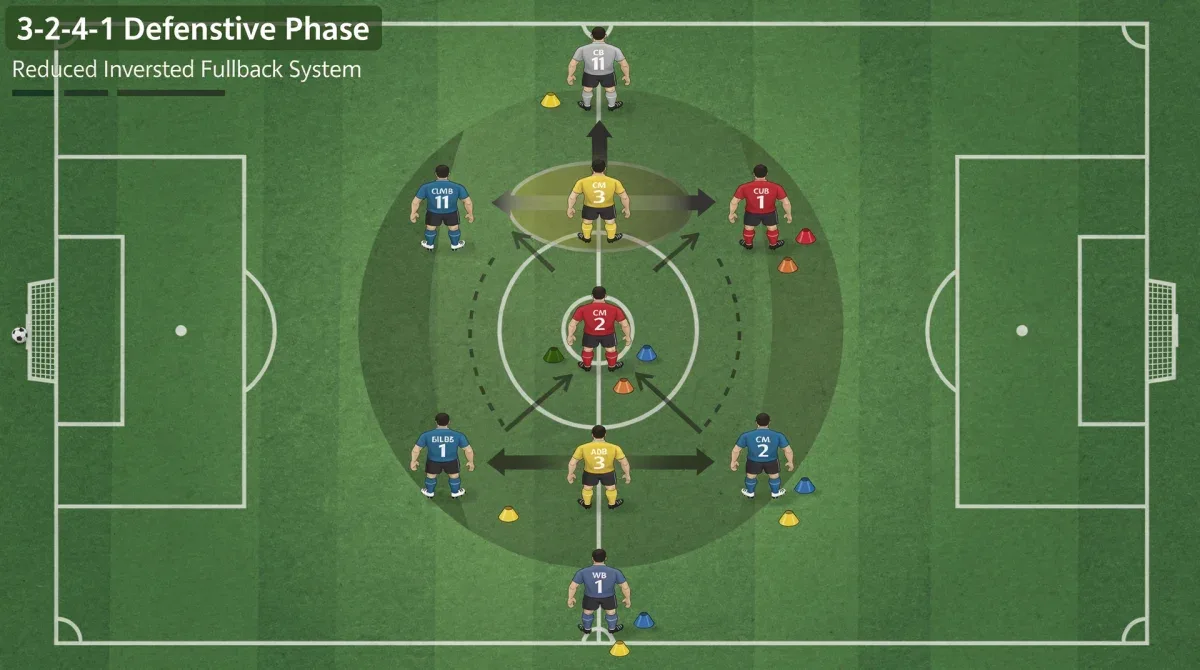
Their responsibilities include creating passing triangles, acting as outlets for the central defenders, and providing defensive cover against counter-attacks. They need to be technically proficient, tactically astute, and have high stamina.
- Positional Discipline: Understanding when to stay wide defensively and when to tuck in centrally in possession is crucial.
- Passing & Vision: Ability to distribute the ball accurately and quickly under pressure in congested central areas.
- Work Rate: High endurance to cover large areas and participate in both defensive and offensive phases.
The attacking midfielders (the other part of the '4')
These two players operate in the half-spaces, between the opposition's defensive and midfield lines. They are the creative engines, responsible for linking up with the striker, creating chances, and making incisive runs into the box. They need excellent dribbling skills, vision, and goal-scoring instincts.
They often combine with the inverted fullbacks and the holding midfielders to create intricate attacking patterns, exploiting gaps in the opposition's defense.
The lone striker (the '1')
The striker in a 3-2-4-1 system is often a focal point, capable of holding up the ball, linking play, and finishing chances. They need to be strong, intelligent in their movement, and effective at pressing opposition defenders.
Their ability to create space for the attacking midfielders and occupy central defenders is crucial for the system's offensive success. They are often the target for direct passes but also participate in intricate build-up plays.
The effectiveness of the 3-2-4-1 inverted fullback system is a direct reflection of how well these specialized roles are understood and executed by the players. It demands a high level of tactical awareness and versatility from every individual on the pitch.
Offensive Principles and Attacking Strategies
The 3-2-4-1 inverted fullback system, while defensively robust, is also designed to be a potent offensive weapon. Its structure naturally facilitates specific attacking principles that aim to disorganize opponents and create scoring opportunities.
Central overload and ball retention
The primary offensive principle is to achieve a central overload, creating numerical superiority in the midfield. This allows for superior ball retention, as there are always short passing options available. The inverted fullbacks, along with the two holding midfielders and two attacking midfielders, form a formidable central block.
This central dominance enables teams to control possession, dictate the tempo, and patiently probe for openings. The quick, intricate passing patterns can draw opponents out of position, creating space in behind or on the flanks.
- Triangle Formation: Constant creation of passing triangles, especially in central areas, ensures secure ball circulation.
- Progressive Passes: Opportunities for incisive through balls and line-breaking passes increase due to the density of players in advanced central positions.
- Opposition Frustration: Sustained possession can wear down opponents, forcing them into errors or losing their defensive shape.
Exploiting wide areas with overlapping runs
While fullbacks invert, this doesn't mean wide areas are neglected. The system often relies on the attacking midfielders or even the central defenders to step into wide positions to provide width when needed. Alternatively, the attacking midfielders can drift wide, or the inverted fullbacks can make late overlapping runs from deep positions if the opportunity arises.
The unpredictability of who provides the width keeps defenders guessing. This often creates one-on-one situations or allows for crosses into the box, targeting the lone striker or late runs from the attacking midfielders.
Dynamic movement and positional interchange
A key aspect of the 3-2-4-1's attacking prowess is the dynamic movement and positional interchange among the front six players. The attacking midfielders, striker, and even the inverted fullbacks are encouraged to swap positions, create decoys, and make intelligent runs.
This fluidity makes it incredibly difficult for opposition defenders to mark players tightly, as they are constantly facing new threats from different angles. The system thrives on intelligent movement off the ball, disrupting defensive lines and creating channels for penetration.
Ultimately, the offensive principles of the 3-2-4-1 inverted fullback system revolve around central control, intelligent exploitation of space, and dynamic player movement, all aimed at creating a relentless and unpredictable attacking threat.
Defensive Strategies and Transitions
Beyond its attacking flair, the 3-2-4-1 inverted fullback system provides a robust defensive framework, particularly during transitions. Its inherent structure allows for quick recovery and effective containment of opposition attacks.
Compact central block
When possession is lost, the inverted fullbacks immediately drop back and tuck in, forming a compact central block with the two holding midfielders and the three central defenders. This creates a formidable barrier, denying opponents space through the middle and forcing them into wider, less dangerous areas.
This central density is crucial for stifling counter-attacks, as most teams aim to penetrate through the heart of the defense. The sheer number of players in central zones makes it difficult for opponents to play quick, incisive passes.
Pressing triggers and high recovery
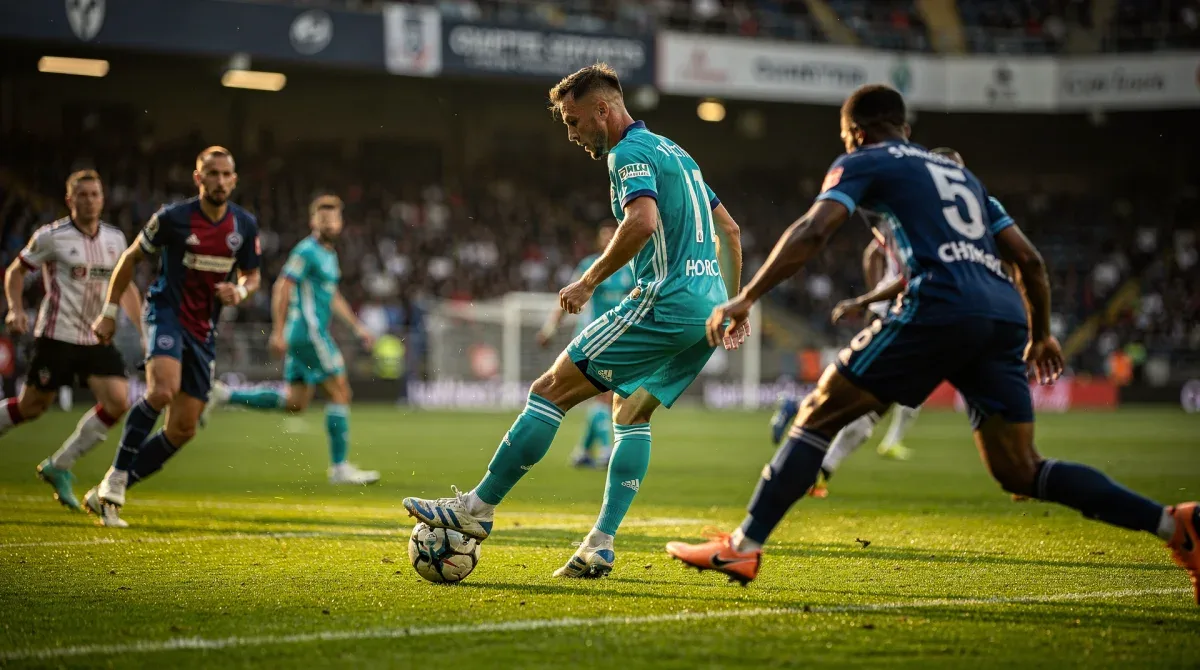
The system often employs an aggressive pressing scheme, particularly in the opponent's half. When possession is lost, the players closest to the ball immediately press to win it back, while others quickly reposition to cut off passing lanes and support the press.
The inverted fullbacks play a critical role here, as their central positioning allows them to join the midfield press quickly, preventing opponents from easily progressing the ball. The aim is to recover possession high up the pitch, minimizing the time the team spends in a defensive phase.
- Immediate Counter-Press: Players are trained to react instantly to turnovers, closing down passing options and forcing errors.
- Defensive Shape: Even during the press, the team maintains a structured defensive shape, ensuring no large gaps are left vulnerable.
- Numerical Advantage: The central overload facilitates a more effective press, as there are more players to converge on the ball carrier.
Managing wide areas defensively
While the fullbacks invert, the team still needs to manage wide defensive areas. This is often handled by the attacking midfielders tracking back, or the central defenders stepping out if an opponent winger drops deep. The system relies on coordinated defensive movements and clear communication to prevent being exposed on the flanks.
The holding midfielders also play a role in shifting across to cover wide areas when necessary, demonstrating the fluidity and adaptability required by this tactical setup. The overall goal is to present a cohesive defensive unit that is difficult to break down, whether centrally or out wide.
The defensive strategies and transitions within the 3-2-4-1 inverted fullback system highlight its balanced nature, proving that an attacking formation can also be incredibly secure when executed with discipline and tactical intelligence.
Advantages and Disadvantages of the 3-2-4-1 System
Like any tactical setup, the 3-2-4-1 inverted fullback system comes with its own set of strengths and weaknesses. Understanding these can help coaches decide if it's the right fit for their team and how to mitigate its potential drawbacks.
Key advantages
The benefits of this system are numerous and contribute significantly to its widespread adoption:
- Midfield Control: The central overload ensures dominance in the middle of the park, leading to higher possession and dictating the game's rhythm.
- Defensive Solidity: The back three, combined with the inverted fullbacks and holding midfielders, creates a strong central defensive block against counter-attacks.
- Fluid Attack: The dynamic movement and positional interchange among the front six players make the attack unpredictable and difficult to mark.
- Build-up Play: Numerous short passing options facilitate intricate build-up from the back, bypassing high presses effectively.
- Versatility: Can easily transition between defensive and offensive shapes, adapting to different game situations.
These advantages explain why many top clubs have adopted variations of this system, finding it effective in both domestic leagues and European competitions. The ability to control the game through possession and create numerous scoring opportunities makes it an attractive option for coaches aiming for dominance.
Potential disadvantages
Despite its strengths, the 3-2-4-1 system is not without its challenges:
- Demanding Player Profiles: Requires highly intelligent, technically proficient, and physically fit players, particularly in the inverted fullback and attacking midfield roles.
- Vulnerability on the Flanks: If wide players (attacking midfielders or central defenders) don't track back effectively, the wide areas can be exposed defensively.
- Reliance on Central Defenders: The back three must be excellent distributors and capable of defending large spaces when wide players push forward.
- Stagnant Attack: If movement off the ball is not dynamic, the central overload can become congested, leading to predictable and easily defended attacks.
- Risk of Counter-Attacks: While designed to mitigate them, a lost ball in midfield can leave the team vulnerable if recovery runs are not immediate.
Coaches implementing this system must carefully consider these disadvantages and ensure their squad possesses the necessary qualities to execute it effectively. Training regimens must focus on tactical awareness, physical conditioning, and fluid positional play to maximize its potential and minimize its risks.
Ultimately, the 3-2-4-1 inverted fullback system is a high-reward, high-demand tactical approach that, when executed correctly, can lead to significant success on the pitch.
Implementation and Training Considerations
Implementing the 3-2-4-1 inverted fullback system requires more than just drawing it on a whiteboard. It demands meticulous training, clear communication, and a deep understanding of each player's role within the broader tactical framework.
Tactical training sessions
Training sessions must be designed to simulate game situations where the inverted fullback concept is central. This includes:
- Positional Play Drills: Focus on creating passing triangles and diamond shapes in central areas, emphasizing quick ball circulation and intelligent movement.
- Transition Drills: Practice quick transitions from attack to defense and vice versa, specifically focusing on how inverted fullbacks recover defensively and join the attack.
- Pressing Schemes: Implement drills that teach coordinated pressing, where players understand their triggers and responsibilities in winning the ball back high up the pitch.
- Wide Area Coverage: Drills to ensure attacking midfielders and central defenders understand their roles in covering wide defensive zones when fullbacks invert.
Repetition and scenario-based training are crucial for players to internalize the movements and decision-making required by the system. Video analysis also plays a vital role in reviewing performance and highlighting areas for improvement.
Player selection and development
The system places unique demands on players, particularly the fullbacks. Coaches must identify and develop players with the right attributes:
- Technical Proficiency: High comfort on the ball, excellent passing range, and dribbling skills are essential for all players, especially those in central roles.
- Tactical Intelligence: Players need a high football IQ to understand positional rotations, anticipate play, and make quick decisions under pressure.
- Physical Conditioning: High stamina and endurance are critical, especially for inverted fullbacks who cover significant ground in both attacking and defensive phases.
- Versatility: Players who can comfortably operate in multiple positions or adapt their roles mid-game are invaluable.
Youth academies can play a significant role in developing players with these attributes from an early age, creating a pipeline of talent suited for such a demanding system. Investing in player development tailored to this tactical approach is key for long-term success.
Communication and leadership
Effective communication on the pitch is paramount. Players must constantly communicate their movements, intentions, and defensive assignments. Strong leadership from central defenders and holding midfielders can help organize the team and ensure tactical discipline.
The coach's role extends beyond tactical instruction; it involves fostering a culture of understanding, adaptability, and collective responsibility. Without clear communication and leadership, the intricate movements of the 3-2-4-1 system can quickly devolve into disorganization.
Successfully implementing the 3-2-4-1 inverted fullback system requires a holistic approach, combining rigorous tactical training with careful player selection and a strong emphasis on communication and leadership within the squad.
| Key Aspect | Brief Description |
|---|---|
| Inverted Fullbacks | Fullbacks move into central midfield during possession, creating midfield overload. |
| Central Overload | Creates numerical superiority in midfield for ball retention and progression. |
| Defensive Solidity | Forms a compact central block with three defenders and two holding midfielders. |
| Dynamic Movement | Fluid positional interchange among front players to disorganize opponents. |
Frequently asked questions about the 3-2-4-1 system
What is an inverted fullback in the 3-2-4-1 system?▼An inverted fullback is a player who starts wide in defense but moves into central midfield when their team has possession. In the 3-2-4-1, this creates a numerical advantage in the middle, aiding ball retention and defensive stability against counter-attacks.
Why is the 3-2-4-1 system so prevalent in modern soccer?▼Its prevalence stems from its ability to offer both defensive solidity and offensive fluidity. It allows teams to dominate midfield, control possession, and create diverse attacking opportunities, making it highly effective against various tactical setups in contemporary football.
What are the key player attributes needed for this system?▼Players need high tactical intelligence, technical proficiency, and exceptional physical conditioning. Inverted fullbacks, in particular, require strong passing skills, positional awareness, and the stamina to cover large areas in both defensive and offensive phases.
How does the 3-2-4-1 system defend against wide attacks?▼While fullbacks invert, wide defensive coverage is managed by attacking midfielders tracking back or central defenders stepping out. Coordinated team movement and communication are crucial to prevent exposure on the flanks, often supported by holding midfielders shifting across.
What are the main challenges when implementing the 3-2-4-1?▼Challenges include finding players with the right skillset, ensuring tactical discipline in positional rotations, and maintaining defensive balance in wide areas. It requires extensive training and clear communication to prevent disorganization and maximize its potential.
Conclusion
The 3-2-4-1 inverted fullback system stands as a testament to the dynamic and ever-evolving nature of modern soccer tactics. Its sophisticated blend of central numerical superiority, fluid attacking patterns, and robust defensive transitions offers a compelling blueprint for success. While demanding in terms of player profiles and tactical understanding, its widespread adoption across elite clubs underscores its effectiveness in navigating the complexities of contemporary football. For coaches and enthusiasts alike, understanding this system is crucial to appreciating the cutting edge of tactical innovation on the pitch.
