Tactical Masterclass: Asymmetrical Fullback Overloads Explained
Asymmetrical fullback overloads are a sophisticated tactical approach in modern football designed to exploit defensive compactness, creating numerical superiorities in wide areas, specifically 3-on-2 advantages, to break down opposition defenses effectively.
Welcome to a deep dive into one of football's most intriguing tactical concepts: the asymmetrical fullback overloads. This masterclass will unravel how teams leverage this strategy to exploit defensive compactness, creating crucial 3-on-2 advantages in wide areas that can dismantle even the most organized defenses.
Understanding asymmetrical fullback overloads
Asymmetrical fullback overloads represent a sophisticated tactical maneuver where one fullback pushes significantly higher and wider than their counterpart, creating an imbalance in attacking shape. This deliberate asymmetry aims to disrupt the opposition's defensive structure, particularly when facing compact, centrally-focused teams.
The core idea behind this tactic is to concentrate attacking numbers in a specific wide area, forcing the opposition to react and often creating numerical superiorities. Unlike balanced attacks where both fullbacks operate similarly, an asymmetrical approach focuses resources on one flank, making it a potent weapon against predictable defenses.
The philosophy behind tactical asymmetry
Tactical asymmetry isn't just about one player pushing forward; it's a holistic team strategy. It requires coordinated movement, intelligent passing, and a clear understanding of roles from all players involved. The goal is to create chaos for the opponent while maintaining structural integrity for the attacking team.
- Unpredictability: By not attacking symmetrically, teams become less predictable, making it harder for opponents to set their defensive lines.
- Space creation: The high-flying fullback draws defenders, opening up central or opposite-flank spaces.
- Numerical superiority: The primary objective is to create a 3-on-2 advantage, or even higher, in a specific zone.
This approach demands disciplined defensive cover from the deeper-lying fullback and central midfielders to prevent counter-attacks. It's a calculated risk that, when executed correctly, yields significant attacking benefits. The balance between attack and defense is paramount for success.

In essence, understanding asymmetrical fullback overloads means recognizing the deliberate manipulation of space and numbers. It's about creating an overload that is difficult for a compact defense to manage, forcing them to make difficult choices and leaving vulnerabilities to be exploited.
Exploiting defensive compactness: the tactical challenge
Modern football often sees teams adopting compact defensive shapes, aiming to deny space in central areas and force opponents wide. This defensive compactness can be incredibly effective, stifling creative play and making it difficult to penetrate. However, it also presents specific vulnerabilities that asymmetrical fullback overloads are designed to exploit.
When a team defends compactly, they prioritize central solidity, often leaving wide areas less protected. This is where the high-flying fullback comes into play. By pushing wide and high, they can stretch the opposition's defensive block horizontally, creating gaps or forcing individual defenders out of their preferred positions.
How compactness creates opportunities
The very nature of a compact defense, while strong centrally, can become its undoing when faced with intelligent wide play. The desire to maintain a narrow shape means that when an attacking player pushes wide, a defender must make a choice: follow them, thus breaking the compact line, or stay central, allowing the wide player freedom.
- Horizontal stretching: Fullbacks force central midfielders or wide players to cover larger distances, tiring them out and creating space.
- Isolation of defenders: A compact defense can leave individual wide defenders isolated against multiple attackers.
- Opening passing lanes: As defenders are drawn out, new passing lanes into dangerous areas can open up.
The tactical challenge for the attacking team is to identify these vulnerabilities and then execute the overload with precision. It requires quick transitions, accurate passing, and intelligent movement off the ball to capitalize on the moments of defensive indecision or numerical disadvantage.
Exploiting defensive compactness is not merely about sending a player wide; it's about understanding the ripple effect this movement has on the entire defensive structure. The goal is to create a domino effect, where one defender's movement creates space for another attacking player, ultimately leading to a clear goal-scoring opportunity.
Creating 3-on-2 advantages: the core mechanism
The holy grail of the asymmetrical fullback overload is the creation of a 3-on-2 advantage in a specific wide channel. This numerical superiority is often the key to unlocking stubborn defenses and generating high-quality attacking opportunities. It's a calculated effort involving the fullback, a winger, and usually a central midfielder or an attacking midfielder drifting wide.
When these three players combine on one flank, they present a significant challenge for the two typical defenders in that area – usually the opposition's fullback and winger/midfielder. The attacking trio can then use quick passing combinations, overlaps, and underlaps to bypass their markers, creating space to cross, shoot, or penetrate the penalty area.
Player roles and responsibilities
For the 3-on-2 advantage to materialize and be effective, each player must understand their role implicitly. This is not a random collection of players, but a synchronized unit.
- The attacking fullback: Provides width and often looks for overlapping runs. Their timing is crucial.
- The winger: Can either hold width to create space for the fullback, or drift inside to combine, or make underlapping runs.
- The third man (CM/AM): Offers passing angles, acts as a pivot, or makes late runs into the box.
The communication between these players is vital. They must anticipate each other's movements and be able to execute quick one-two passes or through balls. The defensive team, faced with three attackers, often finds itself in a dilemma: who marks whom, and who covers the space?

The 3-on-2 situation puts immense pressure on the two defenders. If one steps out to press, space opens behind them. If they both stay compact, the attacking trio can combine around them. This mechanism is a direct consequence of stretching the defense and forcing them to commit numbers to a specific area, leaving other areas vulnerable.
Ultimately, creating these 3-on-2 advantages is about creating dilemmas for the opposition. It’s about leveraging numerical superiority to gain access to dangerous areas of the pitch, turning defensive solidity into attacking opportunity.
Tactical variations and common setups
While the core principle of asymmetrical fullback overloads remains consistent, there are numerous tactical variations and common setups that teams employ. These variations often depend on the specific players available, the opponent's defensive style, and the overall tactical philosophy of the coach.
One common setup involves a more defensive fullback on one side, often referred to as an 'inverted fullback' or simply a more conservative full-back, who tucks in to form a back three during possession. This provides cover for the attacking fullback on the opposite flank, who then has the license to push high and wide. This creates a stable defensive base while maximizing attacking threat on one side.
Popular formations and roles
Different formations lend themselves well to asymmetrical overloads. For instance, a 4-3-3 can easily transition into a structure that supports this tactic.
- 4-3-3: One winger cuts inside, allowing the fullback to overlap. The opposite winger stays wide, and their fullback tucks in.
- 3-4-3/3-5-2: Wing-backs naturally provide width, and an asymmetrical approach can involve one wing-back pushing much higher than the other, often supported by an attacking midfielder.
- 4-2-3-1: The attacking midfielder can drift wide to create the third man in the overload, while the double pivot provides defensive stability.
The key is not just the formation, but the fluidity of player movement within it. Players must be comfortable interchanging positions and making intelligent runs to support the attacking fullback. The 'third man run' is particularly crucial here, as it often creates the decisive numerical advantage.
These tactical variations highlight the adaptability of asymmetrical fullback overloads. Whether it's through specific player profiles or dynamic positional changes, the goal is always to create that decisive numerical advantage in a key attacking zone, making it a versatile and effective tactic in modern football.
Training drills for effective execution
Implementing asymmetrical fullback overloads effectively requires more than just theoretical understanding; it demands rigorous training and practical application. Coaches design specific drills to enhance player understanding, timing, and execution of this complex tactical scheme. These drills typically focus on movement patterns, passing combinations, and defensive transitions.
One fundamental drill involves a 3-on-2 scenario in a confined wide area, simulating the actual match situation. Players practice quick one-touch passing, overlapping runs, and underlapping movements, aiming to create a clear crossing or shooting opportunity. The emphasis is on speed of thought and execution, as well as the ability to recognize when and where the numerical advantage exists.
Key training components
Successful execution of asymmetrical overloads relies on several key training components:
- Positional understanding: Drills that teach fullbacks when to advance and when to hold, and wingers when to drift or stay wide.
- Combination play: Small-sided games focusing on quick triangular passing and movement between the three attacking players.
- Defensive transitions: Training scenarios where the team immediately transitions from attack to defense upon losing possession, ensuring cover for the advanced fullback.
Another crucial aspect is decision-making under pressure. Drills can incorporate opposition defenders to challenge the attacking trio, forcing them to make quick choices about passing angles, dribbling, or shooting. Repetition of these scenarios helps players instinctively react to different defensive setups.
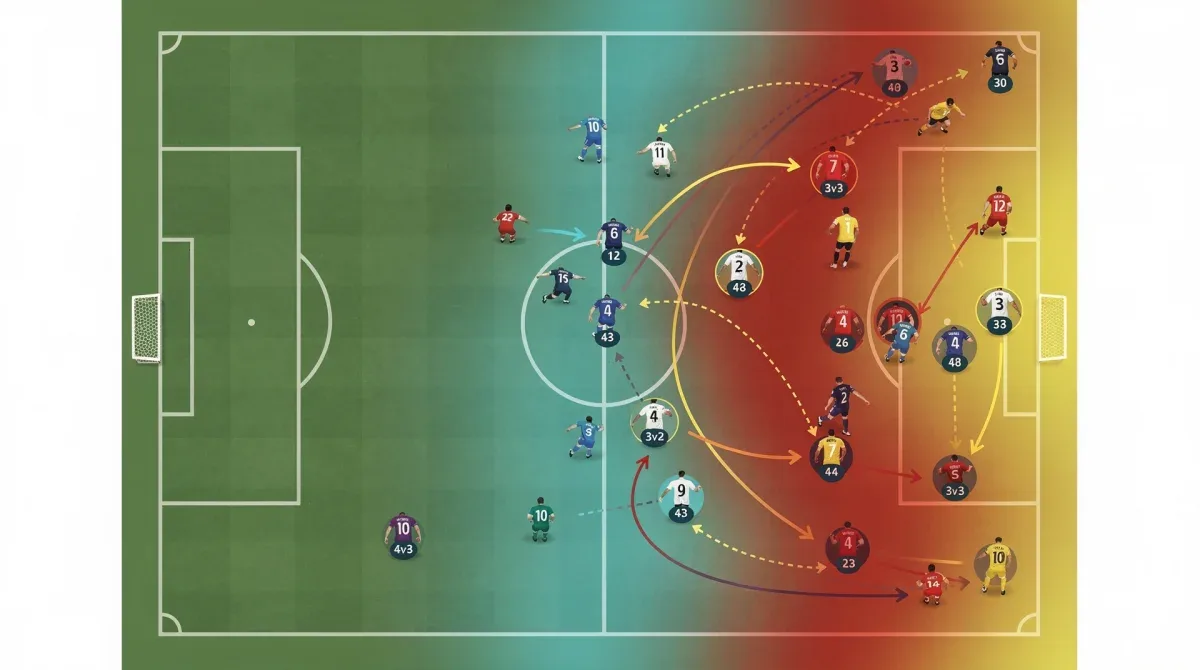
Ultimately, effective training for asymmetrical fullback overloads is about developing a deep understanding of the tactic, not just individually but as a cohesive unit. It’s about creating muscle memory for specific movements and fostering an intuitive connection between players, allowing them to execute these complex maneuvers seamlessly in a match.
Defending against asymmetrical overloads
Just as teams aim to exploit defensive compactness with asymmetrical fullback overloads, opponents also devise strategies to counter this potent attacking tactic. Defending against such overloads requires discipline, tactical awareness, and often, a willingness to adapt the team's defensive shape.
One common defensive adjustment is to shift the entire defensive block to cover the overloaded flank, effectively creating a temporary numerical parity or even superiority. This can involve the central midfielder or even the opposite winger tracking back aggressively to support their fullback. However, this carries the risk of leaving the opposite flank or central areas vulnerable.
Counter-tactics and adjustments
Several counter-tactics can be employed to nullify the threat of asymmetrical overloads:
- Man-marking the advanced fullback: Assigning a specific player to track the high-flying fullback, preventing them from receiving the ball in dangerous areas.
- Defensive shifting: The entire defensive line and midfield shift collectively towards the overloaded side, maintaining compactness in that zone.
- Counter-pressing: Immediately pressing the ball carrier and passing options upon losing possession, preventing the attacking team from building the overload.
Another approach is to utilize a deeper defensive line, denying the attacking fullback space to run into behind the defense. This can force them to receive the ball in less dangerous areas, further away from goal. The key is to deny both space and time for the attacking trio to combine effectively.
Defending against asymmetrical overloads is a constant chess match. It requires coaches to anticipate the opponent's movements and prepare their players to react swiftly and intelligently. The success of the defense often hinges on their ability to disrupt the attacking team's rhythm and prevent the crucial 3-on-2 advantage from being established.
| Key Aspect | Brief Description |
|---|---|
| Objective | Exploit defensive compactness by creating numerical superiority on one flank. |
| Key Advantage | Establishes 3-on-2 situations to bypass opposition defenders. |
| Player Roles | Involves an attacking fullback, winger, and a third supporting midfielder. |
| Countering Strategy | Defensive shifting, man-marking, and aggressive counter-pressing. |
Frequently Asked Questions about Asymmetrical Fullback Overloads
What is an asymmetrical fullback overload in football?▼An asymmetrical fullback overload is a tactical strategy where one fullback pushes high and wide to create numerical superiority on one flank, while the other fullback maintains a deeper, more defensive position. This imbalance aims to stretch defenses and create attacking opportunities.
How do asymmetrical overloads create 3-on-2 advantages?▼They create 3-on-2 advantages by combining the attacking fullback with a winger and a central midfielder or attacking midfielder on one side. This numerical superiority allows for quick passing combinations and movement to bypass the two opposition defenders in that zone.
Why are these tactics effective against compact defenses?▼Compact defenses prioritize central solidity, often leaving wide areas less protected. Asymmetrical overloads exploit this by stretching the defense horizontally, forcing defenders out of position, and creating space or isolation for attacking players in crucial wide channels.
What roles are crucial for executing asymmetrical overloads?▼Key roles include the attacking fullback for width and overlaps, the winger who can drift or hold position, and a third midfielder who provides support, passing angles, and late runs. Coordination and timing among these players are essential for success.
How do teams defend against asymmetrical fullback overloads?▼Defensive strategies include collective shifting of the defensive block to the overloaded side, man-marking the advanced fullback, and implementing aggressive counter-pressing. The goal is to deny space, disrupt passing lanes, and prevent the numerical advantage from forming effectively.
Conclusion
The asymmetrical fullback overload is a testament to the ever-evolving nature of football tactics. It's a sophisticated strategy that, when executed with precision and understanding, provides a potent weapon against even the most disciplined and compact defenses. By deliberately creating numerical superiorities and exploiting wide channels, teams can unlock stubborn opposition, generate high-quality scoring opportunities, and ultimately dictate the flow of the game. Mastering this tactical approach requires not only individual brilliance but also a profound collective understanding and seamless coordination among players, making it a true tactical masterclass in modern football.
