MLS roster rules & 3-DP model: 2026 competitiveness shift
Major League Soccer's intricate roster rules and the pivotal 3-Designated Player model are set to fundamentally alter team competitiveness by 2026, influencing how clubs build squads and strategize for on-field success.
As Major League Soccer (MLS) continues its rapid expansion and global ascent, understanding MLS roster rules competitiveness becomes crucial, especially looking ahead to the 2026 season. The intricate framework governing player acquisition, salaries, and squad composition is constantly evolving, with the 3-Designated Player (DP) model standing as a cornerstone of this competitive landscape. This article delves deep into how these regulations are shaping the league's future, impacting team strategies, and ultimately defining who rises to the top.
The foundation of MLS roster rules: A complex ecosystem
MLS operates under a unique set of roster rules designed to promote competitive balance while allowing teams flexibility in signing high-impact players. Unlike many global leagues, MLS employs a single-entity structure, meaning player contracts are held by the league itself, not individual clubs. This structure enables a centralized approach to roster management, including salary caps, allocation money, and various player categories, all contributing to a level playing field.
The complexity arises from the numerous mechanisms teams can utilize to circumvent the basic salary cap, such as General Allocation Money (GAM) and Targeted Allocation Money (TAM). These tools are essential for acquiring and retaining talent that would otherwise be beyond a team's budget, allowing for strategic investments in key positions.
Understanding the salary cap and roster spots
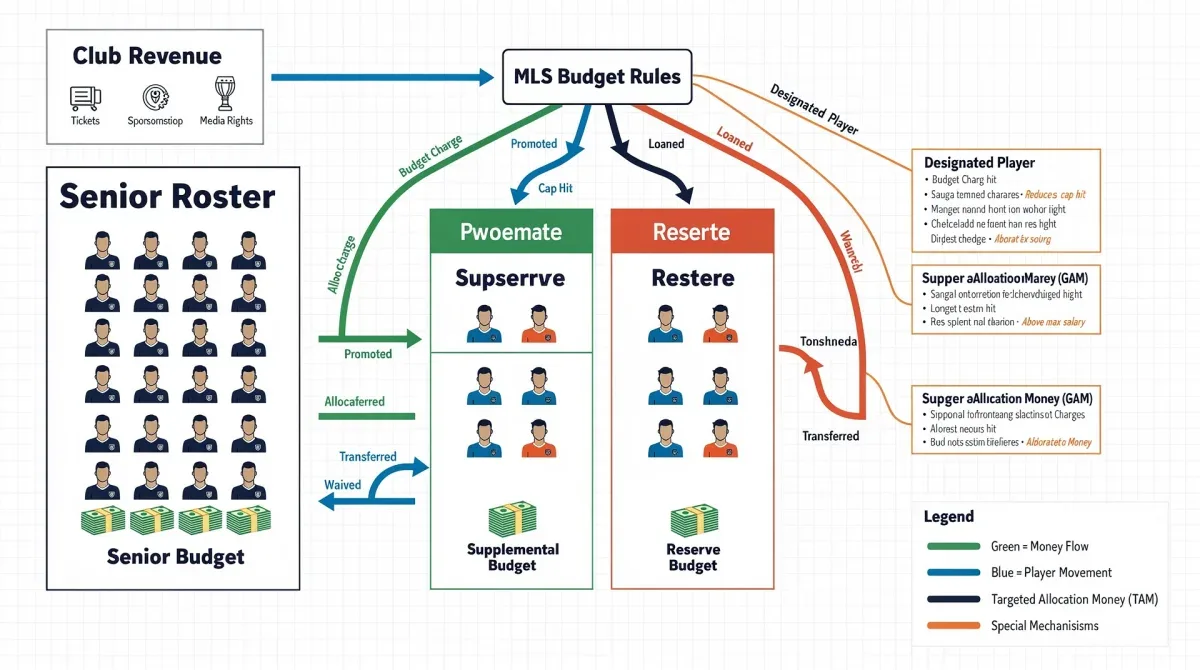
Every MLS team is allocated a specific number of roster spots and a corresponding salary budget. This budget is the foundation upon which teams build their squad, but it's far from the whole story. The league differentiates between senior roster slots and supplemental roster slots, each with its own implications for player compensation and development.
- Senior Roster (1-20): These players count against the salary cap, with their wages directly impacting a team's financial flexibility. This is where most starting players and key reserves reside.
- Supplemental Roster (21-30): Players in these spots generally have lower salaries and do not count against the senior salary cap, making them crucial for squad depth and developing young talent.
- Reserve Roster: Consists primarily of players signed through MLS NEXT Pro or Homegrown initiatives, often providing a pipeline for future senior team members.
The strategic management of these roster spots is paramount. Teams must balance experienced veterans with promising youth, ensuring both immediate competitiveness and long-term sustainability. The judicious use of allocation money can significantly enhance a team’s ability to sign players whose salaries exceed the maximum budget charge for a senior roster spot, effectively allowing them to acquire higher-caliber talent without breaching the cap.
The ongoing evolution of these rules ensures that general managers and sporting directors must remain agile and innovative. Predicting how these rules will shift and adapt by 2026 is a constant challenge, requiring a deep understanding of the league's objectives and financial landscape. The interplay between these various elements creates a dynamic environment where strategic planning is as important as on-field performance.
The 3-Designated Player model: A game changer
The Designated Player (DP) rule, often referred to as the "Beckham Rule," allows teams to sign up to three players whose salaries exceed the maximum budget charge, with only a portion of their salary counting against the team's salary cap. This mechanism was introduced to bring global superstars to MLS, boosting the league's profile and quality of play. By 2026, the strategic use of these three DP slots will be more critical than ever.
The impact of DPs extends beyond their individual performance; they often elevate the play of those around them, attract more fans, and generate significant commercial revenue. Teams that effectively utilize their DP slots can create a competitive advantage, transforming their roster into a formidable force capable of challenging for championships.

Strategic allocation of DP slots
Teams approach their DP allocation in various ways. Some opt for high-profile attacking players who can guarantee goals and assists, while others might invest in a dominant midfielder or a veteran defender to anchor their squad. The key is to identify positions where a top-tier player can have the most significant impact on team performance and overall competitive standing.
- Attacking DPs: Often the most common choice, focusing on goal-scorers or creative playmakers to boost offensive output.
- Midfield DPs: Players who can control the tempo, distribute the ball effectively, and provide defensive cover, crucial for midfield dominance.
- Defensive DPs: Less common but equally impactful, these players bring leadership, organization, and elite defensive capabilities to solidify the backline.
The decision of where to invest these valuable slots is a complex one, influenced by team philosophy, available talent, and financial considerations. A well-chosen DP can be the difference between a mid-table finish and a deep playoff run. The evolving nature of the global transfer market also plays a significant role, with teams constantly scouting for the next big talent or established star who fits their system and budget.
As the league continues to grow in stature and attract more international attention, the caliber of players filling these DP slots is expected to rise. This will, in turn, intensify the competition and demand even greater shrewdness from front offices. The success of a team in 2026 will largely depend on its ability to maximize the value derived from its Designated Players, both on and off the pitch.
Impact on player acquisition and team building
The interplay between MLS roster rules and the DP model profoundly influences how teams approach player acquisition. It's not simply about signing the best available talent; it's about finding players who fit within the financial constraints and strategic vision of the club. This often involves a delicate balance of scouting, negotiation, and long-term planning.
Teams must constantly assess their squad needs, identify areas for improvement, and then navigate the complex web of rules to bring in the right players. This includes utilizing mechanisms like the SuperDraft, Homegrown Player Rule, and various allocation processes to build a balanced and competitive roster.
The role of allocation money (GAM and TAM)
General Allocation Money (GAM) and Targeted Allocation Money (TAM) are vital resources for MLS clubs. These funds allow teams to buy down the budget charge of players, either to fit them under the salary cap or to convert a DP into a non-DP, freeing up a valuable DP slot. The strategic use of GAM and TAM can significantly enhance a team's ability to compete for high-quality players.
- General Allocation Money (GAM): Can be used to sign new players, re-sign existing players, or offset a player's salary budget charge. It is often distributed to teams through various mechanisms, including missing the playoffs or player transfers.
- Targeted Allocation Money (TAM): Specifically designed to sign or re-sign players earning above the maximum salary budget charge but below the DP threshold. TAM helps teams acquire or retain players who are impactful but not necessarily global superstars.
The smart application of these funds can be a true differentiator. A team that masterfully leverages its allocation money can build a deeper, more talented squad than one that relies solely on its basic salary cap. This requires sophisticated financial planning and an acute understanding of player valuations in the MLS market. By 2026, the efficacy of using GAM and TAM will be even more pronounced as player salaries continue to climb and competition for talent intensifies.
Moreover, the integration of analytics and data science into scouting and player acquisition has become increasingly sophisticated. Teams are no longer just looking at raw talent; they are analyzing how a player fits into their tactical system, their potential for growth, and their value proposition within the complex MLS financial structure. This data-driven approach is a key component of modern team building.

Youth development and homegrown talent
Beyond the high-profile DPs and allocation money, the development of homegrown talent is becoming an increasingly important aspect of MLS roster building. The Homegrown Player Rule allows teams to sign players from their own youth academies without them counting against the SuperDraft or general allocation mechanisms. These players often come with a deeper understanding of the club's culture and tactical philosophy.
Investing in youth academies is a long-term strategy that pays dividends in both on-field performance and financial returns. Successful academies produce players who can contribute to the first team, reducing the need for expensive external transfers. Furthermore, homegrown players can be sold to other leagues, generating significant transfer fees that can be reinvested into the squad.
The pathway from academy to senior squad
The transition from a youth academy to the senior MLS squad is a critical developmental phase. Many teams now utilize MLS NEXT Pro, a professional league designed to bridge this gap, providing young players with competitive experience before they are ready for the demands of MLS. This structured pathway ensures that talent is nurtured and prepared for the highest level of domestic competition.
- MLS NEXT Pro: Offers a professional environment for academy graduates to gain experience, hone their skills, and adapt to the pace of professional soccer.
- Loan System: Allows promising young players to gain valuable minutes and experience with other clubs, either within MLS or in lower divisions.
- Mentorship Programs: Integrating young players with experienced veterans can accelerate their development, providing guidance on and off the field.
By 2026, the quality of homegrown talent emerging from MLS academies is expected to be significantly higher, reflecting years of investment and refinement in youth development programs. This influx of domestic talent will not only raise the overall standard of play in the league but also provide teams with cost-effective solutions for filling roster spots, thereby enhancing their overall competitiveness.
The success stories of homegrown players who have gone on to achieve significant success both domestically and internationally serve as powerful motivators for young athletes and compelling evidence of the effectiveness of these development pathways. These players often become fan favorites, embodying the spirit and future of their respective clubs.
The international player slot conundrum
MLS roster rules also govern the number of international players a team can carry. Each team is allocated a specific number of international roster slots, which can be traded between clubs. These slots are crucial for bringing in talent from outside the United States and Canada, adding diversity and quality to the league.
The management of international slots is a strategic chess game. Teams must decide whether to invest in an international player who can immediately impact the first team or to use a slot on a younger, high-potential prospect who may require more development. The value of these slots can fluctuate based on market demand and the availability of quality international talent.
Navigating the global transfer market
The global transfer market is a vast and competitive landscape. MLS teams are increasingly looking beyond traditional scouting grounds to identify talent that can thrive in the league. This involves extensive scouting networks, data analysis, and an understanding of different playing styles and cultures.
- Scouting Networks: Expanding reach to South America, Europe, and other emerging football markets to identify undervalued talent.
- Data-Driven Recruitment: Utilizing advanced analytics to identify players whose statistics and playing style align with team needs and tactical philosophies.
- Cultural Integration: Providing support and resources to international players to help them adapt to life in a new country and integrate into the team environment.
The ability to effectively navigate the international player market is a significant competitive advantage. Teams that can consistently identify and acquire high-quality international talent, within the constraints of their roster slots and financial budget, will be better positioned for success in 2026. The increasing global reputation of MLS also makes it an attractive destination for players seeking new challenges or a stepping stone to top European leagues.
The complexities of visa processes, international transfer windows, and player agents further add to the challenge of international recruitment. Teams need dedicated personnel with expertise in these areas to ensure smooth and efficient player acquisition. This specialized knowledge is a non-negotiable asset for any club aspiring to contend for major honors.
Future outlook: Adapting to evolving rules by 2026
Looking towards 2026, the MLS roster rules and the 3-Designated Player model are likely to continue evolving. The league has consistently shown a willingness to adapt its regulations to promote growth, improve competitive balance, and enhance the overall quality of play. Teams that can anticipate these changes and proactively adjust their strategies will be best positioned for long-term success.
The ongoing dialogue between the league office, team owners, and the MLS Players Association will undoubtedly shape the future of these rules. Potential changes could include adjustments to salary cap figures, modifications to allocation money distributions, or even alterations to the DP rule itself, perhaps allowing for more flexibility or different categories of DPs.
Strategic implications for MLS clubs
For MLS clubs, adapting to these evolving rules is not just about compliance; it's about strategic advantage. Teams will need to invest in robust scouting departments, sophisticated analytics tools, and experienced front-office personnel capable of navigating the intricate landscape of player acquisition and roster management. The ability to innovate and find creative solutions within the rulebook will be a hallmark of successful organizations.
- Continuous Learning: Staying abreast of all rule changes and their potential implications for team building and financial planning.
- Data Analytics: Leveraging data to make informed decisions on player recruitment, contract negotiations, and roster optimization.
- Talent Identification: Developing comprehensive scouting networks to identify both domestic and international talent that fits the team's philosophy and budget.
The competitive landscape of MLS in 2026 will be characterized by teams that are not only financially astute but also strategically agile. The ability to identify talent, develop youth, and utilize all available roster mechanisms to their fullest potential will separate the contenders from the rest. This continuous adaptation is essential for maintaining a competitive edge in a league that is constantly striving for higher standards.
Ultimately, the teams that truly understand and master the nuances of these rules will be the ones celebrating championships. The future of MLS competitiveness is inextricably linked to how effectively clubs can leverage these frameworks to build formidable and sustainable rosters.
| Key Point | Brief Description |
|---|---|
| Roster Rules Complexity | MLS uses a complex system of salary caps, allocation money, and player categories to ensure competitive balance. |
| 3-Designated Player Model | Allows teams to sign three high-salary players with minimal cap impact, crucial for attracting top talent and boosting quality. |
| Allocation Money | GAM and TAM are vital tools for acquiring and retaining players whose salaries exceed the standard budget charge. |
| Youth Development | Homegrown Player Rule and MLS NEXT Pro are critical for developing cost-effective and culturally aligned talent. |
Frequently asked questions about MLS roster rules
What is the primary purpose of MLS roster rules?▼The primary purpose of MLS roster rules is to ensure competitive balance across the league while also providing mechanisms for teams to acquire high-impact talent. These rules prevent a single team from dominating financially, fostering an environment where more teams have a realistic chance at success each season.
How does the Designated Player (DP) rule affect team competitiveness?▼The DP rule significantly enhances team competitiveness by allowing clubs to sign up to three players whose salaries largely fall outside the salary cap. This enables teams to attract global stars and top-tier talent, elevating the quality of play and potentially transforming a team's on-field performance and market appeal.
What is the difference between GAM and TAM in MLS?▼GAM (General Allocation Money) can be used for various purposes, including signing new players or buying down existing contracts. TAM (Targeted Allocation Money) is specifically designed to sign or retain players whose salaries are above the maximum budget charge but below the DP threshold, focusing on quality players just outside DP status.
Why is youth development important under MLS roster rules?▼Youth development is crucial because the Homegrown Player Rule allows teams to sign academy products without using SuperDraft picks or allocation money. These players are often cost-effective, culturally integrated, and can provide significant value, both on the field and as potential transfer assets, enhancing long-term competitiveness.
How might MLS roster rules evolve by 2026?▼By 2026, MLS roster rules are expected to continue evolving to reflect the league's growth and competitive aspirations. Potential changes could involve adjustments to salary cap figures, modifications to allocation money usage, or even refinements to the Designated Player rule, all aimed at further enhancing the league's quality and global standing.
Conclusion
The intricate dance between MLS roster rules and the 3-Designated Player model will undoubtedly continue to shape the league's competitive landscape through 2026 and beyond. Teams that demonstrate a profound understanding of these regulations, coupled with innovative scouting, robust youth development, and shrewd financial management, will be the ones to consistently contend for top honors. As MLS solidifies its position on the global football stage, the strategic mastery of these rules will remain a cornerstone of success, driving both on-field performance and sustainable growth.
