Press-Resistant Midfielders: 28% Valuation Increase Explained
Press-resistant midfielders have seen a 28% increase in transfer valuation this season due to their critical ability to maintain possession, break defensive lines, and dictate tempo under intense pressure in modern football.
The modern game of football demands more than ever from its central players, and a recent analysis reveals a staggering trend: press-resistant midfielders have witnessed an unprecedented 28% increase in their transfer valuation this season. This isn't merely a statistical anomaly but a profound shift rooted deeply in evolving tactical philosophies and the relentless demands of elite-level competition. Understanding this surge requires a deep dive into the 'why' behind this premium.
The tactical evolution of midfield dominance
Modern football places an immense premium on control and progression. Teams are increasingly adopting high-pressing schemes, making the ability to navigate tight spaces and retain possession under duress an invaluable asset. This tactical evolution has fundamentally reshaped the role of the central midfielder.
No longer is it enough to simply pass the ball; players must possess an inherent understanding of space, body orientation, and timing to consistently break lines and initiate attacks. The shift towards more aggressive defensive strategies means that midfielders who can withstand this pressure become the linchpin of any successful attacking build-up.
The rise of the high press
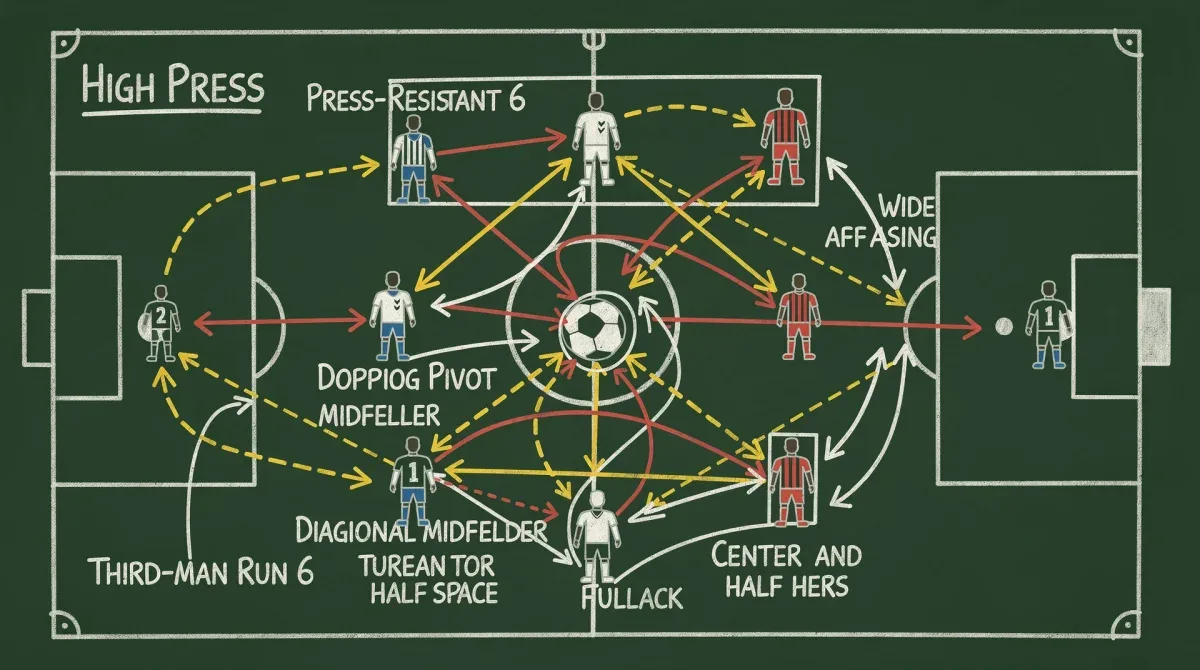
The high press, characterized by forwards and midfielders aggressively closing down opponents in their own half, aims to disrupt build-up play and win the ball back close to the opposition goal. This strategy, popularized by coaches like Jürgen Klopp and Pep Guardiola, demands specific attributes from players tasked with breaking it.
- Spatial awareness: Understanding where teammates and opponents are to create passing angles.
- First touch: Controlling the ball cleanly and quickly to evade immediate pressure.
- Body orientation: Positioning oneself to see the field and protect the ball.
- Decision-making under pressure: Choosing the right pass or dribble in split-second moments.
These qualities are not easily coached; they are often innate or developed through years of high-level training and match experience. Consequently, players who demonstrate these attributes consistently become highly sought after.
The tactical landscape of football is in constant flux, but the emphasis on midfield control and the ability to bypass an aggressive press appears to be a lasting trend. This makes press-resistant midfielders not just desirable, but essential for teams aiming for sustained success.
Defining press resistance: more than just dribbling
While often associated with flashy dribblers, press resistance encompasses a broader set of skills. It's about a player's holistic ability to operate effectively in congested areas, ensuring ball retention and progression. This multidimensional skill set is what truly distinguishes these valuable assets.
It involves a combination of technical proficiency, tactical intelligence, and physical attributes that allow a player to consistently outmaneuver opponents. The market is now recognizing and rewarding this comprehensive skill profile with significantly higher valuations.
Key attributes of press-resistant midfielders
Several core competencies define a truly press-resistant midfielder. These attributes work in synergy, allowing players to perform under the most intense scrutiny.
- Exceptional close control: The ability to keep the ball glued to their feet, even when tightly marked.
- Vision and scanning: Constantly checking shoulders to assess immediate threats and identify open spaces or passing lanes.
- Passing accuracy and range: The capacity to execute precise short, medium, and long passes to relieve pressure or launch attacks.
- Balance and strength: Maintaining composure and resisting physical challenges from opponents.
These players act as conduits, connecting defense to attack and ensuring that possession is not just maintained but used purposefully. Their presence can transform a team's ability to build from the back and control the tempo of a game, making them indispensable.
Beyond individual brilliance, press resistance is also about understanding team dynamics. It’s about knowing when to hold, when to release, and when to carry the ball forward. This collective understanding further elevates the value of these players, as they enable the entire team to function more smoothly against pressure.
The market's response: supply, demand, and scarcity
The sharp increase in transfer valuation for press-resistant midfielders is a clear reflection of basic economic principles: high demand coupled with limited supply. There are simply not enough players with this elite skill set to meet the growing tactical needs of top clubs worldwide.
Clubs are willing to pay a premium for these players because they offer a tangible competitive advantage. They reduce turnovers, increase possession statistics, and provide the platform for sustained attacking phases, all of which contribute to winning matches and trophies.
Why the scarcity?
Developing a truly press-resistant midfielder is a complex process. It requires years of specialized training, focusing on technical refinement, tactical understanding, and mental resilience. Academies and youth development programs are increasingly prioritizing these attributes, but the pipeline of truly elite talent remains thin.
Furthermore, the demands of modern football mean that players must adapt quickly to different tactical systems and high-pressure environments. Those who can do so seamlessly become even more valuable, as they offer versatility and reliability. This combination of inherent talent and adaptability contributes significantly to their market worth.
The scarcity is also driven by the global nature of football. Top clubs from various leagues are all competing for the same pool of talent, driving up prices. When a player emerges who consistently demonstrates press resistance at an elite level, bidding wars inevitably ensue, pushing valuations to new heights.
Impact on team performance and tactical flexibility
The influence of a press-resistant midfielder extends far beyond their individual performance; it profoundly impacts the entire team's tactical framework and overall success. Their presence provides a foundation of stability and control, allowing coaches greater flexibility in their strategic approaches.
These players enable teams to play through pressure, rather than resorting to long balls or hurried clearances. This capability is vital for maintaining possession, dictating the tempo, and ultimately creating more goal-scoring opportunities. Their ability to consistently find solutions under pressure empowers the entire squad.
Enabling diverse tactical approaches
- Build-up from the back: Allows goalkeepers and defenders to confidently pass out, knowing the midfielder can receive and progress.
- Control of tempo: The ability to speed up or slow down play, depending on game state and opponent's strategy.
- Breaking defensive lines: Drawing opponents in before releasing a forward pass, creating space for attackers.
- Reduced turnovers: Minimizes loss of possession in critical areas, preventing counter-attacks.
This tactical flexibility is a major draw for top managers. A team with a reliable press-resistant midfielder can adapt to various game situations, whether they need to patiently probe a low block or quickly transition against a high line. This adaptability is a hallmark of successful modern teams.
Ultimately, these players are force multipliers. They don't just improve their own performance; they elevate the performance of those around them, making the entire team more cohesive and effective. This collective enhancement is a key driver of their surging market value.
Case studies: examples of high-value press-resistant midfielders
To truly appreciate the value of press-resistant midfielders, one needs only to look at some of the game's most coveted talents. Players like Frenkie de Jong, Rodri, and Joshua Kimmich exemplify these qualities, commanding significant transfer fees and wages.
These individuals consistently demonstrate the technical prowess and tactical intelligence required to thrive in high-pressure situations, making them indispensable to their respective clubs. Their performances serve as benchmarks for what a top-tier press-resistant midfielder can offer.
Notable examples and their impact
Consider the impact of these players:
- Frenkie de Jong (Barcelona): His ability to carry the ball from deep, evade multiple markers, and maintain possession is crucial for Barcelona's possession-based game. His unique blend of dribbling and passing under pressure makes him exceptionally valuable.
- Rodri (Manchester City): While often lauded for his defensive solidity, Rodri's press resistance is equally vital. He rarely loses possession, consistently finds progressive passes, and dictates the rhythm of City's attacks from the base of midfield.
- Joshua Kimmich (Bayern Munich): Whether at right-back or in midfield, Kimmich's intelligence, precise passing, and ability to turn away from pressure are fundamental to Bayern's dominance. He is a master of spatial awareness and ball retention.
These players don't just perform well; they redefine their teams' capabilities. Their consistent ability to break lines and maintain control under duress allows their teams to implement complex tactical schemes with greater success. This tangible impact on results directly translates into higher market demand and valuation.
The success of these players validates the investment. Clubs see a direct correlation between acquiring such talent and achieving their sporting objectives, reinforcing the market trend towards valuing press-resistant midfielders so highly.
The future outlook: sustained demand and rising prices
Given the current tactical trends in football, it is highly probable that the demand for press-resistant midfielders will remain strong, if not intensify, in the coming seasons. As coaching methodologies continue to emphasize high-intensity pressing and sophisticated build-up play, these players will only become more crucial.
The 28% increase in valuation this season is likely not an isolated peak but rather an indicator of a sustained upward trajectory. Clubs that fail to secure such talent may find themselves at a significant disadvantage in an increasingly competitive landscape.

What to expect in future transfer windows
Several factors suggest that valuations will continue to climb:
- Youth development focus: Academies are now explicitly training for press resistance, but it takes time for this talent to mature.
- Increased data analytics: Advanced metrics highlight the impact of these players on possession, progression, and breaking lines, making their value quantifiable.
- Global competition: More clubs globally are adopting possession-based and pressing tactics, intensifying the hunt for suitable midfielders.
- Financial power of top leagues: The economic strength of leagues like the Premier League, La Liga, and Serie A allows them to pay top dollar.
The investment in press-resistant midfielders is seen as a foundational one, capable of elevating an entire team's performance. As such, clubs will continue to allocate significant resources to acquire and retain these vital assets. This ensures that the market for such players will remain robust and highly competitive, solidifying their status as some of the most valuable commodities in football.
The future of football tactics points towards an even greater emphasis on technical excellence under pressure, ensuring that the press-resistant midfielder will continue to be a prized commodity for years to come.
| Key Aspect | Brief Description |
|---|---|
| Valuation Increase | Press-resistant midfielders saw a 28% rise in transfer valuation this season, highlighting their critical role. |
| Tactical Importance | Essential for bypassing high presses, maintaining possession, and dictating game tempo in modern football. |
| Key Attributes | Exceptional close control, vision, accurate passing, and physical balance under pressure. |
| Market Dynamics | High demand and limited supply drive up prices, making them scarce and highly sought-after assets. |
Frequently asked questions about press-resistant midfielders
What defines a press-resistant midfielder?▼A press-resistant midfielder is a player who can consistently retain possession and progress the ball under intense defensive pressure. They exhibit exceptional close control, vision, accurate passing, and the ability to maintain balance and make smart decisions in tight spaces, effectively bypassing an opponent's high press.
Why have their transfer valuations increased so significantly?▼Their valuations have increased by 28% due to evolving tactical trends in football, where high-pressing strategies are prevalent. These players are crucial for breaking down aggressive defenses, maintaining possession, and initiating attacks, making them highly valuable assets for top clubs seeking control and progression.
What specific skills contribute to press resistance?▼Key skills include a superb first touch, advanced spatial awareness to identify open teammates or spaces, precise passing (both short and long), excellent body orientation to shield the ball, and the mental fortitude to make quick, effective decisions under pressure from multiple opponents.
How do these midfielders impact team performance?▼They significantly enhance team performance by enabling stable build-up play from the back, dictating game tempo, reducing costly turnovers, and creating opportunities by drawing in opponents before releasing progressive passes. Their presence allows for greater tactical flexibility and overall team cohesion.
Will the demand for press-resistant midfielders continue to grow?▼Yes, the demand is expected to remain strong and potentially increase. As modern football continues to prioritize tactical control, high pressing, and intricate build-up play, the unique skill set of press-resistant midfielders will become even more indispensable, driving sustained interest and high transfer fees.
Conclusion
The remarkable 28% surge in transfer valuation for press-resistant midfielders is a clear testament to their indispensable role in the evolving landscape of modern football. These players are not merely skilled individuals; they are tactical cornerstones, enabling teams to navigate intense pressure, maintain possession, and dictate the flow of the game. Their unique blend of technical mastery, tactical intelligence, and composure under duress makes them a scarce and highly prized commodity. As the beautiful game continues its tactical evolution, the premium placed on these midfield maestros is only set to grow, solidifying their status as some of the most valuable assets in world football.
