Goalkeeper Positioning Breakdown: Sweeper-Keeper Actions Analyzed
Analyzing advanced goalkeeper positioning breakdown, particularly focusing on the sweeper-keeper's critical actions beyond the 18-yard box, reveals how precise metric tracking can revolutionize tactical understanding and improve team defensive structures.
Understanding the intricacies of goalkeeper positioning breakdown: analyzing sweeper-keeper actions outside the 18-yard box with metric tracking is no longer a niche topic but a fundamental aspect of modern football. This deep dive explores how goalkeepers operate as an eleventh outfield player, impacting defensive strategies and offensive transitions. Let's uncover the metrics that define success in this evolving role.
The evolution of the sweeper-keeper role
The role of the goalkeeper in modern football has transformed dramatically, moving beyond shot-stopping to encompass a more dynamic, proactive presence. This evolution has given rise to the 'sweeper-keeper,' a player who not only defends the goal but also acts as an additional outfield player, particularly when their team is in possession or defending high lines. Their ability to read the game and intervene outside the traditional 18-yard box is now a critical component of team success.
This expanded role demands a unique skill set, combining traditional goalkeeping attributes with the tactical awareness and technical proficiency typically associated with outfield players. The sweeper-keeper must be comfortable with the ball at their feet, possess excellent passing range, and make split-second decisions under pressure. Their positioning, especially when venturing beyond the penalty area, is paramount to preventing opposition attacks and initiating their team's offensive movements.
Defining the modern sweeper-keeper
- Proactive defending: Intercepting through balls and clearing danger before it reaches the penalty area.
- Ball distribution: Initiating attacks with accurate short and long passes, acting as a deep-lying playmaker.
- Command of area: Extending their influence beyond the 18-yard box to support defenders and manage space.
- Tactical awareness: Constantly assessing game situations to decide when to stay, when to rush out, and where to position themselves.
The demands placed on a sweeper-keeper are immense, requiring a blend of bravery, technical skill, and acute game intelligence. Their successful execution of these tasks can significantly reduce the pressure on their defensive line and provide a crucial outlet for possession. Failing to perform these duties effectively, however, can leave the goal vulnerable, highlighting the fine margins in this high-stakes position.
In conclusion, the evolution of the sweeper-keeper marks a significant shift in football tactics. This role requires a goalkeeper who is not afraid to leave their line, anticipate danger, and contribute actively to both defensive and offensive phases of play. Understanding this foundational shift is crucial for appreciating the subsequent discussions on positioning and metric tracking.
Understanding goalkeeper positioning outside the 18-yard box
Effective goalkeeper positioning, particularly when operating as a sweeper-keeper outside the 18-yard box, is a complex art that balances risk and reward. This involves a deep understanding of defensive lines, opponent movements, and the trajectory of the ball. The sweeper-keeper must constantly adjust their position to cover depth, cut off passing lanes, and be ready to sweep up any danger that penetrates the defensive line.
The decision to leave the penalty area is often instantaneous, driven by a combination of instinct and learned tactical principles. Factors such as the speed of the opponent's attack, the position of their own defenders, and the nature of the pass or shot all influence this critical choice. A well-timed intervention can snuff out a dangerous opportunity, while a misjudgment can lead to an open goal.
Key positioning principles
- Depth and angle: Maintaining an optimal distance from the goal and adjusting the angle to cover the most likely shot or pass.
- Covering space: Anticipating where the ball will go and positioning to intercept or clear before an attacker can reach it.
- Communication: Directing defenders to maintain a cohesive defensive shape, ensuring collective responsibility.
The sweeper-keeper's positioning is not static; it is a fluid, dynamic process that adapts to the ebb and flow of the game. They act as a crucial pivot, dictating the defensive line's height and providing a safety net behind them. This requires exceptional spatial awareness and the ability to process multiple pieces of information simultaneously, making quick, informed decisions.
For instance, when an opponent plays a long ball over the top of the defense, the sweeper-keeper must quickly assess if they can reach the ball before the attacker. Their starting position, often high up the pitch, allows them to be the first responder in these situations. This proactive approach minimizes the chances of a one-on-one situation developing.
Ultimately, mastering goalkeeper positioning outside the 18-yard box is about strategic awareness and precise execution. It requires continuous practice and a deep tactical understanding to consistently make the right decisions under pressure. This skill set is what truly differentiates an average goalkeeper from an elite sweeper-keeper.
Analyzing sweeper-keeper actions: beyond the save
Analyzing sweeper-keeper actions extends far beyond traditional save statistics. It delves into their proactive contributions to defense and attack, particularly their interventions outside the 18-yard box. These actions, often preventative, are crucial for understanding their true impact on a game. Metrics must capture their ability to read play, make timely clearances, and initiate possession from deep positions.
Successful sweeper-keeper play involves a delicate balance of aggression and composure. They must be brave enough to challenge for balls in open play but also disciplined enough to avoid unnecessary risks. The quality of their decision-making in these high-pressure moments is a significant indicator of their effectiveness in the role.
Critical actions to track
- Successful clearances outside the box: Number of times the goalkeeper successfully clears a dangerous ball beyond the penalty area.
- Interceptions: Instances where the goalkeeper anticipates and cuts out a pass or through ball.
- Passing accuracy (long and short): The precision of their distribution, especially when initiating attacks.
- Touches outside the 18-yard box: Frequency of involvement in play outside their traditional area.
- Decision-making speed: Time taken to react to situations and execute an action.
These actions are not always reflected in conventional statistics, yet they contribute significantly to a team's defensive solidity and ability to transition quickly. For example, a goalkeeper who makes several well-timed clearances might not register a 'save' but has prevented multiple potential scoring opportunities. This proactive defense is invaluable.
Furthermore, their involvement in building play from the back is a key aspect of modern football. A sweeper-keeper's ability to accurately distribute the ball under pressure, whether with short passes to defenders or long balls to wingers, can bypass an opponent's press and launch effective counter-attacks. This makes them a vital link in the team's possession-based strategies.
In summary, analyzing sweeper-keeper actions requires a holistic approach that considers their contributions across all phases of play. By focusing on metrics that capture their proactive interventions and distribution skills, we gain a more complete picture of their value and impact on the team's overall performance. This detailed analysis is essential for coaches and scouts alike.
Metric tracking for sweeper-keeper performance
Metric tracking for sweeper-keeper performance offers invaluable insights into their effectiveness beyond the conventional save percentage. By focusing on specific data points related to their actions outside the 18-yard box, teams can gain a deeper understanding of a goalkeeper's contribution to defensive stability and offensive transitions. This data-driven approach allows for targeted training and strategic adjustments.
The challenge lies in identifying and consistently measuring metrics that accurately reflect the nuances of the sweeper-keeper role. Traditional metrics often overlook the proactive, preventative actions that define this position. Therefore, a specialized set of metrics is required to capture their full impact on the game.
Essential metrics for analysis
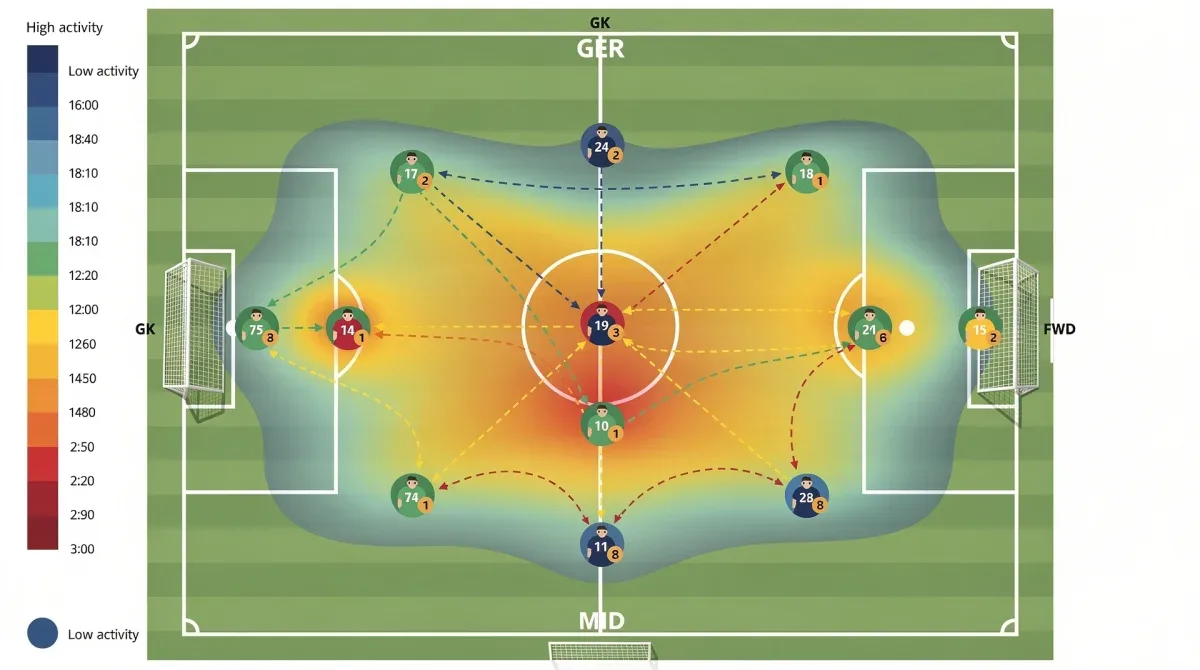

- Expected goals prevented (xGP) from outside the box: Quantifies the goal-scoring opportunities denied by the sweeper-keeper's interventions.
- High claims outside the box: Measures successful aerial challenges or catches made beyond the penalty area.
- Distance covered outside the box: Tracks the ground covered by the goalkeeper when playing as a sweeper.
- Passes completed into attacking third: Highlights their ability to initiate dangerous offensive moves.
- Defensive duels won outside the box: Records successful challenges against opponents in open play.
Implementing these metrics requires sophisticated tracking technology, often involving GPS vests and advanced video analysis software. The data collected can then be visualized through heat maps, action zones, and statistical reports, providing a clear picture of a sweeper-keeper's spatial awareness, decision-making, and technical execution.
For example, tracking 'distance covered outside the box' can reveal a goalkeeper's commitment to the sweeper role and their work rate in supporting the defense. Similarly, 'passes completed into the attacking third' demonstrates their proficiency in transitioning play from defense to attack, a critical component of modern football.
In conclusion, robust metric tracking for sweeper-keeper performance is essential for optimizing their role within the team. By moving beyond basic statistics and focusing on specialized data, coaches can better understand, train, and deploy their goalkeepers to maximize their impact on both ends of the pitch. This data-driven approach is key to unlocking the full potential of the sweeper-keeper.
Tactical implications of advanced sweeper-keeper play
The tactical implications of advanced sweeper-keeper play are profound, influencing everything from defensive structures to offensive strategies. A highly effective sweeper-keeper allows a team to adopt a higher defensive line, compressing the space available to opponents and facilitating a more aggressive pressing game. This can fundamentally alter the dynamics of a match, putting constant pressure on the opposition.
Their ability to cover large areas behind the defense provides a crucial safety net, empowering defenders to step up and engage higher up the pitch. This aggressive defensive posture can lead to more turnovers in dangerous areas, creating opportunities for quick counter-attacks. The sweeper-keeper, therefore, becomes an integral part of the team's overall tactical blueprint.
Impact on team tactics
- High defensive line: Enables defenders to play further up the pitch, reducing space for opposition attackers.
- Aggressive pressing: Supports the team's ability to win the ball back quickly in advanced areas.
- Build-up play: Provides an additional passing option for defenders, facilitating smoother transitions from defense to attack.
- Risk mitigation: Acts as a 'last man' defender, sweeping up through balls and mitigating direct threats.
Moreover, the sweeper-keeper's distribution skills can significantly enhance a team's offensive capabilities. Their accurate long passes can bypass midfield congestion, launching direct attacks or switching play to exploit space on the flanks. This makes them a crucial component in both short and long build-up play, adding another dimension to the team's attacking arsenal.
Consider a scenario where an opposing team attempts to play a long ball over the top to a fast striker. A sweeper-keeper, positioned high and alert, can quickly rush out to clear the ball, preventing a dangerous one-on-one situation. This proactive intervention not only protects the goal but also disrupts the opponent's attacking rhythm, forcing them to rethink their approach.
In essence, advanced sweeper-keeper play transforms the goalkeeper from a purely reactive position into a proactive, influential force on the pitch. Their tactical versatility and ability to impact both defensive and offensive phases make them an indispensable asset in modern football. Understanding these implications is vital for coaches seeking to optimize their team's performance.
Training methodologies for sweeper-keepers
Developing a proficient sweeper-keeper requires specialized training methodologies that go beyond traditional goalkeeping drills. These methods must focus on enhancing their ability to operate effectively outside the 18-yard box, emphasizing tactical awareness, decision-making under pressure, and technical proficiency with their feet. The goal is to cultivate a goalkeeper who is comfortable and confident in their extended role.
Training sessions should incorporate scenarios that mimic real-game situations, forcing the goalkeeper to make quick decisions about when to rush out, where to position themselves, and how to distribute the ball. This experiential learning is crucial for developing the instincts and spatial awareness required for the sweeper-keeper role.
Key training components
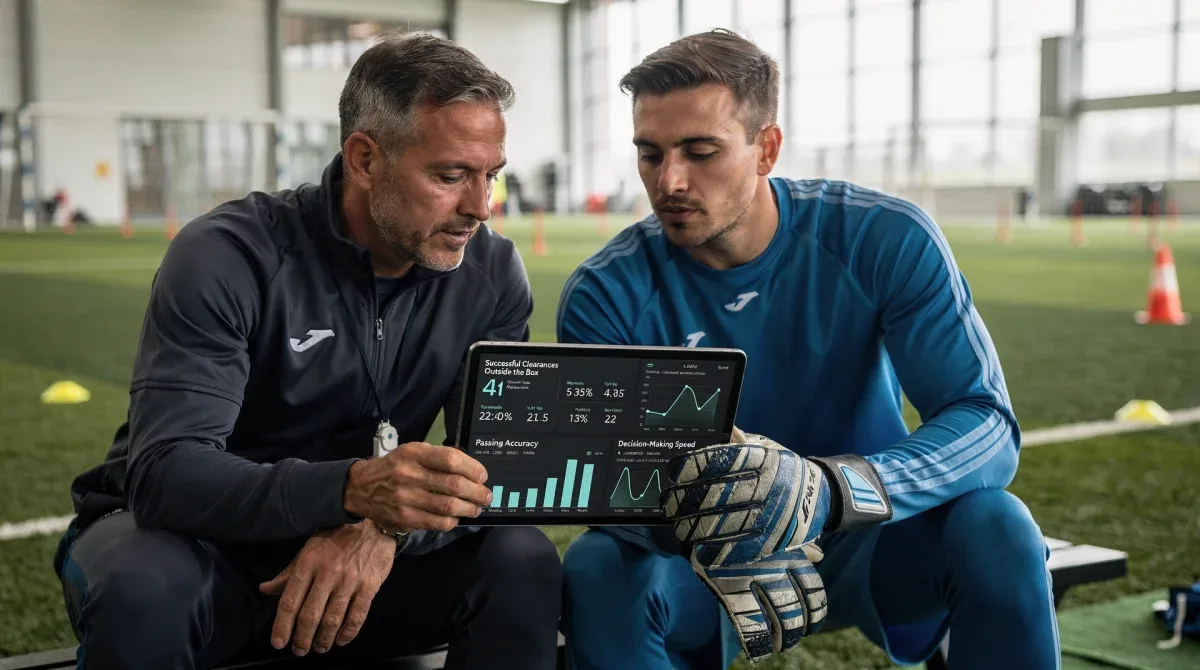

- Positional drills: Focusing on starting positions relative to the defensive line and adjusting based on ball movement.
- Decision-making games: Small-sided games where the goalkeeper is encouraged to act as a sweeper, making interventions outside the box.
- Distribution practice: Drills to improve passing accuracy, range, and decision-making for both short and long distribution.
- One-on-one situations (advanced): Practicing coming off the line and closing down attackers in open space.
- Communication exercises: Developing effective verbal and non-verbal communication with defenders.
Integration with outfield players during training is also vital. This helps the sweeper-keeper develop a strong understanding of their defenders' movements and preferences, fostering cohesive teamwork. Practicing build-up play from the back with the goalkeeper involved as a passing option is an excellent way to enhance their distribution skills and tactical understanding.
For instance, a drill could involve a defender playing a backpass to the goalkeeper, who then has to quickly assess pressure from an opponent and distribute the ball accurately to a wide player or central midfielder. This simulates the rapid decision-making required in a match, enhancing both technical and tactical abilities.
In conclusion, effective training methodologies for sweeper-keepers are multifaceted, combining technical drills with tactical simulations. By focusing on their unique requirements, coaches can develop goalkeepers who are not only excellent shot-stoppers but also highly effective outfield players, significantly contributing to their team's overall performance and strategic flexibility.
Future trends in sweeper-keeper analysis and development
The future of sweeper-keeper analysis and development promises even greater sophistication, driven by advancements in data science, artificial intelligence, and biomechanics. As the role continues to evolve, so too will the tools and methodologies used to identify, train, and optimize these crucial players. This ongoing innovation will provide deeper insights into performance and potential.
Emerging technologies will allow for more granular tracking of movements, decision-making processes, and physiological responses, providing an unprecedented level of detail. This rich data will enable coaches and analysts to tailor training programs with even greater precision, maximizing individual potential and team performance.
Anticipated future trends
- AI-powered predictive analytics: Forecasting optimal positioning and intervention points based on real-time game data.
- Biometric tracking: Monitoring physical exertion and fatigue to optimize training loads and prevent injuries.
- Virtual reality (VR) training: Immersive simulations for decision-making and spatial awareness in complex scenarios.
- Advanced video analysis with machine learning: Automatically identifying and categorizing specific sweeper-keeper actions for in-depth review.
- Integrated performance platforms: Combining physical, technical, and tactical data into a single, comprehensive dashboard.
The application of AI, for example, could analyze patterns in opponent attacks and suggest optimal starting positions for the sweeper-keeper, or even predict the likelihood of a successful clearance based on various contextual factors. This predictive capability would offer a significant tactical advantage, allowing goalkeepers to anticipate play with greater accuracy.
Furthermore, VR training could revolutionize how goalkeepers practice decision-making. By immersing them in realistic game scenarios, VR can provide a safe and repeatable environment to hone their instincts and spatial awareness, without the physical demands of actual training on the field. This could accelerate development and reduce the risk of injury.
In summary, the future of sweeper-keeper analysis and development is bright, with technology poised to unlock new levels of understanding and performance. These advancements will not only refine the training process but also provide unprecedented insights into the tactical contributions of this evolving and increasingly vital position in football. The continuous pursuit of excellence in this area will shape the future of the beautiful game.
| Key Aspect | Brief Description |
|---|---|
| Sweeper-Keeper Evolution | Goalkeepers now act as an 11th outfield player, proactive in defense and offense beyond the 18-yard box. |
| Positioning Principles | Dynamic adjustments to cover depth, cut passing lanes, and intercept danger effectively. |
| Metric Tracking Importance | Specialized metrics track proactive interventions, distribution, and decision-making outside the box. |
| Tactical Impact | Enables high defensive lines, aggressive pressing, and enhances effective build-up play from the back. |
Frequently asked questions about sweeper-keeper analysis
What defines a sweeper-keeper compared to a traditional goalkeeper?▼A sweeper-keeper actively participates in defensive and offensive play outside the 18-yard box, acting as an extra outfield player. Traditional goalkeepers primarily focus on shot-stopping within the penalty area, with less emphasis on proactive interventions or ball distribution from deep.
Why is metric tracking important for sweeper-keepers?▼Metric tracking provides objective data on a sweeper-keeper's effectiveness in their extended role. It quantifies actions like clearances outside the box, passing accuracy, and decision-making speed, which are often overlooked by traditional statistics but are crucial for understanding their overall impact on the team.
What are key actions a sweeper-keeper performs outside the box?▼Key actions include intercepting through balls, making successful clearances, initiating attacks with precise passes, and actively covering space behind the defensive line. These proactive interventions are designed to prevent opposition scoring opportunities before they fully develop, showcasing their advanced game reading abilities.
How does a sweeper-keeper influence team tactics?▼A sweeper-keeper allows a team to play a higher defensive line, enabling a more aggressive pressing strategy. They provide a crucial safety net behind defenders and contribute significantly to build-up play, offering an additional passing option to bypass opponent pressure and launch attacks effectively.
What training methods are effective for developing sweeper-keepers?▼Effective training includes positional drills, decision-making games that encourage interventions outside the box, extensive distribution practice, and advanced one-on-one situations. Integrating goalkeepers with outfield players during drills also enhances their tactical understanding and communication skills for cohesive team play.
Conclusion
The comprehensive goalkeeper positioning breakdown: analyzing sweeper-keeper actions outside the 18-yard box with metric tracking reveals a pivotal evolution in modern football. The sweeper-keeper is no longer just a shot-stopper but a dynamic, influential force who actively shapes both defensive and offensive strategies. Through meticulous metric tracking and specialized training, teams can optimize this role, leveraging their goalkeeper's extended range and distribution skills to gain a crucial competitive edge. As the game continues to evolve, the importance of this multifaceted position will only grow, demanding continuous innovation in analysis and development.
