USL Super League: 8 Changes Impacting Women's Pro Soccer
The USL Super League's Division One status introduces eight structural changes that are fundamentally reshaping the competitive and developmental landscape of women's professional soccer in the United States.
The landscape of women's professional soccer in the United States is undergoing a significant transformation, with the advent of the USL Super League Evaluation taking center stage. This new league, granted Division One status, promises to inject fresh energy and structural changes that could redefine player development, competitive pathways, and fan engagement. How will these shifts impact the existing ecosystem and what opportunities will emerge for athletes and communities alike? Let's delve into the specifics.
Understanding the Division One Designation and Its Significance
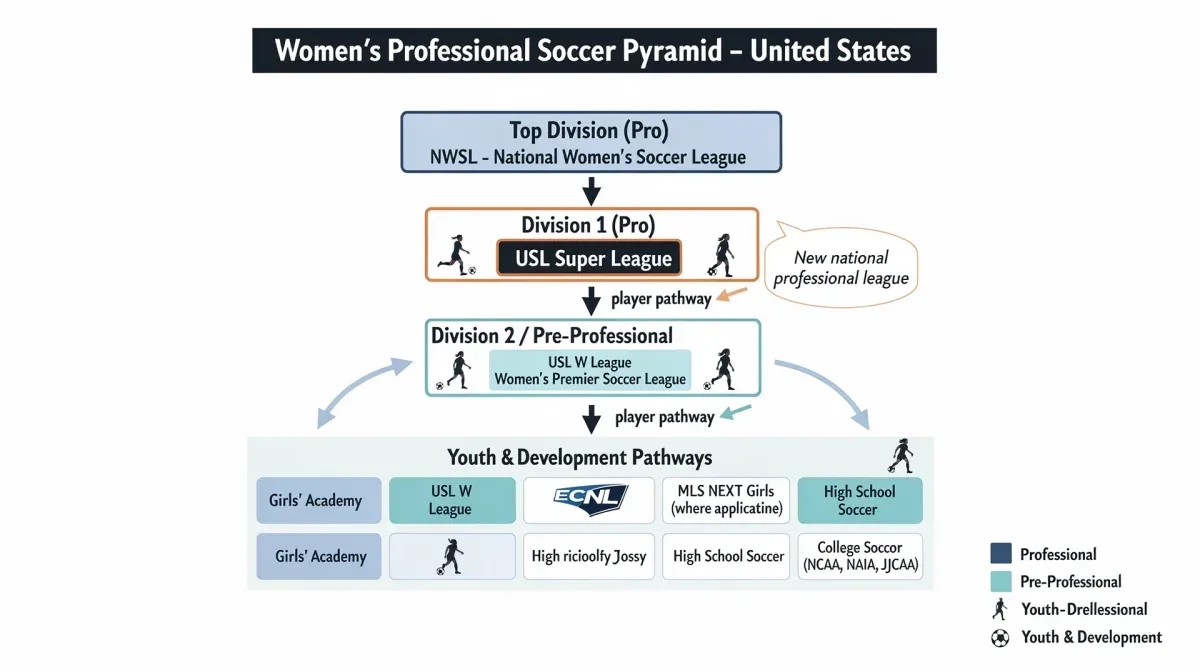
The Division One designation for the USL Super League is not merely a label; it is a profound declaration of intent and a recognition of the league's ambitious vision for women's soccer. This status places the Super League at the pinnacle of the U.S. soccer pyramid, alongside the NWSL, creating a dual-top-tier system. This structural innovation is unprecedented in American professional soccer and carries significant implications for competition, player pathways, and investment.
Historically, professional sports in the U.S. have largely operated with single-entity top leagues. The introduction of a second Division One league for women challenges this paradigm, opening doors for greater competition for talent, resources, and fan attention. It signifies a maturation of the women's soccer market, suggesting that the demand for high-level play can sustain multiple top-tier entities. This environment fosters innovation, as both leagues will undoubtedly strive to offer the most attractive propositions for players, coaches, and investors.
The Criteria for Division One Status
Attaining Division One status is a rigorous process, requiring adherence to stringent criteria set by the U.S. Soccer Federation. These criteria typically encompass financial stability, stadium infrastructure, market size, youth development pathways, and a comprehensive business plan. For the USL Super League, meeting these benchmarks demonstrates a robust foundation and a credible long-term strategy for growth. It assures stakeholders that the league is built on solid ground, capable of sustaining professional operations and delivering a high-quality product.
- Financial Viability: Demonstrating sufficient capital and a sustainable revenue model.
- Stadium Standards: Ensuring appropriate facilities for professional play and fan experience.
- Market Presence: Establishing teams in key geographic markets with strong fan bases.
- Player Development: Committing to pathways for youth and collegiate players.
The implications of this designation extend beyond the immediate competitive landscape. It validates the growing commercial appeal of women's soccer and signals to potential sponsors, media partners, and investors that this is a serious and expanding sector. The enhanced visibility and legitimacy that come with Division One status are critical for attracting the resources needed to fuel long-term development and elevate the sport to new heights. The USL Super League's ability to meet these demanding criteria underscores a pivotal moment for women's professional soccer, promising a future of expanded opportunities and heightened competition.
Expansion of Professional Opportunities for Athletes
One of the most immediate and impactful consequences of the USL Super League's arrival as a Division One entity is the significant expansion of professional opportunities for female athletes. Prior to this, the NWSL served as the sole top-tier destination for aspiring professional soccer players in the United States. While successful, a single league inherently limits the number of roster spots, making the path to professional play incredibly competitive and often leaving highly talented players without a top-tier option.
The Super League effectively doubles the number of Division One professional jobs available, creating more avenues for players graduating from collegiate programs, those returning from international leagues, or individuals seeking a professional foothold within the U.S. This increased demand for talent will not only provide more players with the chance to earn a living playing soccer but will also likely drive up player salaries and improve working conditions across both top-tier leagues as they compete for the best athletes.
Impact on Player Development Pathways
The presence of a second Division One league also profoundly influences player development. With more professional teams, there will be a greater need for robust development pipelines. This could lead to increased investment in lower-division leagues, academy systems, and collegiate programs, as teams look to secure future talent. Players now have clearer, more numerous pathways from youth soccer to the professional ranks, reducing the bottleneck that previously existed.
- Increased Roster Spots: More professional teams mean more opportunities for players.
- Competitive Salaries: Dual top-tier leagues may drive up player compensation.
- Clearer Pathways: Enhanced development structures from youth to pro.
- Reduced Bottleneck: Greater chance for collegiate athletes to go pro.
Furthermore, the expanded professional landscape creates more diverse playing styles and tactical approaches across different teams and leagues. This exposure to varied coaching philosophies and competitive environments can accelerate player growth and adaptability, ultimately benefiting the U.S. Women's National Team pool. The USL Super League's commitment to building out its own ecosystem, including lower divisions, ensures that the expansion of opportunities is not just at the top, but throughout the entire soccer pyramid, fostering a healthier, more dynamic environment for women's soccer.

Increased Competition for Talent and Resources
With two Division One professional women's soccer leagues now operating in the United States, the competitive landscape for talent and resources has fundamentally shifted. This new reality introduces a dynamic where both the USL Super League and the NWSL will vie for the same pool of elite players, coaches, and support staff. While challenging, this competition is ultimately beneficial for the growth and professionalization of women's soccer, pushing both leagues to innovate and offer the most attractive environments.
Teams within both leagues will need to refine their recruitment strategies, focusing not only on player salaries but also on training facilities, medical support, player welfare programs, and overall team culture. This rivalry extends beyond the field, impacting everything from marketing efforts to community engagement, as each league seeks to establish itself as the premier destination for top talent and a beloved institution for fans. The competition for resources, including sponsorship dollars and media rights, will also intensify, requiring compelling value propositions from both entities.
The Battle for Sponsorship and Media Attention
Sponsorships and media coverage are the lifeblood of professional sports leagues. The emergence of the USL Super League means that brands and media outlets now have more options when considering investment in women's soccer. This could lead to a more fragmented market initially, but it also signals a larger, more robust market that can support multiple major players. Both leagues will need to demonstrate strong viewership, fan engagement, and a clear return on investment to attract and retain crucial commercial partners.
- Player Recruitment: Intensified efforts to attract and retain top athletes.
- Coaching Staff: Competition for experienced and innovative coaching talent.
- Sponsorship Dollars: Leagues vying for corporate partnerships and investment.
- Media Coverage: Increased efforts to secure broadcast deals and media attention.
Moreover, this competition will likely spur innovation in how games are presented, how content is delivered, and how fans are engaged. Leagues may explore new technologies, digital platforms, and fan experiences to differentiate themselves. Ultimately, while challenging, increased competition for talent and resources serves as a powerful catalyst for growth, forcing both the USL Super League and the NWSL to continuously improve and elevate the standard of women's professional soccer in the United States.
Enhanced Geographical Reach and Local Engagement
One of the fundamental structural changes brought about by the USL Super League's Division One status is the significant enhancement of geographical reach for women's professional soccer across the United States. While the NWSL has established a strong presence in various key markets, the Super League's expansion strategy aims to bring top-tier professional play to new and underserved regions, fostering deeper local engagement and cultivating new fan bases.
This geographical diversification is crucial for the long-term growth of the sport. By establishing teams in a wider array of cities, the USL Super League connects professional soccer directly with more communities, making games more accessible to fans and providing local role models for aspiring young players. This localized approach can generate a strong sense of community pride and ownership, translating into greater attendance, merchandise sales, and overall support for the sport.
Community-Centric Development Model
The USL Super League often operates with a community-centric development model, which typically includes strong ties to local youth soccer organizations and community initiatives. This integrated approach ensures that professional teams are not just isolated entities but are deeply woven into the fabric of their respective cities. Such connections are vital for building sustainable fan bases and for inspiring the next generation of athletes.
- New Markets: Bringing professional soccer to previously underserved regions.
- Local Role Models: Inspiring youth through local professional players.
- Youth Integration: Strong ties to local youth soccer academies and clubs.
- Community Pride: Fostering a sense of belonging and support for local teams.
The expansion into new markets also creates economic opportunities for these cities, including job creation, increased tourism, and local business support. Stadium development and game-day operations require significant local investment and labor, contributing positively to the regional economy. Furthermore, by tapping into diverse geographic areas, the USL Super League can broaden the talent pool for women's soccer, identifying and developing players from various backgrounds who might not have had easy access to professional pathways before. This commitment to enhanced geographical reach and local engagement is a cornerstone of the Super League's strategy, promising a more inclusive and widespread impact for women's professional soccer.
Innovation in League Structure and Business Models
The USL Super League's entry into the Division One landscape is not just about adding another league; it represents a significant push for innovation in league structure and business models within women's professional soccer. Unlike traditional single-entity leagues, the USL's broader ecosystem approach allows for flexibility and varied ownership structures, fostering a more dynamic and potentially sustainable environment.
This innovative approach challenges existing paradigms, encouraging both new and established teams to explore different revenue streams, fan engagement strategies, and operational efficiencies. The USL's history of operating multiple leagues across different divisions provides a robust framework for scaling and adapting, which is a key advantage in a rapidly evolving sports market. This adaptability allows for quicker responses to market demands and changes in player or fan preferences, keeping the league agile and forward-thinking.
The Impact of Promotion/Relegation Discussions
While not immediately implemented at the Division One level, the USL's broader structure often includes discussions around promotion and relegation, a common feature in global soccer but rare in American sports. The potential integration of such a system, even if it is a long-term vision, introduces a powerful incentive for consistent performance and creates compelling narratives throughout the season, from the top of the table to the bottom. This structural element, even as a concept, drives a different kind of competitive intensity.
- Flexible Ownership: Encouraging diverse investment and operational models.
- Ecosystem Approach: Leveraging lower divisions for talent development and fan engagement.
- Data-Driven Decisions: Utilizing analytics for strategic growth and fan experience.
- Potential for Pro/Rel: Driving competitive intensity and long-term strategic planning.
The emphasis on innovative business models also includes exploring new ways to engage sponsors, leverage digital platforms, and create unique fan experiences. The Super League aims to be a leader in adopting new technologies, from ticketing and merchandise to immersive broadcast experiences. By continuously seeking out and implementing these innovations, the USL Super League is not only building a competitive professional league but also setting new standards for how women's soccer can be organized, operated, and consumed, ensuring its relevance and growth for years to come.
Increased Investment in Infrastructure and Development
The establishment of the USL Super League as a Division One entity inherently necessitates and drives increased investment across various facets of women's soccer infrastructure and development. This isn't just about team rosters; it's about the foundational elements that underpin a thriving professional sport. The league's commitment to meeting Division One standards means significant capital infusion into facilities, training, and youth pipelines.
New stadiums or significant upgrades to existing venues are often a prerequisite for Division One status, ensuring that players have professional-grade playing surfaces and training environments, and that fans enjoy a premium match-day experience. This infrastructure development is critical for player safety, performance, and overall league credibility. Beyond physical structures, there's an increased need for specialized coaching staff, sports scientists, medical teams, and administrative personnel, all requiring substantial investment.
Youth Academy Integration and Talent Nurturing
A hallmark of the USL's broader philosophy is the integration of youth academies and development pathways directly linked to professional teams. For the Super League, this means a concerted effort to establish and fund academies that identify and nurture young female talent from an early age. This systematic approach ensures a continuous pipeline of skilled players, reducing reliance on external sources and fostering a distinct playing style within the league.
- Stadium Upgrades: Investment in modern, professional-grade facilities.
- Training Facilities: Enhanced spaces for player development and recovery.
- Staffing Expansion: Growth in coaching, medical, and administrative roles.
- Youth Academies: Direct funding and integration for talent development.
This increased investment extends to player welfare programs, including mental health support, educational opportunities, and post-career planning. A truly professional league understands that investing in the holistic development of its athletes yields long-term benefits for both the players and the league itself. By prioritizing these areas, the USL Super League aims to create an environment where players can thrive both on and off the field, ultimately elevating the entire standard of women's professional soccer and ensuring a sustainable future for the sport.
Shifting Dynamics in the Global Women's Soccer Landscape
The emergence of the USL Super League as a Division One entity not only reshapes the domestic landscape but also introduces significant shifts in the global women's soccer dynamic. The United States has long been a powerhouse in women's soccer, and the addition of another top-tier professional league further solidifies its position as a leading destination for talent. This development will have ripple effects on international player movement, scouting, and the overall perception of professional opportunities in the U.S.
With more professional teams and increased financial investment, the U.S. becomes an even more attractive prospect for international players seeking high-level competition and professional stability. This could lead to a greater influx of global talent, enriching the competitive quality of both the NWSL and the Super League. Conversely, it might also mean that fewer American players feel the need to seek professional opportunities abroad, as the domestic market can now better accommodate their ambitions.
Impact on International Scouting and Player Pools
International scouts will undoubtedly pay closer attention to the expanded U.S. professional ecosystem. The presence of two robust top-tier leagues offers a larger pool of players to observe, potentially influencing national team selections and international transfer markets. For the U.S. Women's National Team, a deeper and more competitive domestic league structure means a stronger, more diverse talent pool from which to draw, potentially enhancing their international dominance.
- Global Talent Magnet: Attracting more international players to the U.S.
- Domestic Retention: Keeping top American talent playing at home.
- Enhanced Scouting: Broader pool for international and national team scouts.
- USWNT Strength: A more competitive domestic league strengthens the national team.
Furthermore, the USL Super League's innovative business model and community-centric approach could serve as a blueprint or inspiration for other emerging women's leagues around the world. As global soccer continues to professionalize, successful models from the U.S. will be closely watched and potentially adapted. This shifting dynamic positions the U.S. not just as a consumer of global soccer talent, but also as an innovator in league development, further cementing its influential role in the evolution of women's professional soccer worldwide.
| Key Structural Change | Impact on Women's Pro Soccer |
|---|---|
| Division One Status | Elevates league credibility, attracting talent and investment. |
| Expanded Opportunities | Doubles top-tier professional roster spots for athletes. |
| Increased Competition | Drives innovation and investment across all leagues for talent and resources. |
| Geographical Reach | Brings pro soccer to new markets, fostering local engagement. |
Frequently Asked Questions About the USL Super League
What does Division One status mean for the USL Super League?▼Division One status, granted by the U.S. Soccer Federation, recognizes the USL Super League as a top-tier professional league. This designation confirms its adherence to high standards in financial stability, infrastructure, and player development, placing it at the pinnacle of the U.S. soccer pyramid alongside the NWSL, and signaling a significant expansion of professional women's soccer.
How will the USL Super League impact player opportunities?▼The USL Super League will significantly expand professional opportunities for female athletes by creating more roster spots and increasing demand for talent. This will provide more pathways for collegiate players, those returning from international leagues, and aspiring professionals to play at a top-tier level within the United States, potentially influencing salaries and player welfare positively.
Will the USL Super League compete directly with the NWSL?▼Yes, the USL Super League will compete with the NWSL for top talent, sponsorship, and media attention. This competition is expected to drive innovation, improve player conditions, and elevate the overall standard of women's professional soccer in the U.S., ultimately benefiting fans and the sport's growth.
What unique structural elements does the USL Super League bring?▼The USL Super League introduces an innovative league structure with a strong emphasis on a community-centric model and integrated youth development pathways. It also explores unique business models and may eventually consider elements like promotion and relegation, which are distinct from traditional U.S. professional sports leagues, fostering dynamic competition.
How will this league affect women's soccer globally?▼Globally, the USL Super League will solidify the U.S. as a premier destination for women's soccer talent, attracting more international players and potentially influencing global scouting. It could also serve as an innovative model for other emerging leagues worldwide, contributing to the professionalization and growth of women's soccer on an international scale.
Conclusion
The USL Super League's attainment of Division One status marks a transformative period for women's professional soccer in the United States. The eight structural changes it introduces—from expanded player opportunities and intensified competition to enhanced geographical reach and innovative league models—are set to redefine the sport's landscape. This evolution promises not only a more robust and dynamic domestic ecosystem but also a strengthened position for American women's soccer on the global stage, fostering an environment where talent can thrive and the sport can reach unprecedented heights.
