AFCON Tactical Review: 3 Key Strategic Trends Defining 24-Team Tournaments
The African Cup of Nations, now a 24-team tournament, showcases distinct tactical trends, including enhanced defensive organization, rapid counter-attacking prowess, and flexible formation shifts, which collectively shape the competitive landscape of modern African football.
Welcome to an insightful exploration of the African Cup of Nations, where we delve into the core tactical shifts defining its expanded 24-team format. This AFCON tactical review aims to uncover the strategic innovations that have transformed the tournament's competitive dynamics, offering a fresh perspective on how African nations approach the beautiful game.
The Evolution of Defensive Solidity in AFCON
The modern African Cup of Nations has seen a significant emphasis on defensive organization. Teams, regardless of their historical attacking prowess, are increasingly prioritizing a robust backline and disciplined midfield screening to mitigate threats from potent attacking units.
This tactical shift is not merely about parking the bus; it's a sophisticated approach to controlling games without necessarily dominating possession. Many teams now employ intricate defensive schemes, often shifting between zonal marking and man-marking depending on the opponent's strengths and in-game situations.
Structured Defensive Blocks
One of the most observable trends is the adoption of highly structured defensive blocks. These blocks, often in a 4-4-2 or 4-2-3-1 shape when out of possession, aim to deny space in central areas and force opponents wide. This makes it challenging for creative players to find pockets of space between the lines.
- Compactness: Teams maintain minimal distances between defenders and midfielders, reducing passing lanes.
- Pressing Triggers: Specific cues for pressing, such as a backward pass or a poor touch, are now well-drilled.
- Full-back Discipline: Full-backs are less adventurous, focusing on defensive duties first, especially against teams with strong wingers.
The effectiveness of these defensive structures is evident in the lower number of high-scoring games and the increased reliance on set-pieces or moments of individual brilliance to break deadlocks. Teams understand that a solid defense provides the foundation for any successful tournament run.
In conclusion, defensive solidity has become a cornerstone of AFCON strategies, demonstrating a maturation in tactical understanding across the continent. This emphasis on preventing goals first has fundamentally altered how matches are approached, making every goal conceded a critical setback.
Dynamic Transitions: Speed and Precision on the Counter
Beyond defensive resilience, the ability to transition rapidly from defense to attack has become a hallmark of successful teams in the expanded AFCON. With 24 teams, the competition is fierce, and exploiting even momentary disorganization in the opponent's defense can be decisive.
This trend highlights the athletic capabilities of African players, many of whom possess blistering pace and remarkable stamina. Teams are not just looking to hit long balls; they are executing intricate, fast-paced sequences that move the ball up the field with purpose.

Exploiting Space with Pace
The moment possession is regained, particularly in deeper areas, teams are primed to launch direct attacks. This often involves bypassing the midfield with quick, vertical passes to wide players or central forwards who can carry the ball forward rapidly.
- Vertical Passes: Prioritizing forward passes to quickly advance the ball into dangerous areas.
- Wing Play: Utilizing fast wingers to stretch defenses and create crossing opportunities.
- Overlapping Runs: Full-backs joining the attack at speed, adding numerical superiority in wide areas.
The precision required for these transitions is often underestimated. Players must make quick decisions, execute accurate passes under pressure, and understand where their teammates will be. Training ground drills focus heavily on these rapid offensive bursts, ensuring players react instinctively.
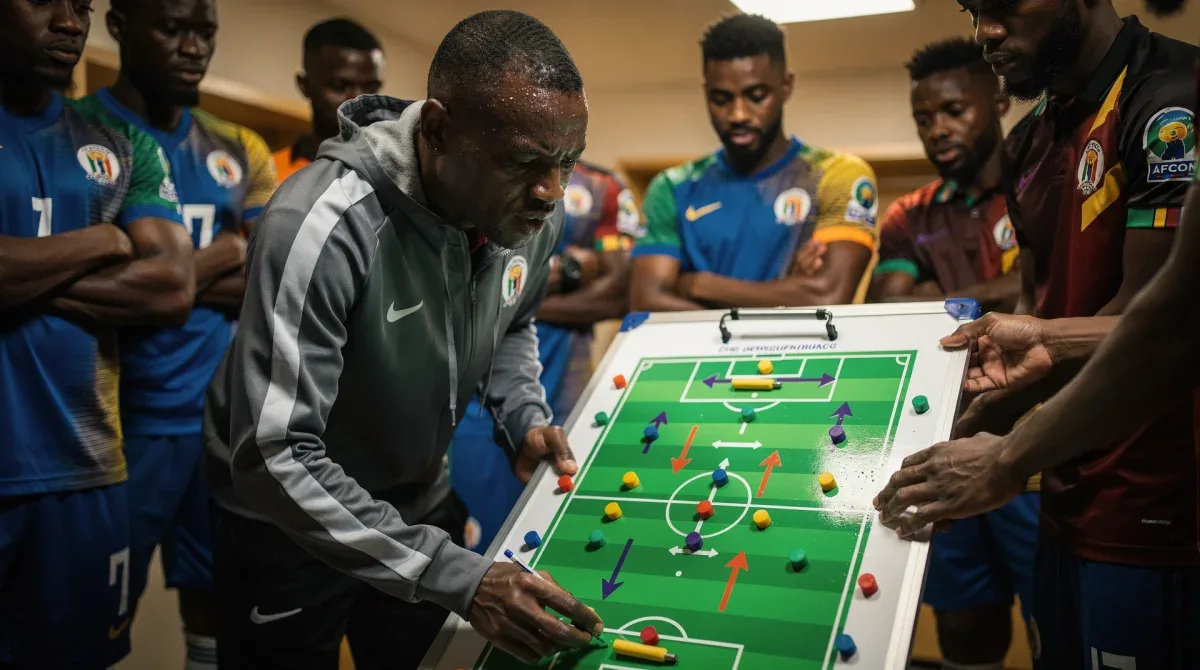
The dynamic nature of these transitions means that teams must also be prepared to defend against them. This creates a fascinating ebb and flow in matches, where one moment a team is defending deep, and the next they are threatening the opposition's goal. It's a testament to the tactical intelligence developing within African football.
Ultimately, the mastery of dynamic transitions has become a crucial differentiator. Teams that can execute these movements with both speed and precision are often the ones that progress furthest in the tournament, demonstrating a well-rounded tactical profile.
Adaptable Formations: The Rise of Tactical Flexibility
The third significant trend observed in recent AFCON tournaments is the increasing tactical flexibility displayed by coaches. Gone are the days when a team rigidly adhered to a single formation throughout a game or even an entire tournament. Modern AFCON coaches are adept at altering their setups to counter specific opponents or react to in-game situations.
This adaptability is a direct response to the diverse playing styles present in a 24-team format. Facing teams with different strengths—be it aerial prowess, technical midfielders, or rapid wingers—requires a nuanced approach to formation selection.
Switching Between Systems
Coaches are not afraid to start with one formation, such as a 4-3-3, and then shift to a 3-5-2 or a 4-2-3-1 within the same match. These changes can occur at halftime, after a goal, or even in response to a tactical substitution made by the opposition.
This requires players to be highly intelligent and versatile, capable of understanding and executing different roles within various systems. Training emphasizes positional fluidity and the ability to quickly grasp new tactical instructions.
For example, a team might start with a two-striker system to press high against a weak defense, then drop into a more compact 4-5-1 once they have a lead to protect. The ability to make these seamless transitions without losing structural integrity is a mark of a well-coached side.
The impact of tactical flexibility extends beyond just formations; it also influences player roles. Wingers might drop deep to assist defensively, while central midfielders are expected to contribute to both attack and defense. This blurring of traditional roles adds another layer of complexity to the tactical battles.
In essence, adaptable formations represent a sophisticated approach to tournament football, allowing teams to remain unpredictable and exploit weaknesses effectively. This tactical shrewdness is a key factor in navigating the demanding schedule and varied opposition of the AFCON.
The Strategic Importance of Midfield Control
While defensive solidity and dynamic transitions garner much attention, the subtle yet crucial aspect of midfield control often dictates the flow and outcome of AFCON matches. In a tournament where physical battles are common, establishing dominance in the central areas provides a vital platform for both defense and attack.
Midfield control isn't just about possession; it's about dictating the tempo, disrupting opposition play, and providing a reliable link between the backline and the forward players. Teams with strong midfield trios or duos often exert significant influence over games, even when they don't have the majority of the ball.
Disrupting Opposition Play
A key role of the midfield is to act as the first line of defense, intercepting passes, winning tackles, and preventing opponents from building momentum. Defensive midfielders are particularly vital in this regard, shielding the back four and breaking up intricate attacking patterns.
- Pressing in Packs: Midfielders often press opponents in groups, closing down options and forcing turnovers.
- Positional Awareness: Maintaining optimal positions to cut off passing lanes and cover teammates.
- Winning Second Balls: Crucial for regaining possession after long clearances or contested headers.
Beyond defensive duties, the midfield is responsible for initiating attacks. This involves progressive passing, carrying the ball forward, and creating space for wingers and strikers. The ability of a midfielder to switch play, thread through-balls, or drive into advanced positions can unlock stubborn defenses.
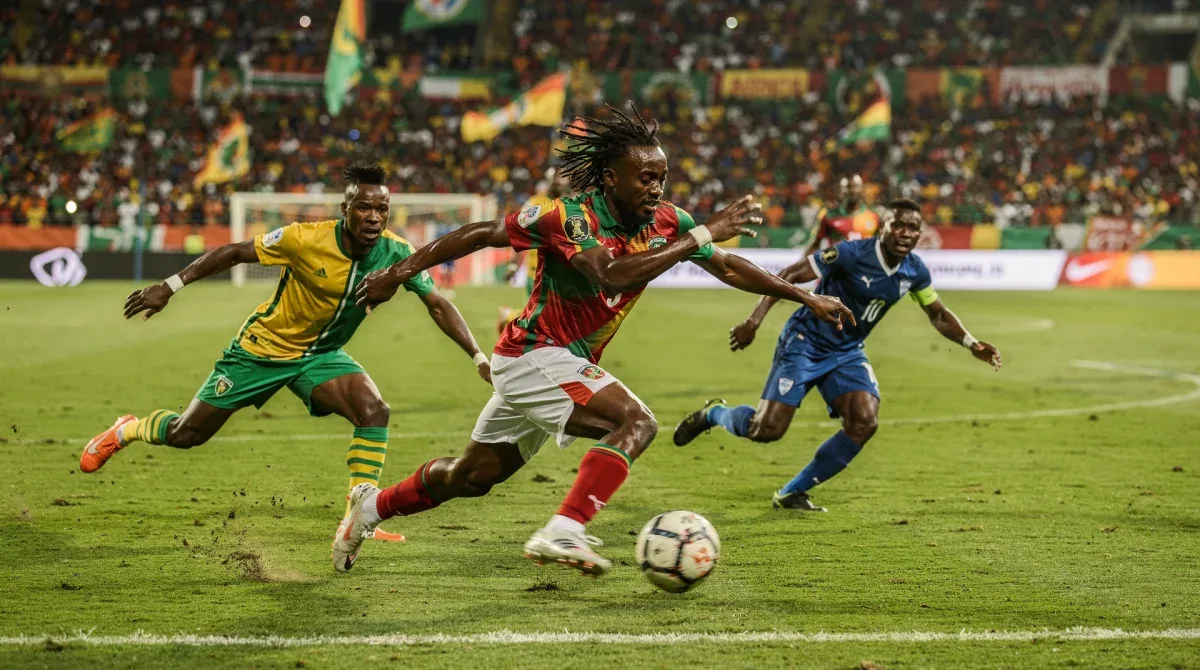
The balance in midfield is paramount. Teams need players who can both destroy and create, ensuring that there's a constant supply of both defensive cover and offensive impetus. The interplay between central midfielders often defines a team's tactical identity and overall effectiveness.
Ultimately, achieving midfield control provides a strategic advantage, allowing teams to impose their will on matches and manage the game effectively. It's a testament to the tactical depth that increasingly characterizes high-level African football.
Set-Piece Mastery: A Decisive Factor
In tightly contested tournaments like the AFCON, where goals can be at a premium due to robust defenses, set-pieces often emerge as a decisive factor. The ability to consistently create chances and score from corners, free-kicks, and even long throw-ins can be the difference between advancing and going home.
Coaches are dedicating significant training time to perfecting set-piece routines, both offensively and defensively. This involves analyzing opponent weaknesses, designing intricate movements, and ensuring players understand their specific roles in these critical moments.
Offensive Set-Piece Strategies
On the attacking front, teams employ a variety of strategies to maximize their chances. This can include direct shots, intricate passing routines, or targeting specific players for headers. The element of surprise and precise execution are key.
- Designated Takers: Identifying players with exceptional crossing or shooting ability for corners and free-kicks.
- Movement Patterns: Players making coordinated runs to create space or draw defenders away.
- Blocking Runs: Using players to screen defenders, allowing teammates free headers or shots.
Defensively, the focus is on organization and concentration. Teams often use a combination of zonal and man-marking to cover all potential threats, while ensuring a player is positioned to clear any dangerous balls. Goalkeepers also play a crucial role in commanding their area during set-pieces.
The psychological impact of set-piece goals cannot be overstated. Scoring from a dead-ball situation can swing momentum, while conceding one can be demoralizing. This makes every corner and free-kick a mini-battle in itself, with high stakes.
In summary, set-piece mastery is no longer a secondary concern but a fundamental aspect of modern AFCON tactics. Teams that are well-drilled in these situations often gain a crucial edge, proving that attention to detail can yield significant rewards.
The Role of Goalkeeping and Distribution
The role of the goalkeeper in modern football, particularly in a tournament setting like the AFCON, has evolved significantly beyond just shot-stopping. Goalkeepers are now integral to a team's tactical setup, especially concerning distribution and initiating attacks.
With teams emphasizing building from the back and maintaining possession, a goalkeeper with excellent footwork and vision can act as an additional outfield player, helping to circulate the ball and draw opponents out of position. This adds another dimension to a team's tactical flexibility.
Goalkeepers as Playmakers
Modern AFCON goalkeepers are expected to be proficient with the ball at their feet, capable of playing accurate short passes to defenders or launching precise long balls to bypass the press. Their decision-making under pressure is critical to maintaining possession and launching effective counter-attacks.
- Short Passing: Ability to distribute the ball calmly and accurately to defenders under pressure.
- Long Distribution: Precise long passes to wingers or strikers, often initiating quick breaks.
- Sweeper-Keeper Role: Coming off their line to clear through balls or intercept passes behind the defense.
Beyond distribution, a goalkeeper's command of their penalty area and ability to organize the defense remain paramount. Their communication with the backline is essential for maintaining defensive shape and dealing with crosses and set-pieces effectively.
The pressure on goalkeepers in a 24-team tournament is immense, as every save and every distribution decision can have a direct impact on the outcome. Their ability to perform consistently under this pressure is a key indicator of a team's overall strength.
In conclusion, the modern AFCON goalkeeper is a vital tactical asset, contributing significantly to both defensive solidity and offensive transitions. Their evolving role underscores the holistic approach to tactics now prevalent in African football.
| Key Tactical Trend | Brief Description |
|---|---|
| Defensive Solidity | Teams prioritize compact defensive blocks and disciplined midfield screening to deny space and minimize threats. |
| Dynamic Transitions | Rapid shifts from defense to attack, exploiting space with pace and precision through vertical passes and strong wing play. |
| Adaptable Formations | Coaches frequently alter tactical setups and player roles to counter specific opponents and react to in-game situations. |
| Set-Piece Mastery | Dedicated strategies for both offensive and defensive set-pieces, recognizing their critical role in scoring and preventing goals. |
Frequently asked questions about AFCON tactics
How has the expansion to 24 teams impacted AFCON tactics?▼The expansion has led to greater tactical diversity and a higher premium on adaptability. Teams face a wider range of opponents, necessitating flexible game plans and the ability to adjust formations and strategies on the fly. This also intensifies the competitive nature of the group stages.
What is meant by 'defensive solidity' in the context of AFCON?▼Defensive solidity refers to teams prioritizing strong defensive organization, often employing compact blocks and disciplined midfield screening. It's about denying space, forcing opponents wide, and making it difficult for creative players to operate, providing a strong foundation for the team.
Why are dynamic transitions crucial for AFCON teams?▼Dynamic transitions are vital because they allow teams to quickly exploit momentary disorganization in the opponent's defense. With the athletic capabilities of many African players, rapid shifts from defense to attack create significant scoring opportunities, often bypassing congested midfield areas with speed.
How important is tactical flexibility for coaches in AFCON?▼Tactical flexibility is extremely important. Coaches must be able to alter formations and player roles to counteract specific opponents or adapt to in-game scenarios. This adaptability keeps opponents guessing and allows teams to maximize their strengths while mitigating weaknesses against diverse playing styles.
What role do set-pieces play in modern AFCON tournaments?▼Set-pieces are often decisive in tight AFCON matches. With strong defenses, goals from open play can be rare. Therefore, well-drilled offensive and defensive set-piece routines provide crucial opportunities to score or prevent goals, significantly impacting match outcomes and tournament progression.
Conclusion
The African Cup of Nations, in its expanded 24-team format, continues to evolve tactically, showcasing a fascinating blend of defensive discipline, blistering offensive transitions, and remarkable strategic adaptability. These key trends highlight a continent increasingly sophisticated in its approach to international football, where every team strives for a competitive edge. The journey through these tactical shifts reveals a tournament that is not only a spectacle of passion and skill but also a testament to the growing depth of strategic thinking in African soccer.
